



Population-Based Incidence of Severe Acute Respiratory Virus Infections among Children Aged <5 Years in Rural Bangladesh, June–October 2010
Supporting Files

-
Feb 25 2014
File Language:
English
Details
-
Alternative Title:PLoS One
-
Personal Author:Nasreen, Sharifa ; Luby, Stephen P. ; Brooks, W. Abdullah ; Homaira, Nusrat ; Mamun, Abdullah Al ; Bhuiyan, Mejbah Uddin ; Rahman, Mustafizur ; Ahmed, Dilruba ; Abedin, Jaynal ; Rahman, Mahmudur ; Alamgir, A. S. M. ; Fry, Alicia M. ; Streatfield, Peter Kim ; Rahman, Anisur ; Bresee, Joseph ; Widdowson, Marc-Alain ; Azziz-Baumgartner, Eduardo
-
Description:Background
Better understanding the etiology-specific incidence of severe acute respiratory infections (SARIs) in resource-poor, rural settings will help further develop and prioritize prevention strategies. To address this gap in knowledge, we conducted a longitudinal study to estimate the incidence of SARIs among children in rural Bangladesh.
Methods
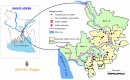
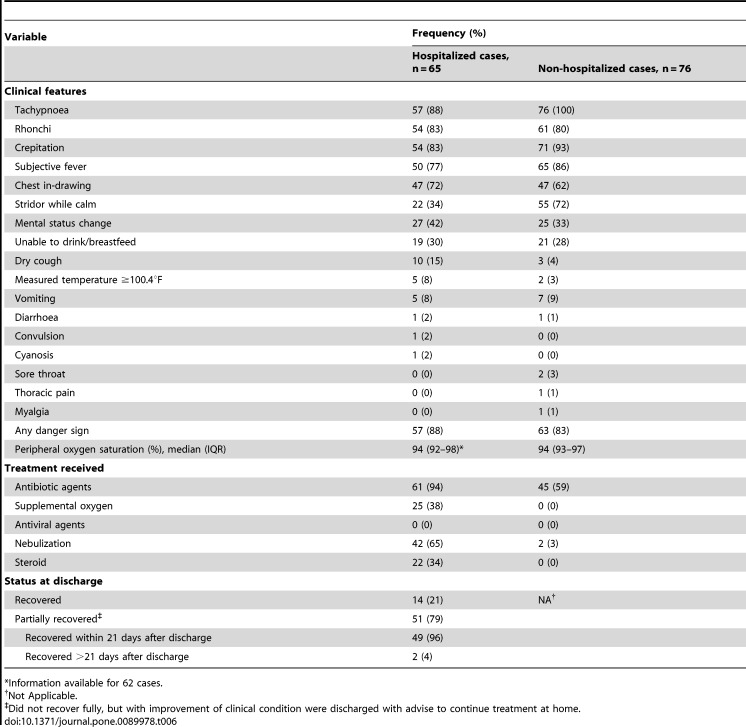
During June through October 2010, we followed children aged <5 years in 67 villages to identify those with cough, difficulty breathing, age-specific tachypnea and/or danger signs in the community or admitted to the local hospital. A study physician collected clinical information and obtained nasopharyngeal swabs from all SARI cases and blood for bacterial culture from those hospitalized. We tested swabs for respiratory syncytial virus (RSV), influenza viruses, human metapneumoviruses, adenoviruses and human parainfluenza viruses 1–3 (HPIV) by real-time reverse transcription polymerase chain reaction. We calculated virus-specific SARI incidence by dividing the number of new illnesses by the person-time each child contributed to the study.
Results
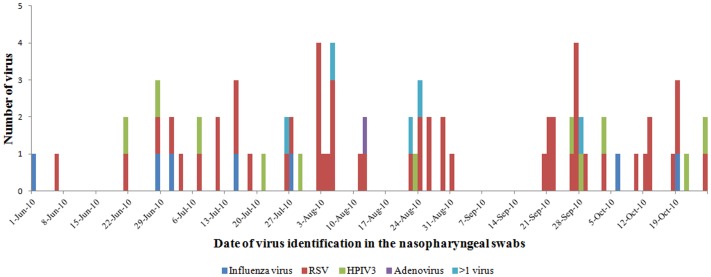
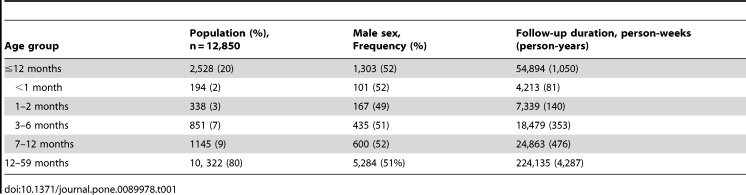
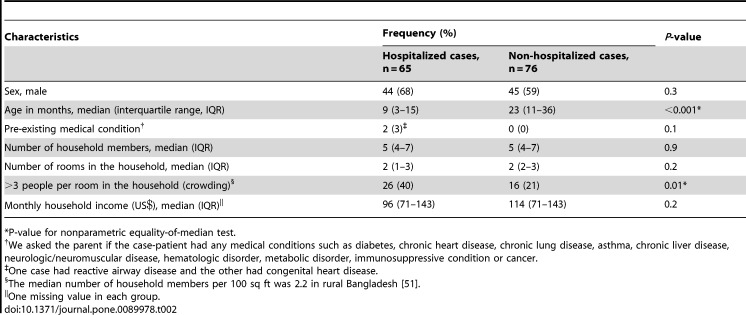
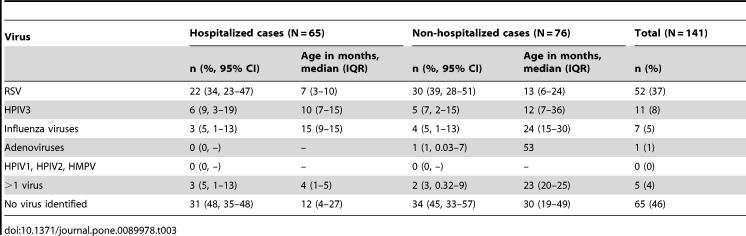
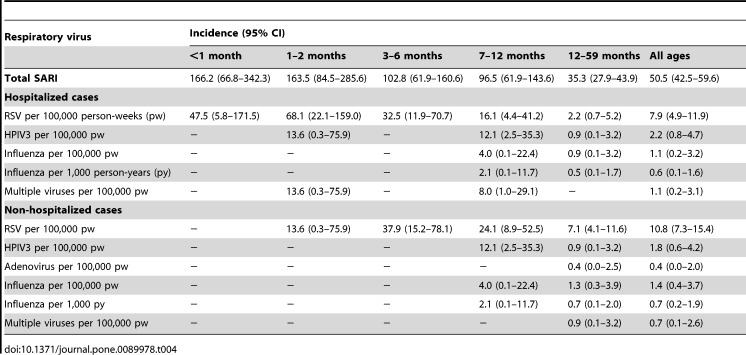
We followed 12,850 children for 279,029 person-weeks (pw) and identified 141 SARI cases; 76 (54%) at their homes and 65 (46%) at the hospital. RSV was associated with 7.9 SARI hospitalizations per 100,000 pw, HPIV3 2.2 hospitalizations/100,000 pw, and influenza 1.1 hospitalizations/100,000 pw. Among non-hospitalized SARI cases, RSV was associated with 10.8 illnesses/100,000 pw, HPIV3 1.8/100,000 pw, influenza 1.4/100,000 pw, and adenoviruses 0.4/100,000 pw.
Conclusion
Respiratory viruses, particularly RSV, were commonly associated with SARI among children. It may be useful to explore the value of investing in prevention strategies, such as handwashing and respiratory hygiene, to reduce respiratory infections among young children in such settings. -
Subjects:
- Research Article
- Child, Preschool
- Disease Outbreaks
- History, 21st Century
- Humans
- Incidence
- Infant
- Longitudinal Studies
- Orthomyxoviridae
- Parainfluenza Virus 1, Human
- Parainfluenza Virus 2, Human
- Parainfluenza Virus 3, Human
- RNA Virus Infections
- Real-Time Polymerase Chain Reaction
- Respiratory Syncytial Viruses
- Respiratory Tract Infections
- Reverse Transcriptase Polymerase Chain Reaction
- Statistics, Nonparametric
-
Source:PLoS One. 2014; 9(2).
-
Pubmed ID:24587163
-
Pubmed Central ID:PMC3934972
-
Document Type:
-
Funding:
-
Place as Subject:
-
Volume:9
-
Issue:2
-
Download URL:
-
File Type:
 [PDF - 393.86 KB]
 -
Collection(s):
-
Main Document Checksum:urn:sha256:97b0ced2bc5e3d6b8fa1f7f2f1a587e730cb44ebecfb317e69da28e614d6bbdf
Supporting Files


File Language:
English
 Was this page helpful?
 Found an issue?





CDC STACKS serves as an archival repository of CDC-published products including
scientific findings, journal articles, guidelines, recommendations, or other public health information authored or
co-authored by CDC or funded partners.
As a repository, CDC STACKS retains documents in their original published format to ensure public access to scientific information.
As a repository, CDC STACKS retains documents in their original published format to ensure public access to scientific information.
You May Also Like
COLLECTION
CDC Public Access