



Progesterone Treatment Shows Benefit in a Pediatric Model of Moderate to Severe Bilateral Brain Injury
Supporting Files

-
Jan 28 2014
-
File Language:
English
Details
-
Alternative Title:PLoS One
-
Personal Author:
-
Description:Purpose
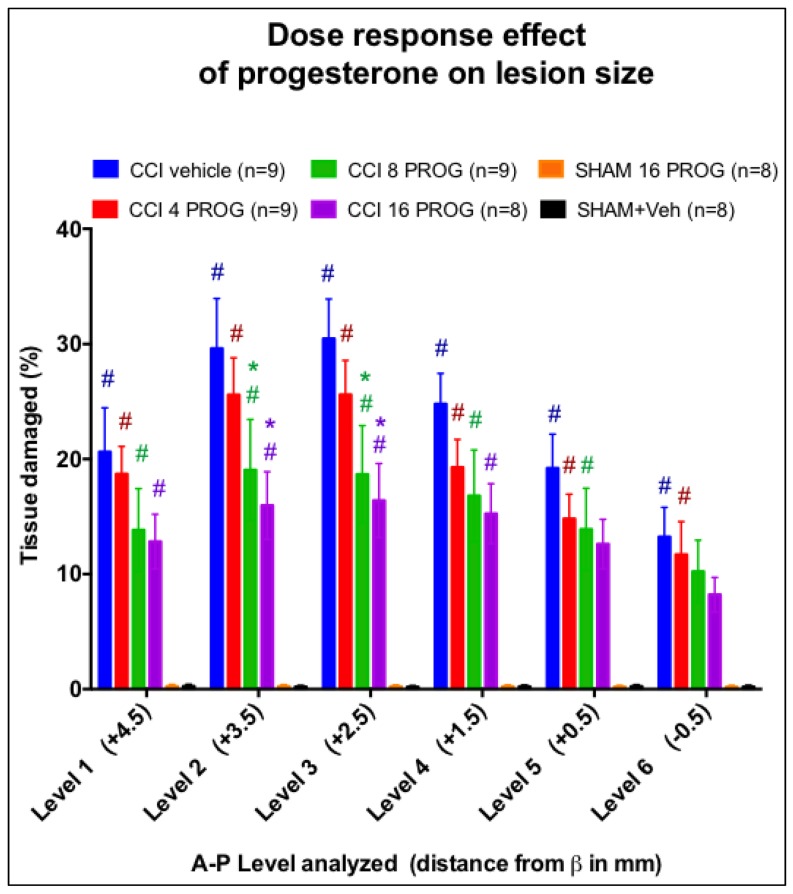
Controlled cortical impact (CCI) models in adult and aged Sprague-Dawley (SD) rats have been used extensively to study medial prefrontal cortex (mPFC) injury and the effects of post-injury progesterone treatment, but the hormone's effects after traumatic brain injury (TBI) in juvenile animals have not been determined. In the present proof-of-concept study we investigated whether progesterone had neuroprotective effects in a pediatric model of moderate to severe bilateral brain injury.
Methods
Twenty-eight-day old (PND 28) male Sprague Dawley rats received sham (n = 24) or CCI (n = 47) injury and were given progesterone (4, 8, or 16 mg/kg per 100 g body weight) or vehicle injections on post-injury days (PID) 1–7, subjected to behavioral testing from PID 9–27, and analyzed for lesion size at PID 28.
Results
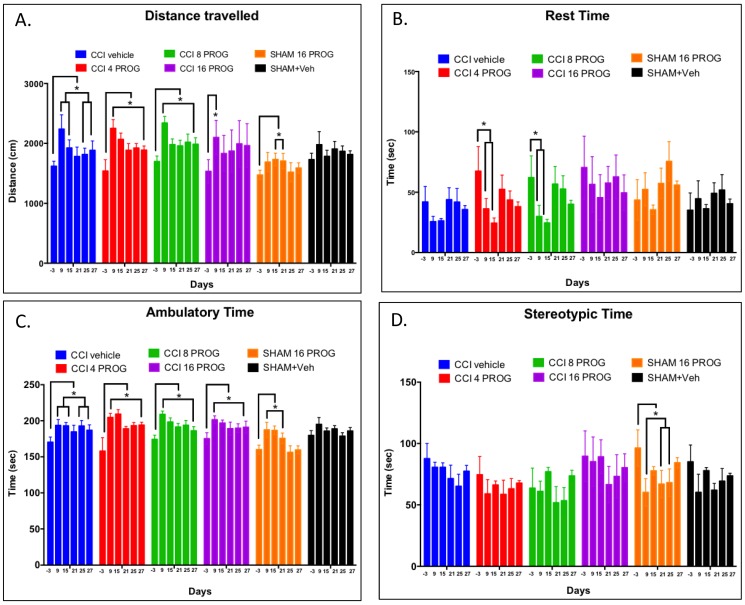
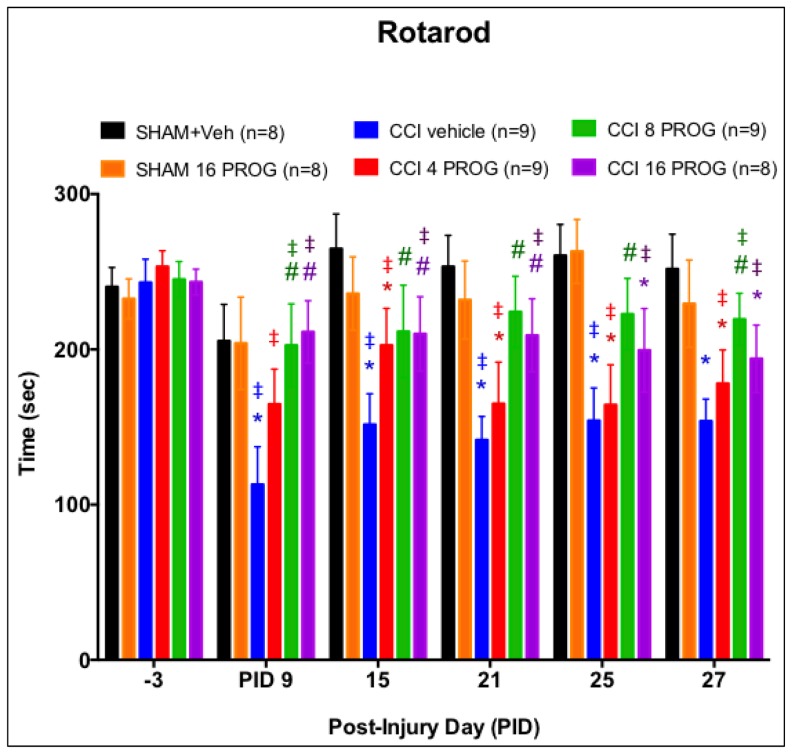
The 8 and 16 mg/kg doses of progesterone were observed to be most beneficial in reducing the effect of CCI on lesion size and behavior in PND 28 male SD rats.
Conclusion
Our findings suggest that a midline CCI injury to the frontal cortex will reliably produce a moderate TBI comparable to what is seen in the adult male rat and that progesterone can ameliorate the injury-induced deficits.
-
Subjects:
-
Source:PLoS One. 2014; 9(1).
-
Pubmed ID:24489882
-
Pubmed Central ID:PMC3904994
-
Document Type:
-
Funding:
-
Volume:9
-
Issue:1
-
Collection(s):
-
Main Document Checksum:urn:sha256:3e8bab01b6d9f76833e0b44d2946fb757bbabe2466593435b91c5157f2bf6146
-
Download URL:
-
File Type:
 [PDF
- 1.08 MB
]
[PDF
- 1.08 MB
]
Supporting Files


File Language:
English
 Was this page helpful?
 Found an issue?





CDC STACKS serves as an archival repository of CDC-published products including
scientific findings,
journal articles, guidelines, recommendations, or other public health information authored or
co-authored by CDC or funded partners.
As a repository, CDC STACKS retains documents in their original published format to ensure public access to scientific information.
As a repository, CDC STACKS retains documents in their original published format to ensure public access to scientific information.
You May Also Like
COLLECTION
CDC Public Access