



Insulin Regimens and Clinical Outcomes in a Type 1 Diabetes Cohort
Supporting Files

-
Sep 06 2012
-
Details
-
Alternative Title:Diabetes Care
-
Personal Author:
-
Corporate Authors:
-
Description:OBJECTIVE
To examine the patterns and associations of insulin regimens and change in regimens with clinical outcomes in a diverse population of children with recently diagnosed type 1 diabetes.
RESEARCH DESIGN AND METHODS
The study sample consisted of youth with type 1 diabetes who completed a baseline SEARCH for Diabetes in Youth study visit after being newly diagnosed and at least one follow-up visit. Demographic, diabetes self-management, physical, and laboratory measures were collected at study visits. Insulin regimens and change in regimen compared with the initial visit were categorized as more intensive (MI), no change (NC), or less intensive (LI). We examined relationships between insulin regimens, change in regimen, and outcomes including A1C and fasting C-peptide.
RESULTS
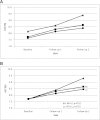
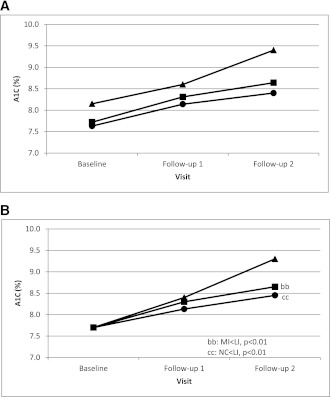
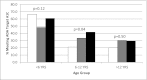
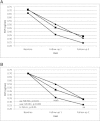
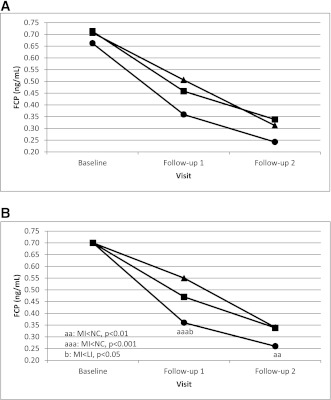
Of the 1,606 participants with a mean follow-up of 36 months, 51.7% changed to an MI regimen, 44.7% had NC, and 3.6% changed to an LI regimen. Participants who were younger, non-Hispanic white, and from families of higher income and parental education and who had private health insurance were more likely to be in MI or NC groups. Those in MI and NC groups had lower baseline A1C (P = 0.028) and smaller increase in A1C over time than LI (P < 0.01). Younger age, continuous subcutaneous insulin pump therapy, and change to MI were associated with higher probability of achieving target A1C levels.
CONCLUSIONS
Insulin regimens were intensified over time in over half of participants but varied by sociodemographic domains. As more intensive regimens were associated with better outcomes, early intensification of management may improve outcomes in all children with diabetes. Although intensification of insulin regimen is preferred, choice of insulin regimen must be individualized based on the child and family’s ability to comply with the prescribed plan.
-
Subjects:
-
Source:Diabetes Care. 2013; 36(1):27-33.
-
Pubmed ID:22961571
-
Pubmed Central ID:PMC3526205
-
Document Type:
-
Funding:1U18DP002709/DP/NCCDPHP CDC HHS/United States ; 1UL1RR026314-01/RR/NCRR NIH HHS/United States ; M01RR00037/RR/NCRR NIH HHS/United States ; M01RR00069/RR/NCRR NIH HHS/United States ; P30 DK57516/DK/NIDDK NIH HHS/United States ; U01 DP000244/DP/NCCDPHP CDC HHS/United States ; U01 DP000245/DP/NCCDPHP CDC HHS/United States ; U01 DP000246/DP/NCCDPHP CDC HHS/United States ; U01 DP000247/DP/NCCDPHP CDC HHS/United States ; U01 DP000248/DP/NCCDPHP CDC HHS/United States ; U01 DP000250/DP/NCCDPHP CDC HHS/United States ; U01 DP000254/DP/NCCDPHP CDC HHS/United States ; U18DP000247-06A1/DP/NCCDPHP CDC HHS/United States ; U18DP002708-01/DP/NCCDPHP CDC HHS/United States ; U18DP002710-01/DP/NCCDPHP CDC HHS/United States ; U18DP002714/DP/NCCDPHP CDC HHS/United States ; U48/CCU419249/PHS HHS/United States ; U48/CCU519239/PHS HHS/United States ; U48/CCU819241-3/PHS HHS/United States ; U48/CCU919219/PHS HHS/United States ; U58/CCU019235-4/PHS HHS/United States ; U58CCU919256/PHS HHS/United States ; UL1 TR000077/TR/NCATS NIH HHS/United States ; UL1RR029882/RR/NCRR NIH HHS/United States
-
Volume:36
-
Issue:1
-
Collection(s):
-
Main Document Checksum:urn:sha256:8fad7de81bd943671183ab5db0365a5b0c7425464734310900c1d64b2f52c610
-
Download URL:
-
File Type:
 [PDF
- 804.86 KB
]
[PDF
- 804.86 KB
]
Supporting Files


 Was this page helpful?
 Found an issue?


CDC STACKS serves as an archival repository of CDC-published products including
scientific findings,
journal articles, guidelines, recommendations, or other public health information authored or
co-authored by CDC or funded partners.
As a repository, CDC STACKS retains documents in their original published format to ensure public access to scientific information.
As a repository, CDC STACKS retains documents in their original published format to ensure public access to scientific information.
You May Also Like
COLLECTION
CDC Public Access