


Travel-associated Antimicrobial Drug–Resistant Nontyphoidal Salmonellae, 2004–2009
Supporting Files
Public Domain

-
Apr 2014
-
File Language:
English
Details
-
Alternative Title:Emerg Infect Dis
-
Personal Author:
-
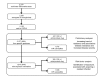
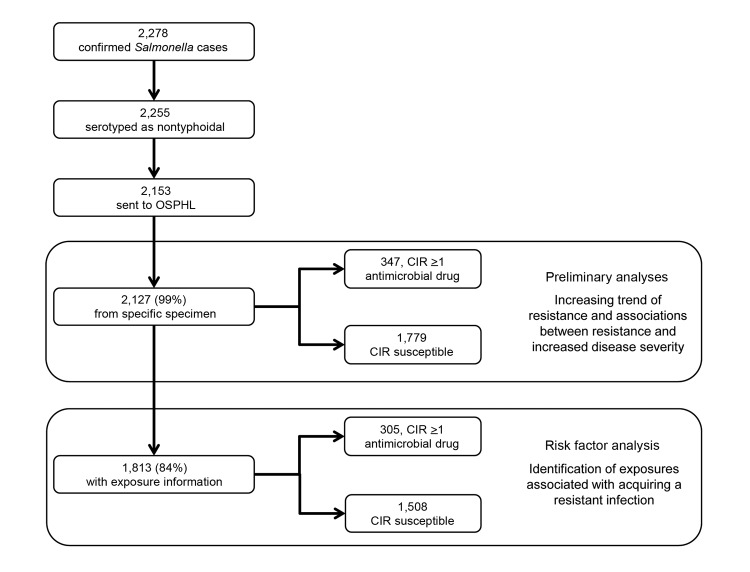
Description:To evaluate trends in and risk factors for acquisition of antimicrobial-drug resistant nontyphoidal Salmonella infections, we searched Oregon surveillance data for 2004-2009 for all culture-confirmed cases of salmonellosis. We defined clinically important resistance (CIR) as decreased susceptibility to ampicillin, ceftriaxone, ciprofloxacin, gentamicin, or trimethoprim/sulfamethoxazole. Of 2,153 cases, 2,127 (99%) nontyphoidal Salmonella isolates were obtained from a specific source (e.g., feces, urine, blood, or other normally sterile tissue) and had been tested for drug susceptibility. Among these, 347 (16%) isolates had CIR. The odds of acquiring CIR infection significantly increased each year. Hospitalization was more likely for patients with than without CIR infections. Among patients with isolates that had been tested, we analyzed data from 1,813 (84%) who were interviewed. Travel to eastern or Southeast Asia was associated with increased CIR. Isolates associated with outbreaks were less likely to have CIR. Future surveillance activities should evaluate resistance with respect to international travel.
-
Subjects:
-
Source:Emerg Infect Dis. 20(4):603-611.
-
Document Type:
-
Volume:20
-
Issue:4
-
Collection(s):
-
Main Document Checksum:urn:sha256:1571c54c1342a8a3793e393690433d344f0b59e0b278b447354f64574a0b4fcc
-
Download URL:
-
File Type:
 [PDF
- 668.53 KB
]
[PDF
- 668.53 KB
]
Supporting Files


File Language:
English
ON THIS PAGE

CDC STACKS serves as an archival repository of CDC-published products including
scientific findings,
journal articles, guidelines, recommendations, or other public health information authored or
co-authored by CDC or funded partners.
As a repository, CDC STACKS retains documents in their original published format to ensure public access to scientific information.
As a repository, CDC STACKS retains documents in their original published format to ensure public access to scientific information.
You May Also Like
COLLECTION
Emerging Infectious Diseases