



Effect of a Liver Cancer Education Program on Hepatitis B Screening Among Asian Americans in the Baltimore–Washington Metropolitan Area, 2009–2010
Supporting Files

-
Feb 06 2014
File Language:
English
Details
-
Journal Article:Preventing Chronic Disease (PCD)
-
Personal Author:
-
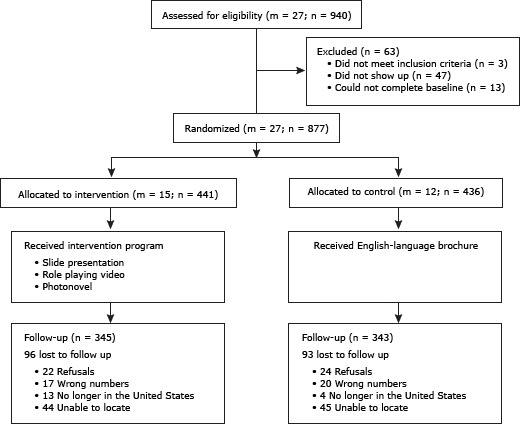
Description:Introduction ; Asian Americans have the highest incidence of hepatocellular carcinoma (HCC), the major form of primary liver cancer, of all ethnic groups in the United States. Chronic hepatitis B virus (HBV) infection is the most common cause of HCC, and as many as 1 in 10 foreign-born Asian Americans are chronically infected with HBV. We tested the effectiveness of a culturally tailored liver cancer education program for increasing screening for HBV among Chinese, Korean, and Vietnamese Americans residing in the Baltimore–Washington metropolitan area, from November 2009 through June 2010. ; Methods ; We used a cluster randomized controlled trial to recruit volunteer participants from community-based organizations (CBOs) in the Baltimore–Washington metropolitan area. We selected 877 participants by using a pretest survey. People were eligible to participate if they had not attended a hepatitis B–related education program in the past 5 years. The intervention group (n = 441) received a 30-minute educational program, and the control group (n = 436) received an educational brochure. After attending the educational program, the intervention group completed a post-education survey. Six months later, participants in both groups were followed up by telephone. Receipt of HBV screening was the outcome measure. ; Results ; Approximately 79% (n = 688) of participants completed the 6-month follow-up telephone survey. Among those who had not had HBV screening at baseline (n = 446), the adjusted odds of self-reported receipt of HBV screening at the 6-month follow-up to the educational program were significantly higher for the intervention group than for the control group (odds ratio = 5.13; 95% confidence interval, 3.14–8.39; P < .001). Chinese Americans and Vietnamese Americans had significantly higher odds of having HBV screening in the 6-month period than Korean Americans. ; Conclusion ; Culturally tailored education programs that increase liver cancer awareness can be effective in increasing HBV screening among underserved Asian American populations.
-
Subjects:
-
Source:Prev Chronic Dis. 11.
-
DOI:
-
ISSN:1545-1151
-
Document Type:
-
Funding:
-
Place as Subject:
-
Location:
-
Volume:11
-
Download URL:
-
File Type:
 [PDF - 581.79 KB]
 -
Collection(s):
-
Main Document Checksum:urn:sha-512:2d05cc58ffcfe4e171e46b0dfba7cf8eebae255a262a07b2a5d39147aecb983c415b0460b1231d9b420facdda82584f270193dcbbc22dfbdbb690c470d3bff17
Supporting Files


File Language:
English
 Was this page helpful?
 Found an issue?


CDC STACKS serves as an archival repository of CDC-published products including
scientific findings, journal articles, guidelines, recommendations, or other public health information authored or
co-authored by CDC or funded partners.
As a repository, CDC STACKS retains documents in their original published format to ensure public access to scientific information.
As a repository, CDC STACKS retains documents in their original published format to ensure public access to scientific information.
You May Also Like
COLLECTION
Preventing Chronic Disease