



Outbreak of Mass Sociogenic Illness in a School Feeding Program in Northwest Bangladesh, 2010
Supporting Files
Public Domain

-
Nov 14 2013
File Language:
English
Details
-
Alternative Title:PLoS One
-
Personal Author:Haque, Farhana ; Kundu, Subodh Kumar ; Islam, Md Saiful ; Hasan, S. M. Murshid ; Khatun, Asma ; Gope, Partha Sarathi ; Mahmud, Zahid Hayat ; Alamgir, A. S. M. ; Islam, M. Sirajul ; Rahman, Mahmudur ; Luby, Stephen P.
-
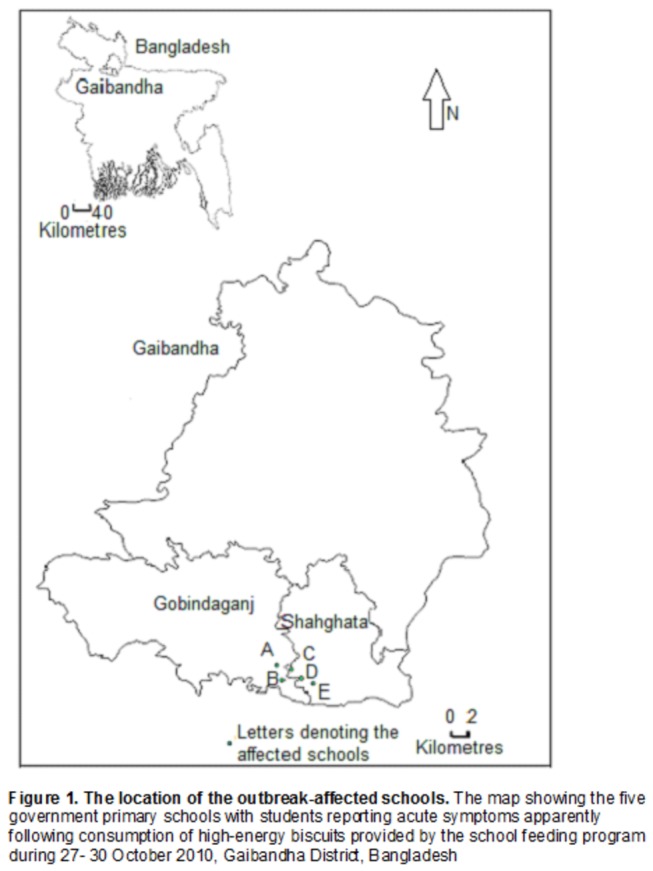
Description:Background ; In 2010, an acute illness outbreak was reported in school students eating high-energy biscuits supplied by the school feeding programme in northwest Bangladesh. We investigated this outbreak to describe the illness in terms of person, place and time, develop the timeline of events, and determine the cause and community perceptions regarding the outbreak. ; Methods ; We defined case-patients as students from affected schools reporting any two symptoms including abdominal pain, heartburn, bitter taste, and headache after eating biscuits on the day of illness. We conducted in-depth interviews and group discussions with students, teachers, parents and community members to explore symptoms, exposures, and community perceptions. We conducted a questionnaire survey among case-patients to determine the symptoms and ascertain food items eaten 12 hours before illness onset, and microbiological and environmental investigations. ; Results ; Among 142 students seeking hospital care, 44 students from four schools qualified as case-patients. Of these, we surveyed 30 who had a mean age of 9 years; 70% (21/30) were females. Predominant symptoms included abdominal pain (93%), heartburn (90%), and bitter taste (57%). All students recovered within a few hours. No pathogenic Vibrio cholerae, Shigella or Salmonellaspp. were isolated from collected stool samples. We found no rancid biscuits in schools and storage sites. The female index case perceived the unusually darker packet label as a “devil’s deed” that made the biscuits poisonous. Many students, parents and community members reported concerns about rumors of students dying from biscuit poisoning. ; Conclusions ; Rapid onset, followed by rapid recovery of symptoms; female preponderance; inconsistent physical, microbiological and environmental findings suggested mass sociogenic illness rather than a foodborne or toxic cause. Rumours of student deaths heightening community anxiety apparently propagated this outbreak. Sharing investigation results and reassuring students and parents through health communication campaigns could limit similar future outbreaks and help retain beneficiaries’ trust on nutrition supplementation initiatives.
-
Subjects:
-
Source:PLoS One. 2013; 8(11).
-
Document Type:
-
Place as Subject:
-
Volume:8
-
Issue:11
-
Download URL:
-
File Type:
 [PDF - 334.65 KB]
 -
Collection(s):
-
Main Document Checksum:urn:sha256:7abcb92c4e13e3321952e93390068c97c50b51bb02823ed36afff3d2c5eda323
Supporting Files


File Language:
English
 Was this page helpful?
 Found an issue?

CDC STACKS serves as an archival repository of CDC-published products including
scientific findings, journal articles, guidelines, recommendations, or other public health information authored or
co-authored by CDC or funded partners.
As a repository, CDC STACKS retains documents in their original published format to ensure public access to scientific information.
As a repository, CDC STACKS retains documents in their original published format to ensure public access to scientific information.
You May Also Like
COLLECTION
CDC Public Access