


Sensitive and Direct Detection of Receptor Binding Specificity of Highly Pathogenic Avian Influenza A Virus in Clinical Samples
Supporting Files
Public Domain

-
Oct 18 2013
-
Details
-
Alternative Title:PLoS One
-
Personal Author:
-
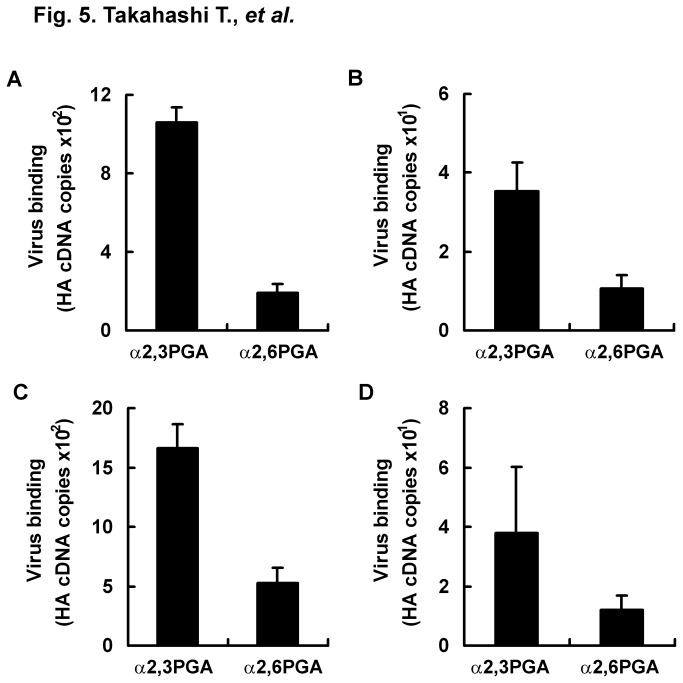
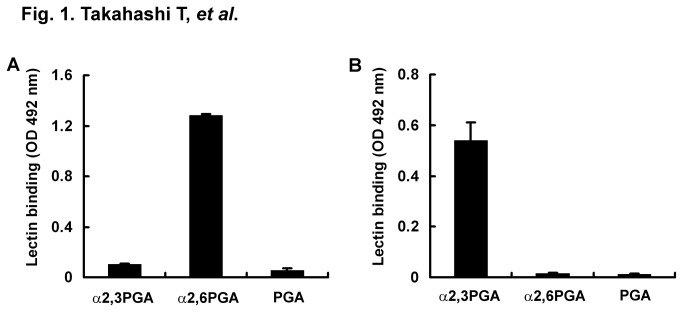
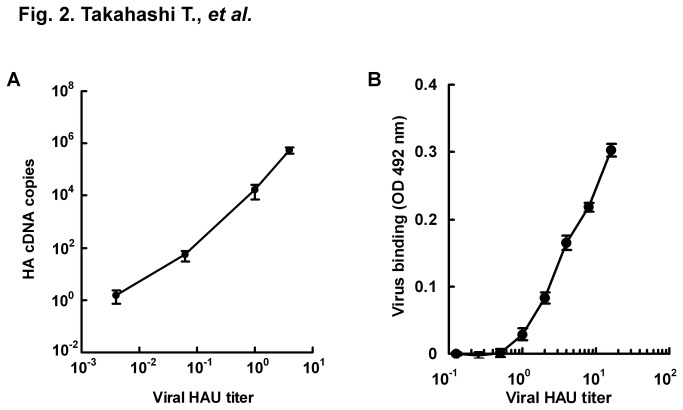
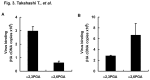
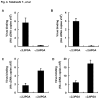
Description:Influenza A virus (IAV) recognizes two types of N-acetylneuraminic acid (Neu5Ac) by galactose (Gal) linkages, Neu5Acα2,3Gal and Neu5Acα2,6Gal. Avian IAV preferentially binds to Neu5Acα2,3Gal linkage, while human IAV preferentially binds to Neu5Acα2,6Gal linkage, as a virus receptor. Shift in receptor binding specificity of avian IAV from Neu5Acα2,3Gal linkage to Neu5Acα2,6Gal linkage is generally believed to be a critical factor for its transmission ability among humans. Surveillance of this shift of highly pathogenic H5N1 avian IAV (HPAI) is thought to be a very important for prediction and prevention of a catastrophic pandemic of HPAI among humans. In this study, we demonstrated that receptor binding specificity of IAV bound to sialo-glycoconjugates was sensitively detected by quantifying the HA gene with real-time reverse-transcription-PCR. The new assay enabled direct detection of receptor binding specificity of HPAIs in chicken clinical samples including trachea and cloaca swabs in only less than 4 h.
-
Subjects:
-
Source:PLoS One. 2013; 8(10).
-
Document Type:
-
Volume:8
-
Issue:10
-
Collection(s):
-
Main Document Checksum:urn:sha256:6dd4f8ed2876d93db430aefc8e0997b4e3cae8cca15fcb9739b59c8c17f64879
-
Download URL:
-
File Type:
 [PDF
- 685.23 KB
]
[PDF
- 685.23 KB
]
Supporting Files


ON THIS PAGE



CDC STACKS serves as an archival repository of CDC-published products including
scientific findings,
journal articles, guidelines, recommendations, or other public health information authored or
co-authored by CDC or funded partners.
As a repository, CDC STACKS retains documents in their original published format to ensure public access to scientific information.
As a repository, CDC STACKS retains documents in their original published format to ensure public access to scientific information.
You May Also Like
COLLECTION
CDC Public Access