



Cryptococcus gattii in the United States: Genotypic Diversity of Human and Veterinary Isolates
Supporting Files
Public Domain

-
Sep 03 2013
File Language:
English
Details
-
Alternative Title:PLoS One
-
Personal Author:
-
Description:Background
Cryptococcusgattii infections are being reported in the United States (US) with increasing frequency. Initially, US reports were primarily associated with an ongoing C. gattii outbreak in the Pacific Northwest (PNW) states of Washington and Oregon, starting in 2004. However, reports of C. gattii infections in patients from other US states have been increasing since 2009. Whether this is due to increasing frequency of disease, greater recognition within the clinical community, or both is currently unknown.
Methodology/Principal Findings
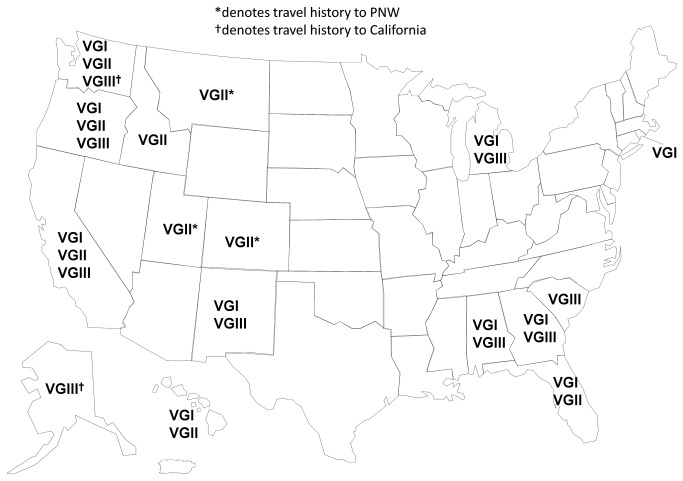
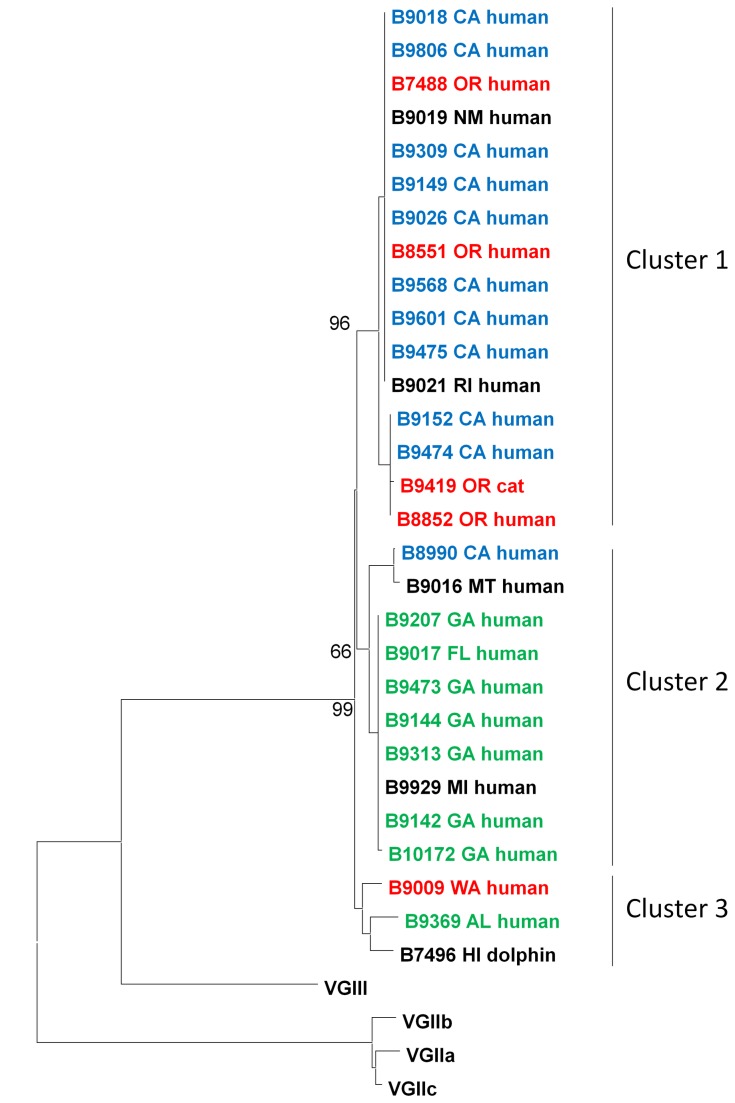
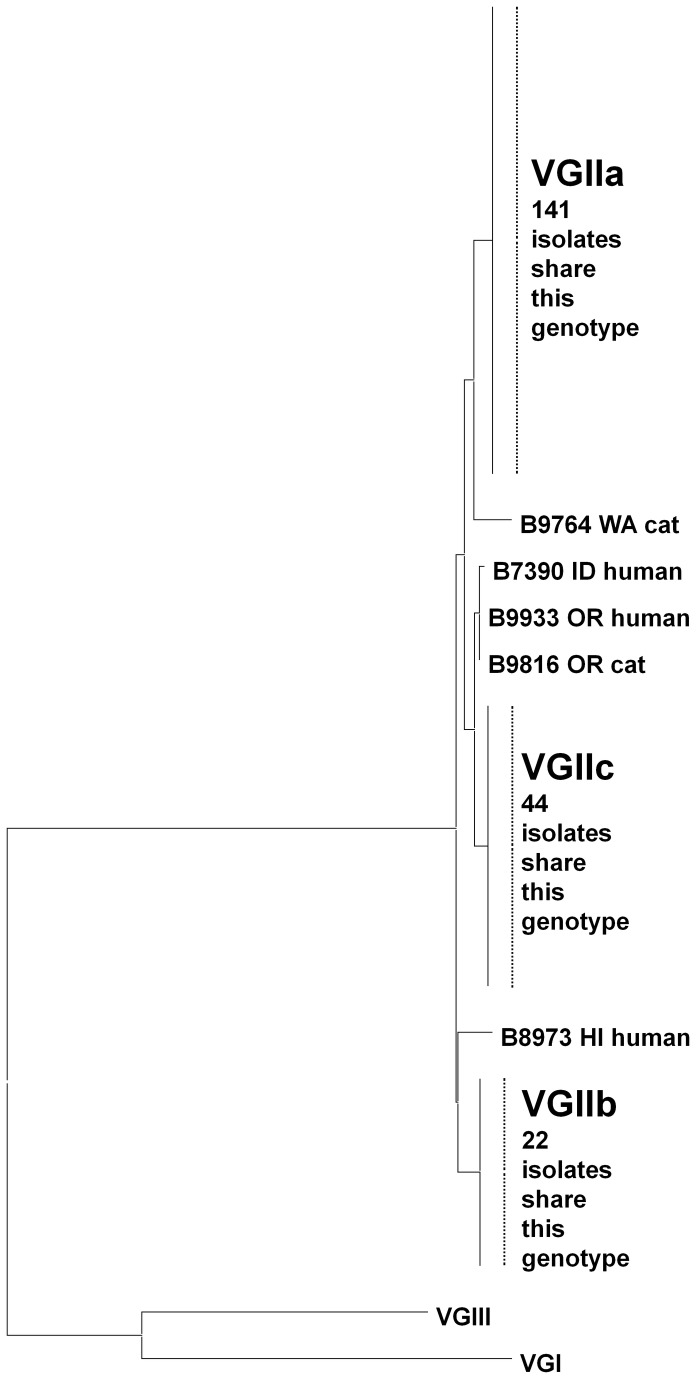
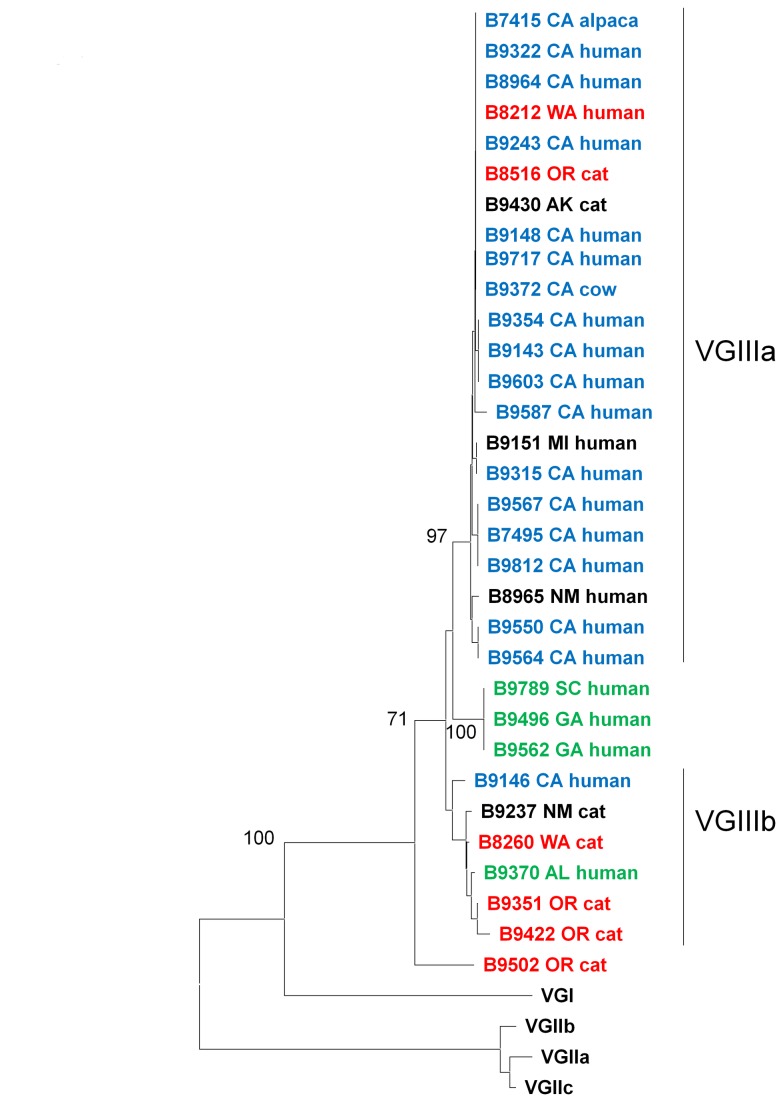
During 2005–2013, a total of 273 C. gattii isolates from human and veterinary sources in 16 US states were collected. Of these, 214 (78%) were from the Pacific Northwest (PNW) and comprised primarily the clonal C. gattii genotypes VGIIa (64%), VGIIc (21%) and VGIIb (9%). The 59 isolates from outside the PNW were predominantly molecular types VGIII (44%) and VGI (41%). Genotyping using multilocus sequence typing revealed small clusters, including a cluster of VGI isolates from the southeastern US, and an unrelated cluster of VGI isolates and a large cluster of VGIII isolates from California. Most of the isolates were mating type MATα, including all of the VGII isolates, but one VGI and three VGIII isolates were mating type MATa.
Conclusions/Significance
We provide the most comprehensive report to date of genotypic diversity of US C. gattii isolates both inside and outside of the PNW. C. gattii may have multiple endemic regions in the US, including a previously-unrecognized endemic region in the southeast. Regional clusters exist both in California and the Southeastern US. VGII strains associated with the PNW outbreak do not appear to have spread substantially beyond the PNW. -
Subjects:
-
Source:PLoS One. 2013; 8(9).
-
Document Type:
-
Place as Subject:
-
Volume:8
-
Issue:9
-
Download URL:
-
File Type:
 [PDF - 1.31 MB]
 -
Collection(s):
-
Main Document Checksum:urn:sha256:bbf5488f72cc090f1299bcf000ec1939baf70dc116b138ea6754ec29311086d4
Supporting Files


File Language:
English
 Was this page helpful?
 Found an issue?



CDC STACKS serves as an archival repository of CDC-published products including
scientific findings, journal articles, guidelines, recommendations, or other public health information authored or
co-authored by CDC or funded partners.
As a repository, CDC STACKS retains documents in their original published format to ensure public access to scientific information.
As a repository, CDC STACKS retains documents in their original published format to ensure public access to scientific information.
You May Also Like
COLLECTION
CDC Public Access