


Antibody Responses against Pneumocystis jirovecii in Health Care Workers Over Time
Supporting Files
Public Domain

-
Oct 2013
-
Details
-
Alternative Title:Emerg Infect Dis
-
Personal Author:
-
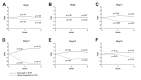
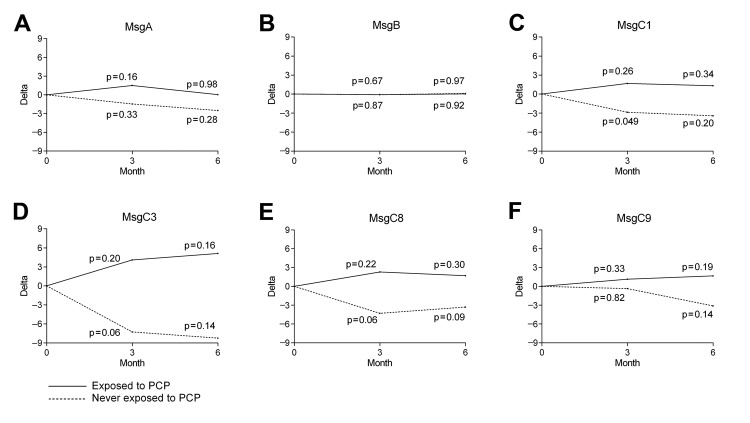
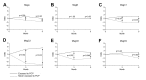
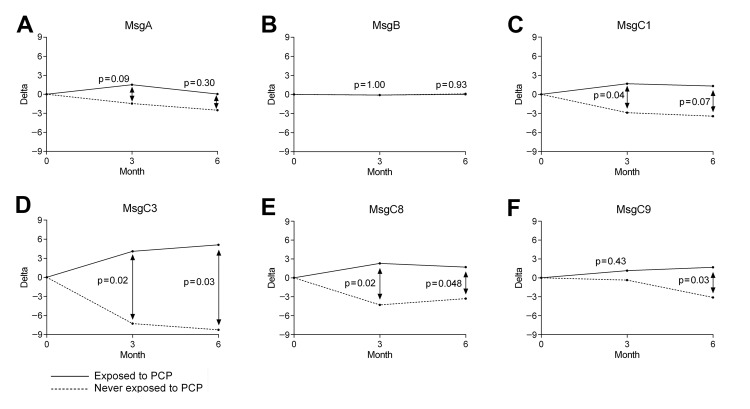
Description:In a previous cross-sectional study, we showed that clinical staff working in a hospital had significantly higher antibody levels than nonclinical staff to Pneumocystis jirovecii. We conducted a longitudinal study, described here, to determine whether occupation and self-reported exposure to a patient with P. jirovecii pneumonia were associated with antibody levels to P. jirovecii over time. Baseline and quarterly serum specimens were collected and analyzed by using an ELISA that targeted different variants of the Pneumocystis major surface glycoprotein (MsgA, MsgB, MsgC1, MsgC3, MsgC8, and MsgC9). Clinical staff had significantly higher estimated geometric mean antibody levels against MsgC1 and MsgC8 than did nonclinical staff over time. Significant differences were observed when we compared the change in antibody levels to the different MsgC variants for staff who were and were not exposed to P. jirovecii pneumonia-infected patients. MsgC variants may serve as indicators of exposure to P. jirovecii in immunocompetent persons.
-
Subjects:
-
Source:Emerg Infect Dis. 19(10):1613-1620.
-
Document Type:
-
Volume:19
-
Issue:10
-
Collection(s):
-
Main Document Checksum:urn:sha256:d267108ddcfd3b12e62bb4c9b37abe37547d8e69822022c2b2016e5df0bd983f
-
Download URL:
-
File Type:
 [PDF
- 648.86 KB
]
[PDF
- 648.86 KB
]
Supporting Files


ON THIS PAGE

CDC STACKS serves as an archival repository of CDC-published products including
scientific findings,
journal articles, guidelines, recommendations, or other public health information authored or
co-authored by CDC or funded partners.
As a repository, CDC STACKS retains documents in their original published format to ensure public access to scientific information.
As a repository, CDC STACKS retains documents in their original published format to ensure public access to scientific information.
You May Also Like
COLLECTION
Emerging Infectious Diseases