


Antigenic and Molecular Characterization of Avian Influenza A(H9N2) Viruses, Bangladesh
Supporting Files
Public Domain

-
2013
-
File Language:
English
Details
-
Alternative Title:Emerg Infect Dis
-
Personal Author:Shanmuganatham, Karthik ; Feeroz, Mohammed M. ; Jones-Engel, Lisa ; Smith, Gavin J.D. ; Fourment, Mathieu ; Walker, David ; McClenaghan, Laura ; Alam, S.M. Rabiul ; Hasan, M. Kamrul ; Seiler, Patrick ; Franks, John ; Danner, Angie ; Barman, Subrata ; McKenzie, Pamela ; Krauss, Scott ; Webby, Richard J. ; Webster, Robert G.
-
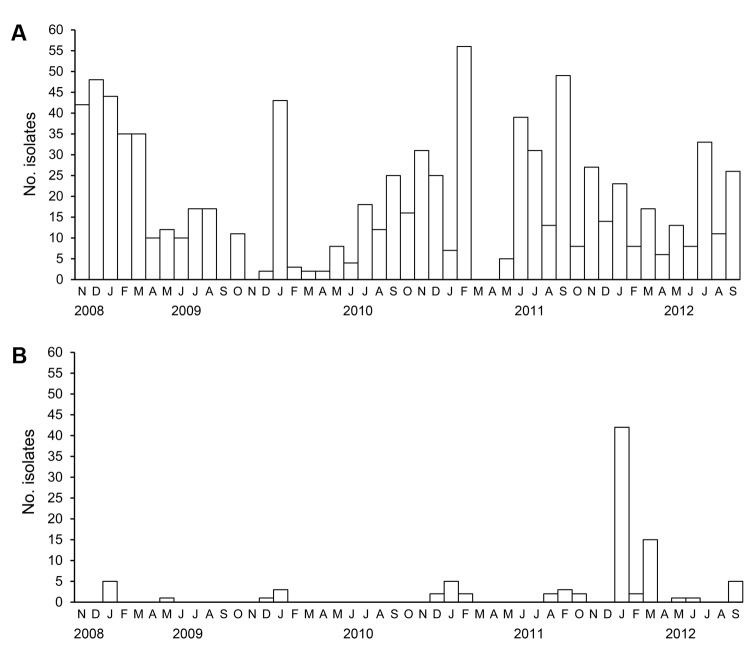
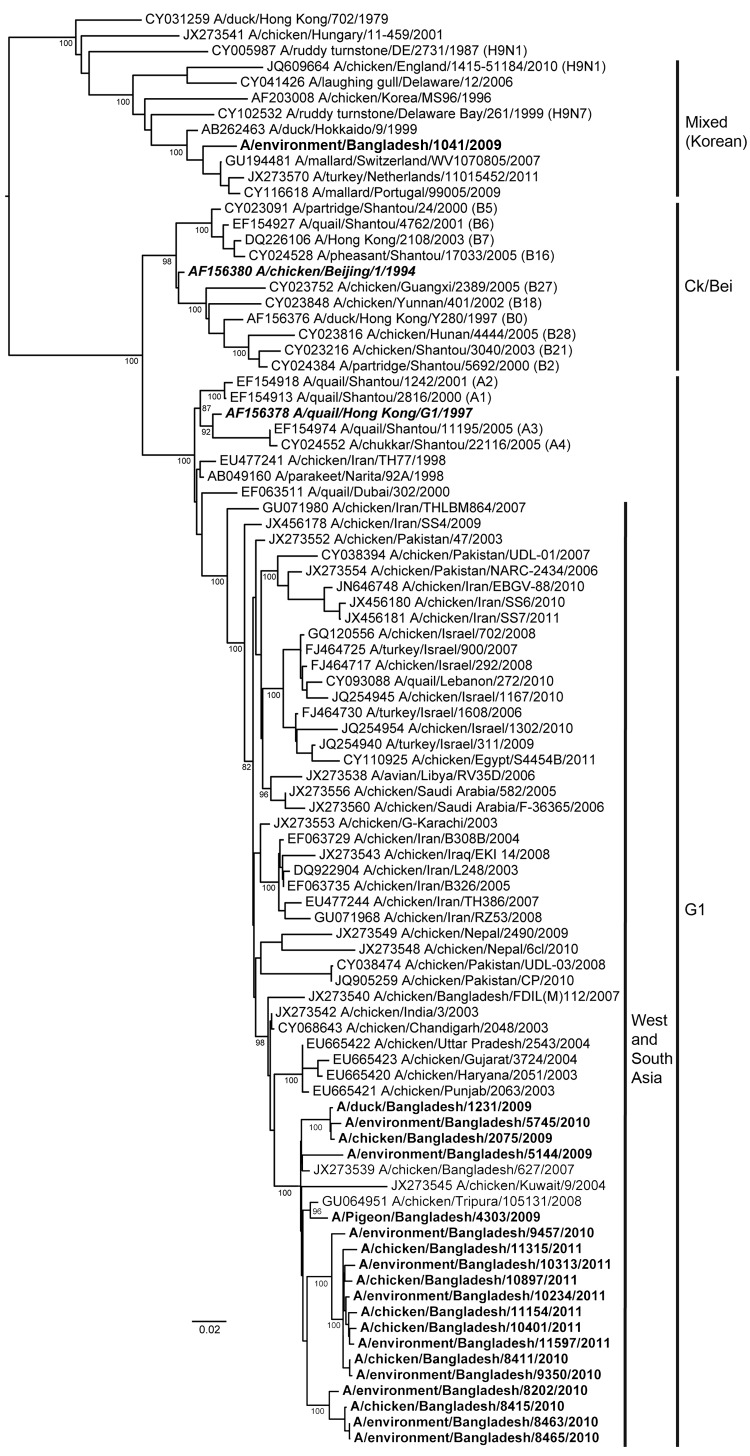
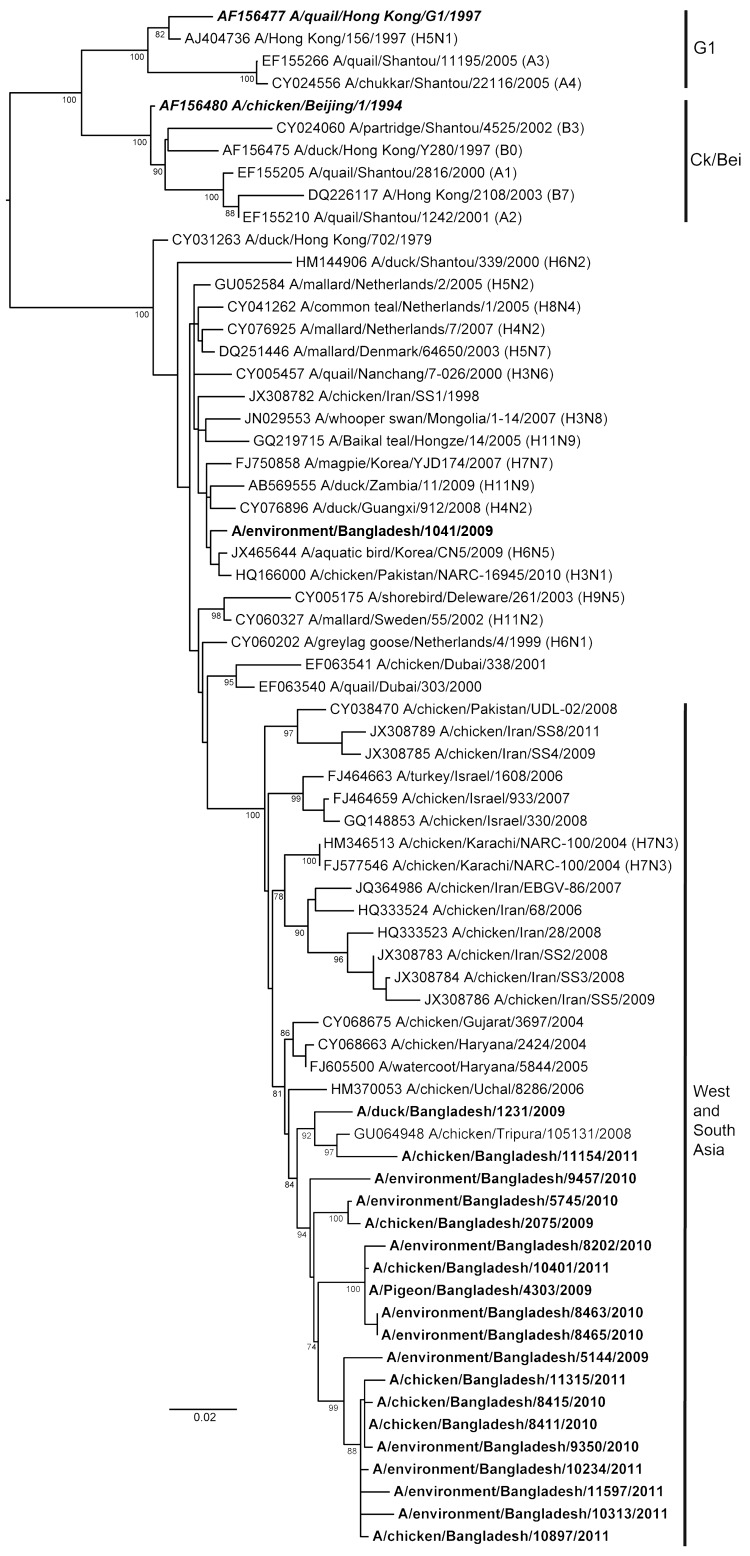
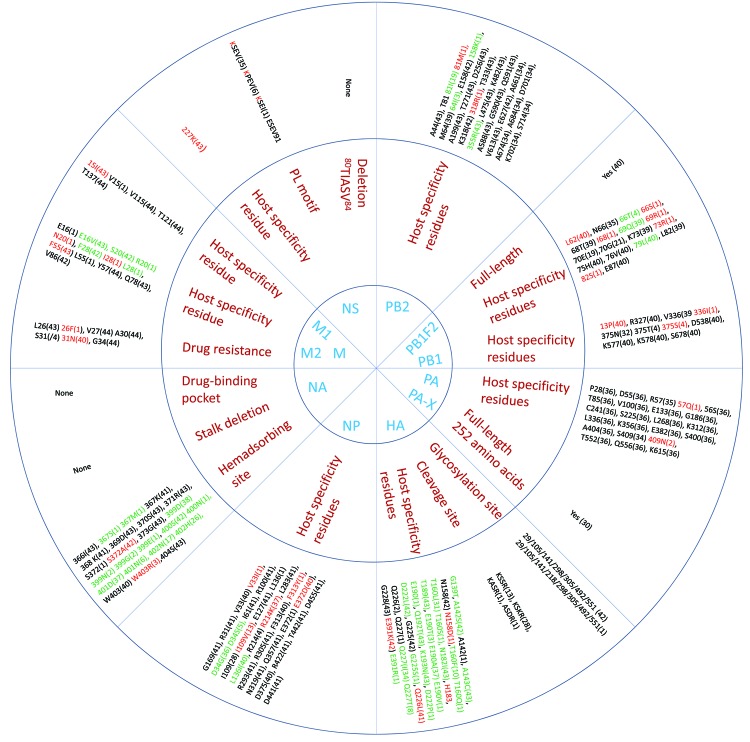
Description:Human infection with avian influenza A(H9N2) virus was identified in Bangladesh in 2011. Surveillance for influenza viruses in apparently healthy poultry in live-bird markets in Bangladesh during 2008-2011 showed that subtype H9N2 viruses are isolated year-round, whereas highly pathogenic subtype H5N1 viruses are co-isolated with subtype H9N2 primarily during the winter months. Phylogenetic analysis of the subtype H9N2 viruses showed that they are reassortants possessing 3 gene segments related to subtype H7N3; the remaining gene segments were from the subtype H9N2 G1 clade. We detected no reassortment with subtype H5N1 viruses. Serologic analyses of subtype H9N2 viruses from chickens revealed antigenic conservation, whereas analyses of viruses from quail showed antigenic drift. Molecular analysis showed that multiple mammalian-specific mutations have become fixed in the subtype H9N2 viruses, including changes in the hemagglutinin, matrix, and polymerase proteins. Our results indicate that these viruses could mutate to be transmissible from birds to mammals, including humans.
-
Subjects:
-
Source:Emerg Infect Dis. 19(9):1393-1402.
-
Document Type:
-
Place as Subject:
-
Location:
-
Volume:19
-
Issue:9
-
Collection(s):
-
Main Document Checksum:urn:sha256:72f5444738665896820e27f888ff6e426b889b429471293ffc1bd4f40f24817c
-
Download URL:
-
File Type:
 [PDF
- 721.44 KB
]
[PDF
- 721.44 KB
]
Supporting Files


File Language:
English
ON THIS PAGE


CDC STACKS serves as an archival repository of CDC-published products including
scientific findings,
journal articles, guidelines, recommendations, or other public health information authored or
co-authored by CDC or funded partners.
As a repository, CDC STACKS retains documents in their original published format to ensure public access to scientific information.
As a repository, CDC STACKS retains documents in their original published format to ensure public access to scientific information.
You May Also Like
COLLECTION
Emerging Infectious Diseases