



Gastric Bypass Surgeries in New Hampshire, 1996-2007
Supporting Files

-
Mar 15 2012
File Language:
English
Details
-
Journal Article:Preventing Chronic Disease (PCD)
-
Personal Author:
-
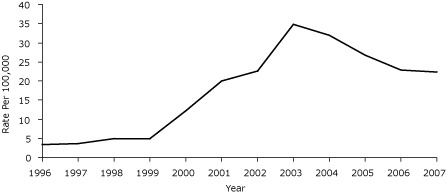
Description:Introduction ; Obesity is a national epidemic. Gastric bypass surgery may be the only option that provides significant long-term weight loss for people who are morbidly obese (body mass index BMI ≥40 kg/m2) or for people who have a BMI of 35 or higher and have an obesity-related comorbidity. The objective of this study was to assess trends in gastric bypass surgery in New Hampshire. ; Methods ; Data from 1996 to 2007 from the New Hampshire Inpatient Hospital Discharge data set were analyzed. Records for patients with a gastric bypass surgery code were identified, and data on patients and hospitalizations were collected. A joinpoint regression model was used to analyze trends in surgery rates. Differences between patients and payer types were analyzed by using the Cochran–Mantel–Haenszel χ2 test. ; Results ; The annual rate of gastric bypass surgery increased significantly from 3.3 to 22.4 per 100,000 adults between 1996 and 2007. The in-hospital death rate decreased significantly from 11% in 1996 to 1% in 2007. A greater proportion of women (78.1% during the study period) than men had this surgery. The average charge of a surgery decreased significantly from $44,484 in 1996 to $43,907 in 2007; by 2007, total annual charges were $13.9 million. Since 1996, private or "other" payers have been charged for nearly 80% of the total discharges. ; Conclusion ; The number of gastric bypass surgeries has increased in New Hampshire, and so have their cost. These increases may reflect a shortage in effective primary care and preventive measures to address the obesity epidemic.
-
Subjects:
-
Source:Prev Chronic Dis. 2012; 9.
-
ISSN:1545-1151
-
Pubmed ID:22420315
-
Pubmed Central ID:PMC3372985
-
Document Type:
-
Funding:
-
Place as Subject:
-
Location:
-
Volume:9
-
Download URL:
-
File Type:
 [PDF - 165.79 KB]
 -
Collection(s):
-
Main Document Checksum:urn:sha-512:f2b093fbffc54e5b7a43315e6a7c17d6d39fe62946ed940723a30546ec76405737a07a8f517819b4dda71d9c09002bdfc78c04df92e96a930eecd464adf002a3
Supporting Files


File Language:
English
 Was this page helpful?
 Found an issue?

CDC STACKS serves as an archival repository of CDC-published products including
scientific findings, journal articles, guidelines, recommendations, or other public health information authored or
co-authored by CDC or funded partners.
As a repository, CDC STACKS retains documents in their original published format to ensure public access to scientific information.
As a repository, CDC STACKS retains documents in their original published format to ensure public access to scientific information.
You May Also Like
COLLECTION
Preventing Chronic Disease