


A High Diversity of Eurasian Lineage Low Pathogenicity Avian Influenza A Viruses Circulate among Wild Birds Sampled in Egypt
Supporting Files
Public Domain

-
Jul 12 2013
-
File Language:
English
Details
-
Alternative Title:PLoS One
-
Personal Author:Gerloff, Nancy A. ; Jones, Joyce ; Simpson, Natosha ; Balish, Amanda ; ElBadry, Maha Adel ; Baghat, Verina ; Rusev, Ivan ; de Mattos, Cecilia C. ; de Mattos, Carlos A. ; Zonkle, Luay Elsayed Ahmed ; Kis, Zoltan ; Davis, C. Todd ; Yingst, Sam ; Cornelius, Claire ; Soliman, Atef ; Mohareb, Emad ; Klimov, Alexander ; Donis, Ruben O.
-
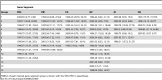
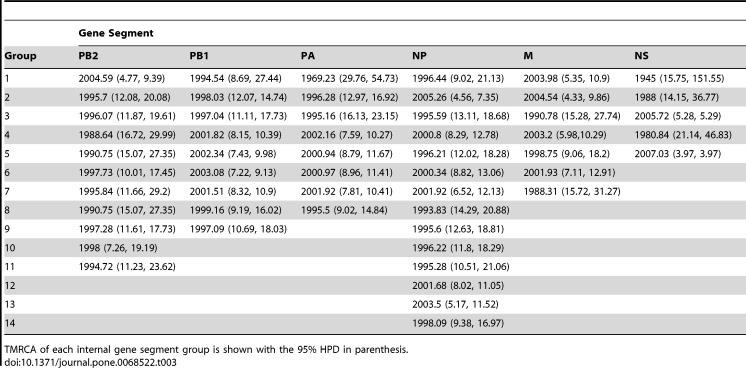
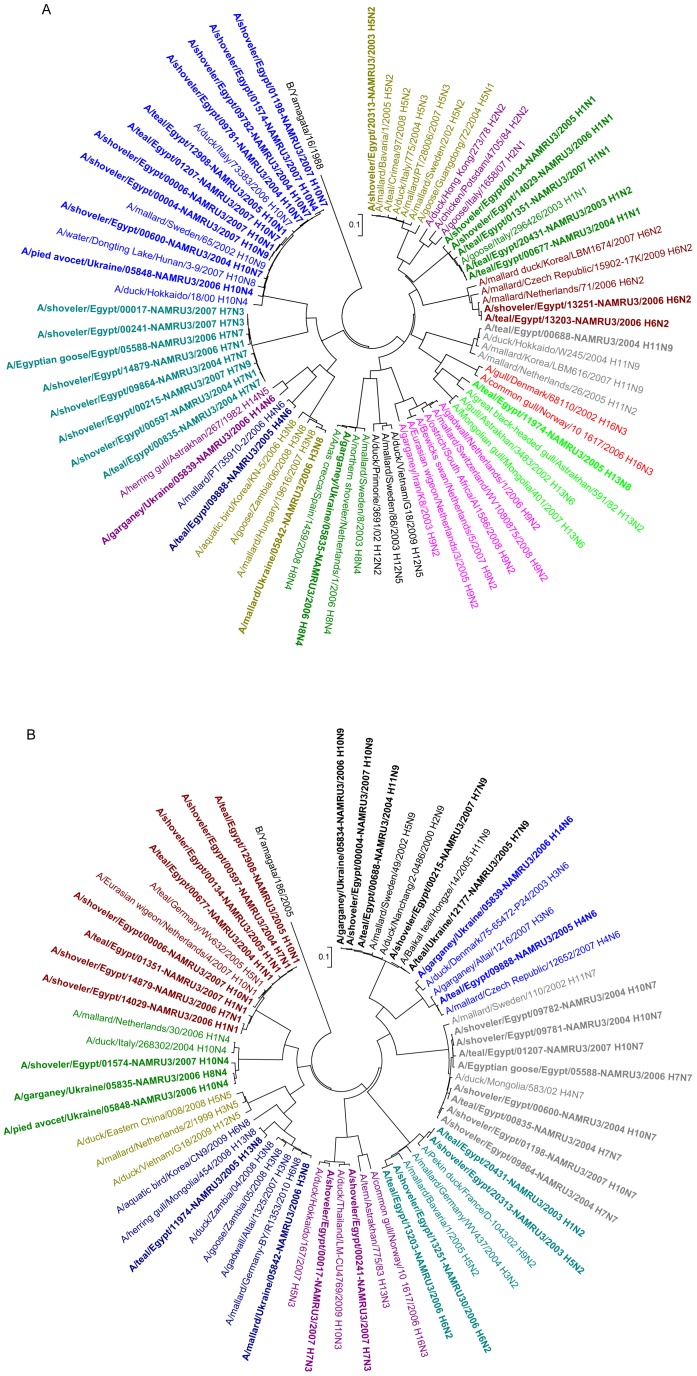
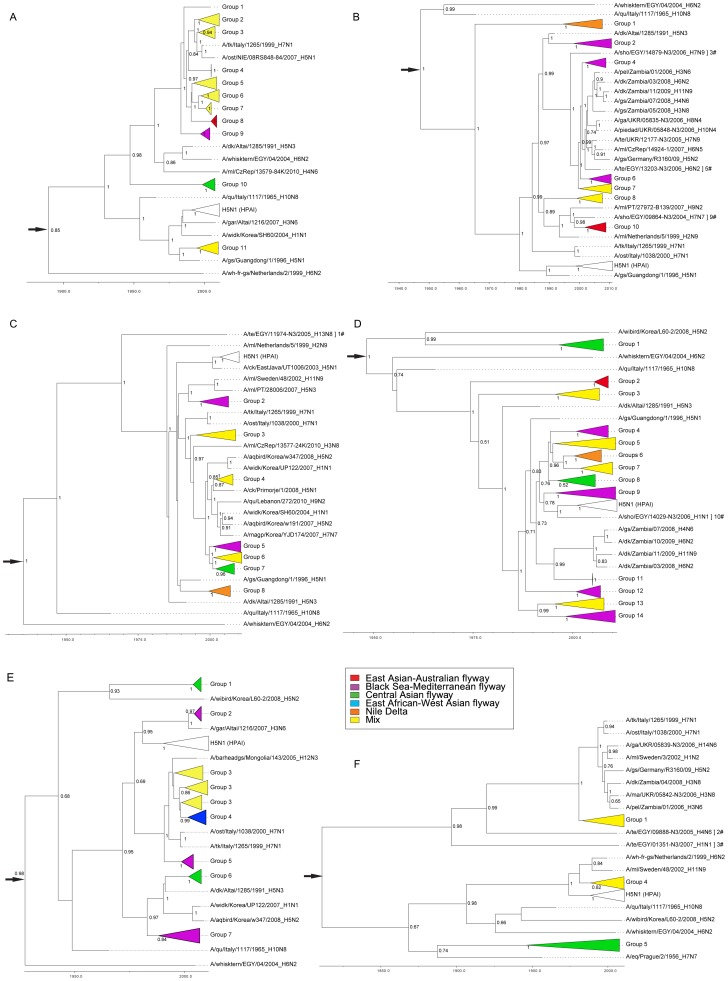
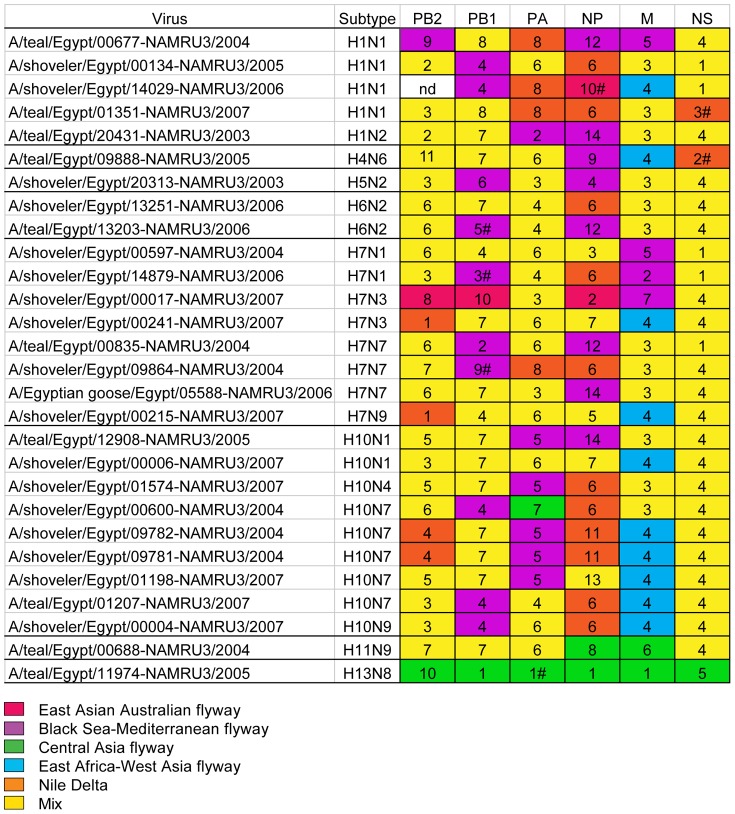
Description:Surveillance for influenza A viruses in wild birds has increased substantially as part of efforts to control the global movement of highly pathogenic avian influenza A (H5N1) virus. Studies conducted in Egypt from 2003 to 2007 to monitor birds for H5N1 identified multiple subtypes of low pathogenicity avian influenza A viruses isolated primarily from migratory waterfowl collected in the Nile Delta. Phylogenetic analysis of 28 viral genomes was performed to estimate their nearest ancestors and identify possible reassortants. Migratory flyway patterns were included in the analysis to assess gene flow between overlapping flyways. Overall, the viruses were most closely related to Eurasian, African and/or Central Asian lineage low pathogenicity viruses and belonged to 15 different subtypes. A subset of the internal genes seemed to originate from specific flyways (Black Sea-Mediterranean, East African-West Asian). The remaining genes were derived from a mixture of viruses broadly distributed across as many as 4 different flyways suggesting the importance of the Nile Delta for virus dispersal. Molecular clock date estimates suggested that the time to the nearest common ancestor of all viruses analyzed ranged from 5 to 10 years, indicating frequent genetic exchange with viruses sampled elsewhere. The intersection of multiple migratory bird flyways and the resulting diversity of influenza virus gene lineages in the Nile Delta create conditions favoring reassortment, as evident from the gene constellations identified by this study. In conclusion, we present for the first time a comprehensive phylogenetic analysis of full genome sequences from low pathogenic avian influenza viruses circulating in Egypt, underscoring the significance of the region for viral reassortment and the potential emergence of novel avian influenza A viruses, as well as representing a highly diverse influenza A virus gene pool that merits continued monitoring.
-
Subjects:
-
Source:PLoS One. 2013; 8(7).
-
Document Type:
-
Place as Subject:
-
Volume:8
-
Issue:7
-
Collection(s):
-
Main Document Checksum:urn:sha256:9bd73947d220de7842a509fc65741db224580a53e885d0fd7a98a5008a67bdc1
-
Download URL:
-
File Type:
 [PDF
- 1.24 MB
]
[PDF
- 1.24 MB
]
Supporting Files


File Language:
English
ON THIS PAGE






CDC STACKS serves as an archival repository of CDC-published products including
scientific findings,
journal articles, guidelines, recommendations, or other public health information authored or
co-authored by CDC or funded partners.
As a repository, CDC STACKS retains documents in their original published format to ensure public access to scientific information.
As a repository, CDC STACKS retains documents in their original published format to ensure public access to scientific information.
You May Also Like
COLLECTION
CDC Public Access