


Microevolution of Highly Pathogenic Avian Influenza A(H5N1) Viruses Isolated from Humans, Egypt, 2007–2011
Supporting Files
Public Domain

-
Jan 2013
-
File Language:
English
Details
-
Alternative Title:Emerg Infect Dis
-
Personal Author:Younan, Mary ; Poh, Mee Kian ; Elassal, Emad ; Davis, Todd ; Rivailler, Pierre ; Balish, Amanda L. ; Simpson, Natosha ; Jones, Joyce ; Deyde, Varough ; Loughlin, Rosette ; Perry, Ije ; Gubareva, Larisa ; ElBadry, Maha A. ; Truelove, Shaun ; Gaynor, Anne M. ; Mohareb, Emad ; Amin, Magdy ; Cornelius, Claire ; Pimentel, Guillermo ; Earhart, Kenneth ; Naguib, Amel ; Abdelghani, Ahmed S. ; Refaey, Samir ; Klimov, Alexander I. ; Donis, Ruben O. ; Kandeel, Amr
-
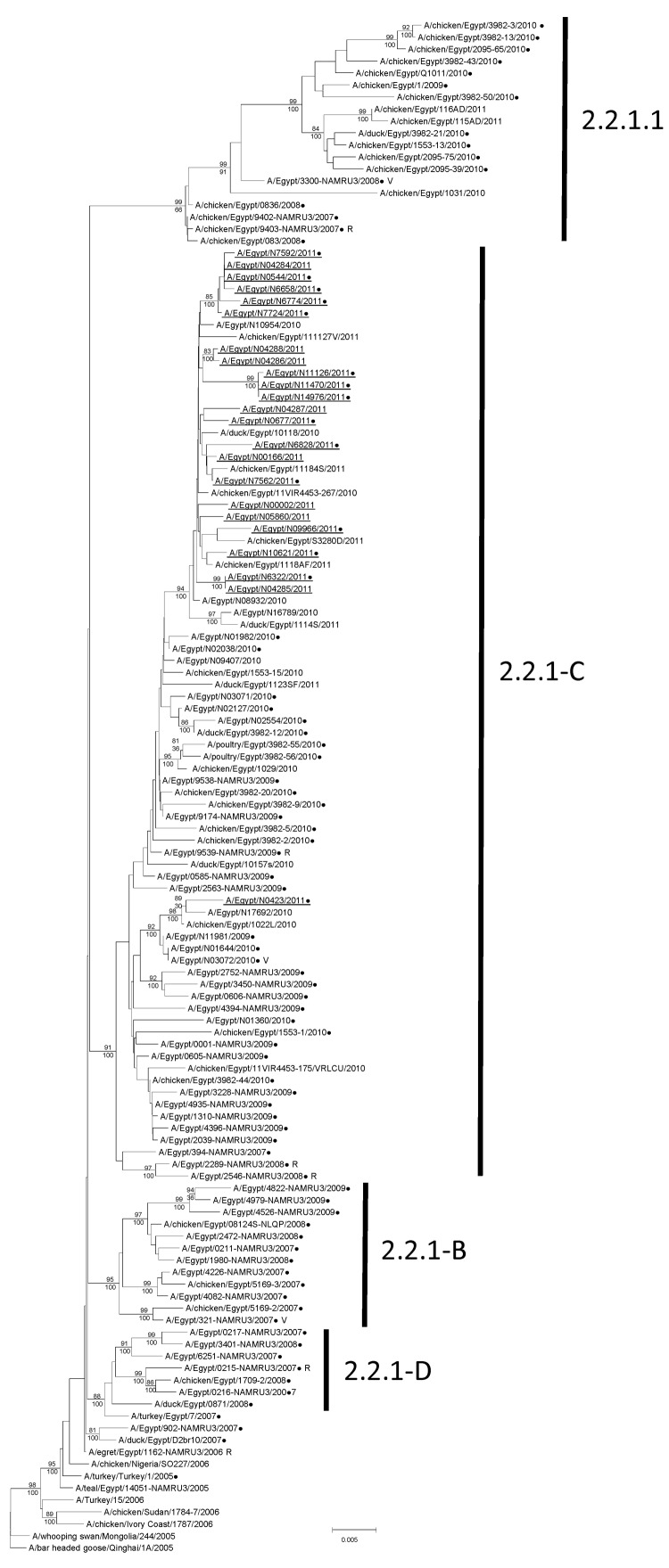
Description:We analyzed highly pathogenic avian influenza A(H5N1) viruses isolated from humans infected in Egypt during 2007-2011. All analyzed viruses evolved from the lineage of subtype H5N1 viruses introduced into Egypt in 2006; we found minimal evidence of reassortment and no exotic introductions. The hemagglutinin genes of the viruses from 2011 formed a monophyletic group within clade 2.2.1 that also included human viruses from 2009 and 2010 and contemporary viruses from poultry; this finding is consistent with zoonotic transmission. Although molecular markers suggestive of decreased susceptibility to antiviral drugs were detected sporadically in the neuraminidase and matrix 2 proteins, functional neuraminidase inhibition assays did not identify resistant viruses. No other mutations suggesting a change in the threat to public health were detected in the viral proteomes. However, a comparison of representative subtype H5N1 viruses from 2011 with older subtype H5N1 viruses from Egypt revealed substantial antigenic drift.
-
Subjects:
-
Source:Emerg Infect Dis. 19(1):43-50.
-
Document Type:
-
Place as Subject:
-
Location:
-
Volume:19
-
Issue:1
-
Collection(s):
-
Main Document Checksum:urn:sha256:13843619921c0b2fc8e7a7b7d3d6d3f0e00772457bff1c11efc86dac695b43c2
-
Download URL:
-
File Type:
 [PDF
- 610.04 KB
]
[PDF
- 610.04 KB
]
Supporting Files


File Language:
English
ON THIS PAGE

CDC STACKS serves as an archival repository of CDC-published products including
scientific findings,
journal articles, guidelines, recommendations, or other public health information authored or
co-authored by CDC or funded partners.
As a repository, CDC STACKS retains documents in their original published format to ensure public access to scientific information.
As a repository, CDC STACKS retains documents in their original published format to ensure public access to scientific information.
You May Also Like
COLLECTION
Emerging Infectious Diseases