


Nipah Virus Infection Outbreak with Nosocomial and Corpse-to-Human Transmission, Bangladesh
Supporting Files

-
Feb 2013
-
File Language:
English
Details
-
Alternative Title:Emerg Infect Dis
-
Personal Author:
-
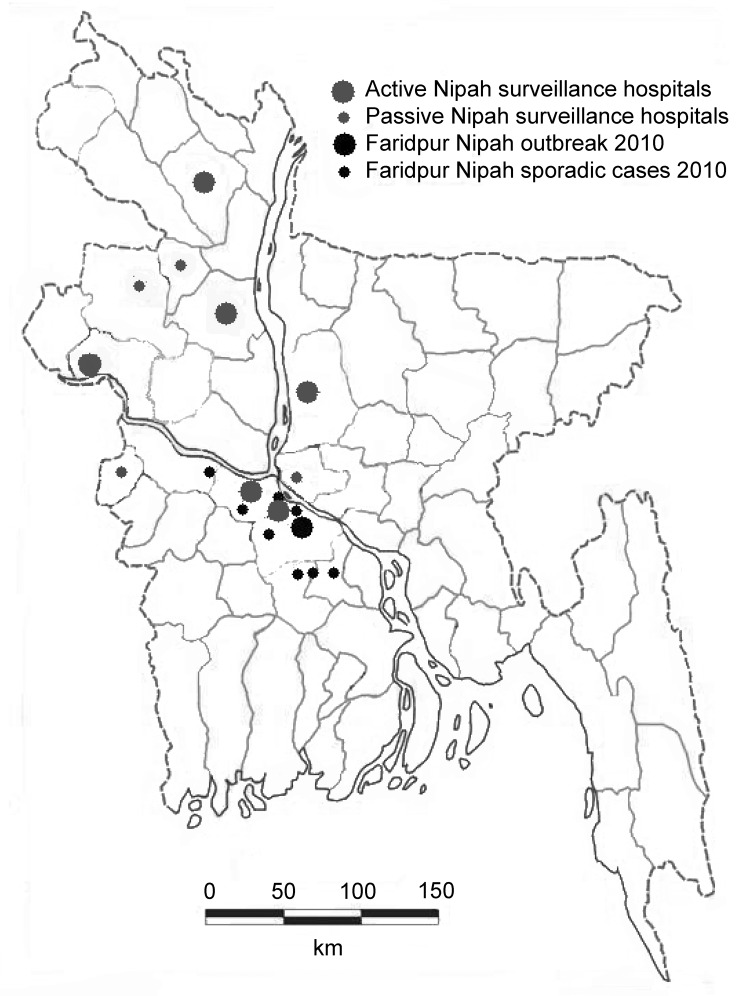
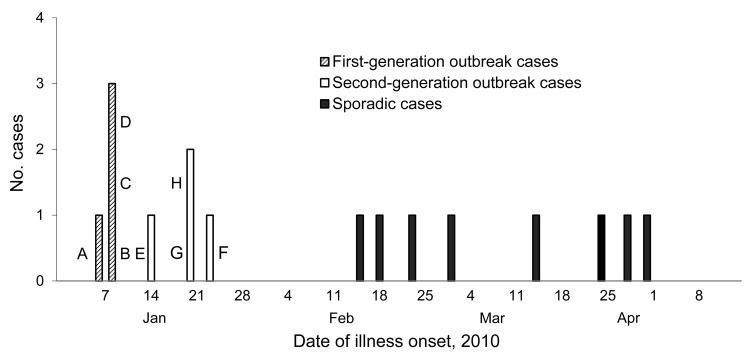
Description:Active Nipah virus encephalitis surveillance identified an encephalitis cluster and sporadic cases in Faridpur, Bangladesh, in January 2010. We identified 16 case-patients; 14 of these patients died. For 1 case-patient, the only known exposure was hugging a deceased patient with a probable case, while another case-patient's exposure involved preparing the same corpse for burial by removing oral secretions and anogenital excreta with a cloth and bare hands. Among 7 persons with confirmed sporadic cases, 6 died, including a physician who had physically examined encephalitis patients without gloves or a mask. Nipah virus-infected patients were more likely than community-based controls to report drinking raw date palm sap and to have had physical contact with an encephalitis patient (29% vs. 4%, matched odds ratio undefined). Efforts to prevent transmission should focus on reducing caregivers' exposure to infected patients' bodily secretions during care and traditional burial practices.
-
Subjects:
-
Source:Emerg Infect Dis. 19(2):210-217.
-
Document Type:
-
Funding:
-
Place as Subject:
-
Location:
-
Volume:19
-
Issue:2
-
Collection(s):
-
Main Document Checksum:urn:sha256:2b97bcc6f0da767b7b1808628dc54c23e86185cdd11f015d938dccf89642ed7f
-
Download URL:
-
File Type:
 [PDF
- 881.25 KB
]
[PDF
- 881.25 KB
]
Supporting Files


File Language:
English
ON THIS PAGE


CDC STACKS serves as an archival repository of CDC-published products including
scientific findings,
journal articles, guidelines, recommendations, or other public health information authored or
co-authored by CDC or funded partners.
As a repository, CDC STACKS retains documents in their original published format to ensure public access to scientific information.
As a repository, CDC STACKS retains documents in their original published format to ensure public access to scientific information.
You May Also Like
COLLECTION
Emerging Infectious Diseases