



Sources of Dengue Viruses Imported into Queensland, Australia, 2002–2010
Supporting Files
Public Domain

-
Nov 2012
File Language:
English
Details
-
Alternative Title:Emerg Infect Dis
-
Personal Author:
-
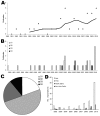
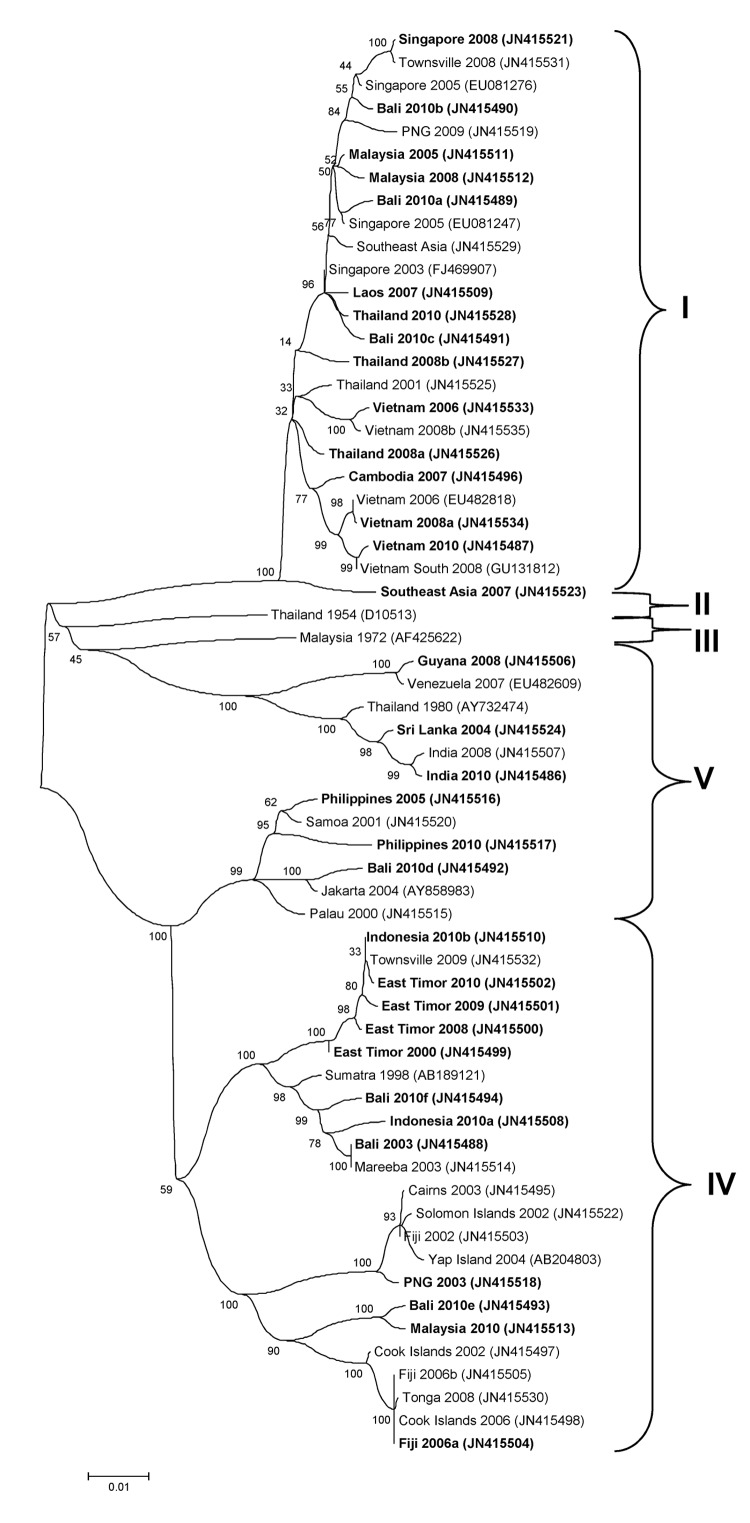
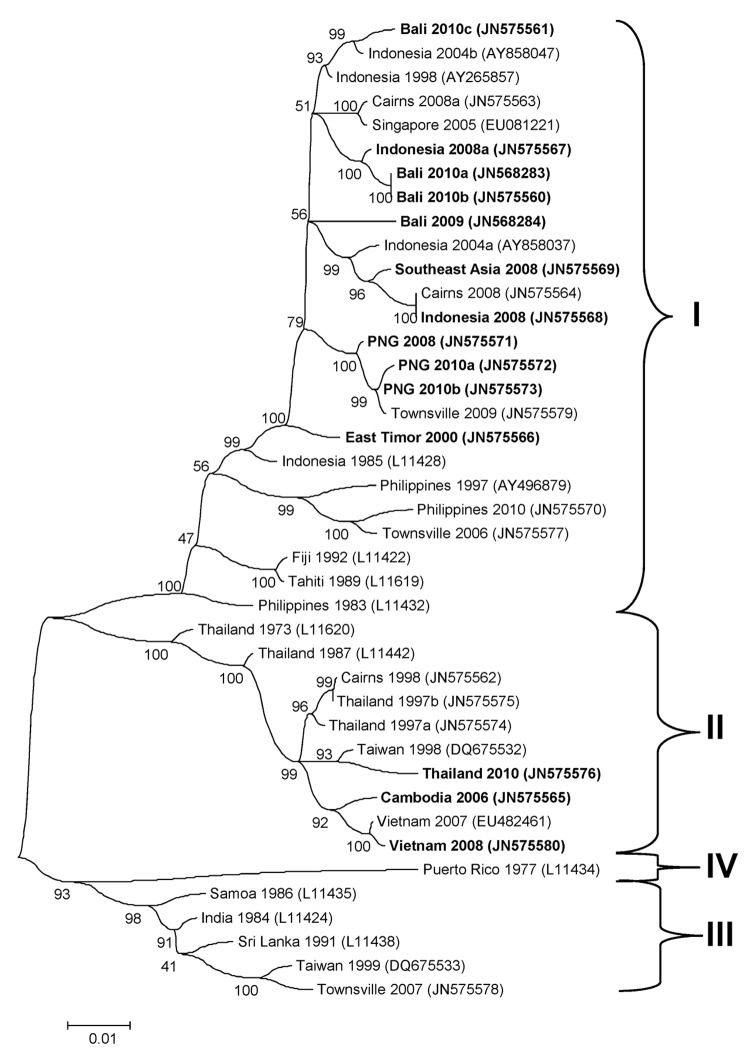
Description:To assess risk for importation of dengue virus (DENV) into Queensland, Australia, and sources of imported viruses, we sequenced the envelope region of DENV isolates from symptomatic patients with a history of travel during 2002-2010. The number of imported dengue cases greatly increased over the surveillance period, some of which were associated with domestic outbreaks. Patients reported traveling to (in order) Asia, Papua New Guinea, Pacific Island countries, and non-Asia-Pacific countries. By using phylogenetic methods, we assigned DENV isolates from returning residents and overseas visitors with viremia to a specific genotypic group. Genotypes circulating in Asia were extremely diverse. Genotyping and molecular clock analysis supported Asian origination of a strain that caused an outbreak of DENV-4 in Pacific Island countries during 2007-2009, and subsequently, in Innisfail, Australia, in 2009. Our findings indicate that Asia is a major source of DENVs that are imported into Australia, causing a risk for epidemics.
-
Subjects:
-
Source:Emerg Infect Dis. 18(11):1850-1857.
-
Document Type:
-
Place as Subject:
-
Volume:18
-
Issue:11
-
Download URL:
-
File Type:
 [PDF - 470.42 KB]
 -
Collection(s):
-
Main Document Checksum:urn:sha256:4f8bd74c7c688a9387022bcf514ec165c913ee27d27ede73581c9f136d28e76a
Supporting Files


File Language:
English
 Was this page helpful?
 Found an issue?






CDC STACKS serves as an archival repository of CDC-published products including
scientific findings, journal articles, guidelines, recommendations, or other public health information authored or
co-authored by CDC or funded partners.
As a repository, CDC STACKS retains documents in their original published format to ensure public access to scientific information.
As a repository, CDC STACKS retains documents in their original published format to ensure public access to scientific information.
You May Also Like
COLLECTION
Emerging Infectious Diseases