



Antigenic Diversity of Enteroviruses Associated with Nonpolio Acute Flaccid Paralysis, India, 2007–2009
Supporting Files
Public Domain

-
Nov 2012
File Language:
English
Details
-
Alternative Title:Emerg Infect Dis
-
Personal Author:
-
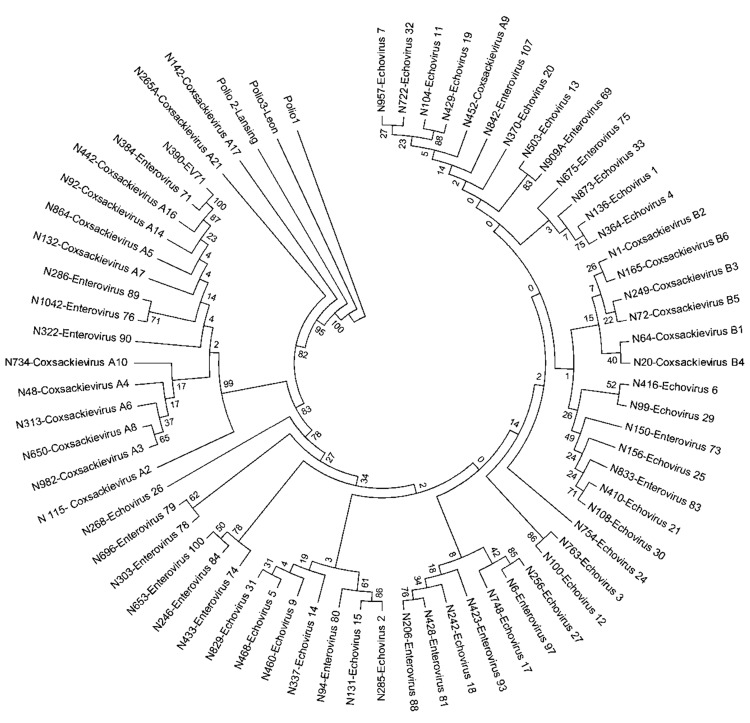
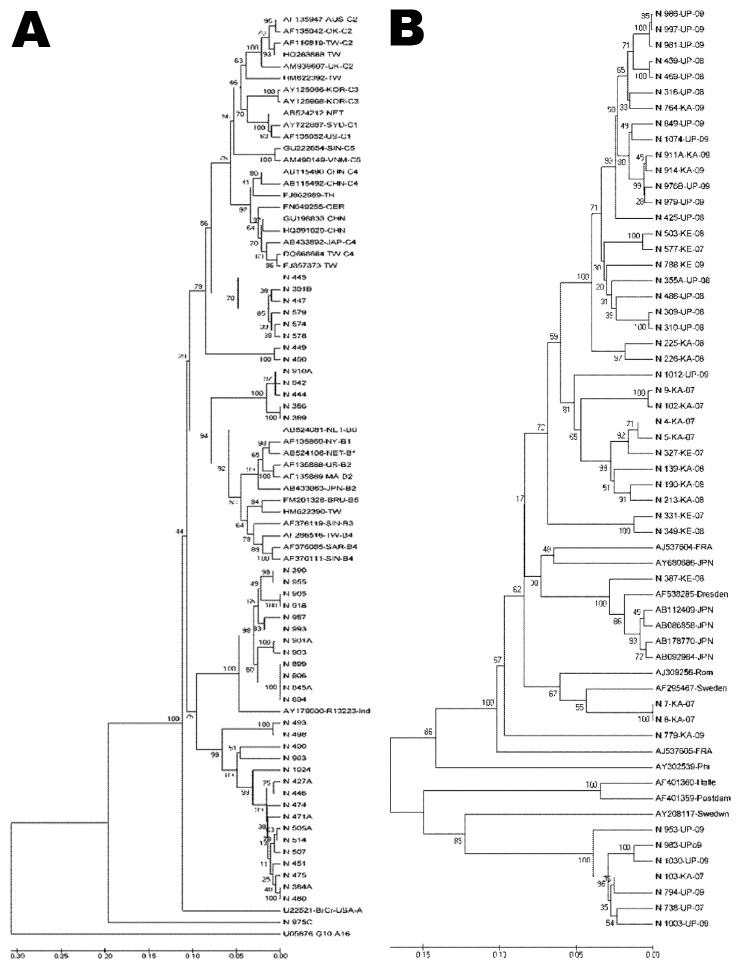
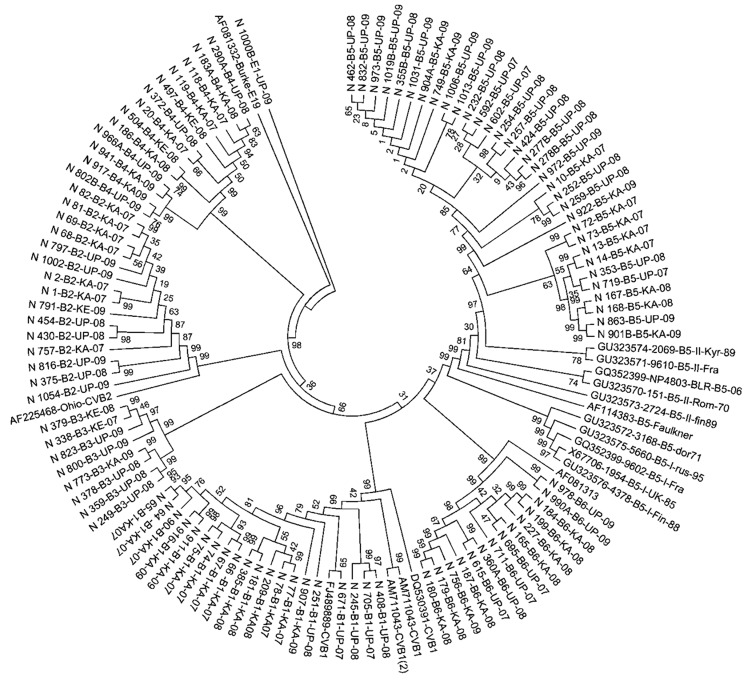
Description:Because of the broadened acute flacid paralysis (AFP) definition and enhanced surveillance, many nonpolio AFP (NP-AFP) cases have been reported in India since 2005. To determine the spectrum of nonpolio enterovirus (NPEV) serotypes associated with NP-AFP from polio-endemic and -free regions, we studied antigenic diversity of AFP-associated NPEVs. Of fecal specimens from 2,786 children with NP-AFP in 1 polio-endemic and 2 polio-free states, 823 (29.5%) were positive for NPEVs in RD cells, of which 532 (64.6%) were positive by viral protein 1 reverse transcription PCR. We identified 66 serotypes among 581 isolates, with enterovirus 71 most frequently (8.43%) detected, followed by enterovirus 13 (7.1%) and coxsackievirus B5 (5.0%). Most strains within a serotype represented new genogropups or subgenogroups. Agents for ≈35.0% and 70.0% of culture-positive and -negative cases, respectively, need to be identified. Association of human enterovirus with NP-AFP requires better assessment and understanding of health risks of NPEV infections after polio elimination.
-
Subjects:
-
Source:Emerg Infect Dis. 18(11):1833-1840.
-
Document Type:
-
Place as Subject:
-
Location:
-
Volume:18
-
Issue:11
-
Download URL:
-
File Type:
 [PDF - 503.30 KB]
 -
Collection(s):
-
Main Document Checksum:urn:sha256:72fc3f83a71ca02c28ed09224c803b354e98a7f224ef5f8bf4c0eb5fb4ae543c
Supporting Files


File Language:
English
 Was this page helpful?
 Found an issue?




CDC STACKS serves as an archival repository of CDC-published products including
scientific findings, journal articles, guidelines, recommendations, or other public health information authored or
co-authored by CDC or funded partners.
As a repository, CDC STACKS retains documents in their original published format to ensure public access to scientific information.
As a repository, CDC STACKS retains documents in their original published format to ensure public access to scientific information.
You May Also Like
COLLECTION
Emerging Infectious Diseases