



Seroprevalence of Antibodies against Chikungunya, Dengue, and Rift Valley Fever Viruses after Febrile Illness Outbreak, Madagascar
Supporting Files
Public Domain

-
Nov 2012
-
File Language:
English
Details
-
Alternative Title:Emerg Infect Dis
-
Personal Author:Schwarz, Norbert G. ; Girmann, Mirko ; Randriamampionona, Njary ; Bialonski, Alexandra ; Maus, Deborah ; Krefis, Anne Caroline ; Njarasoa, Christine ; Rajanalison, Jeanne Fleury ; Ramandrisoa, Herly Daniel ; Randriarison, Maurice Lucien ; May, Jürgen ; Schmidt-Chanasit, Jonas ; Rakotozandrindrainy, Raphael
-
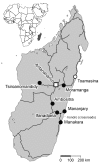
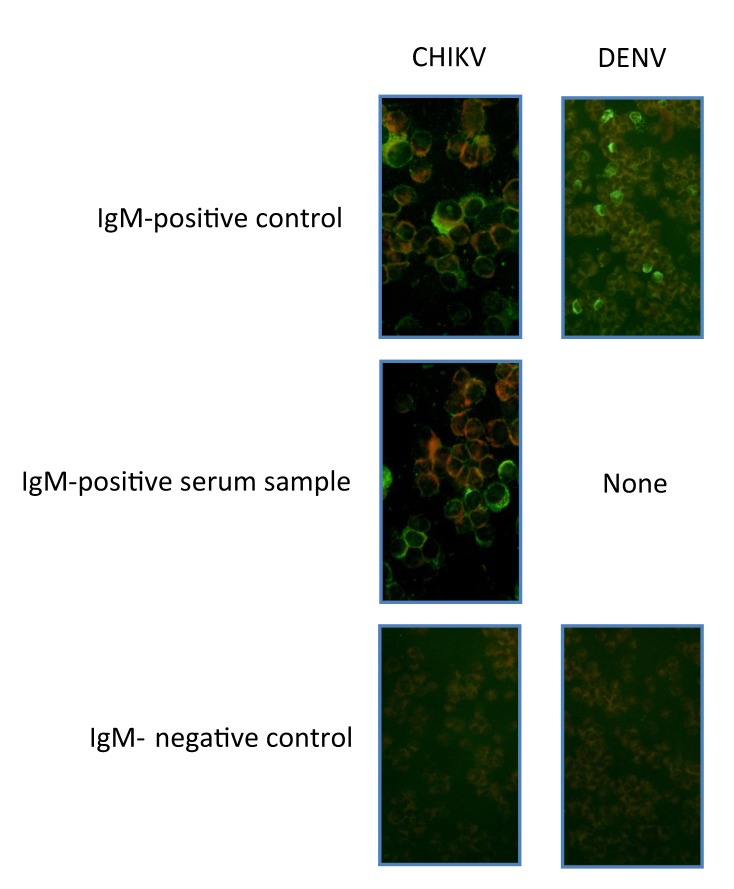
Description:In October 2009, two-3 months after an outbreak of a febrile disease with joint pain on the eastern coast of Madagascar, we assessed serologic markers for chikungunya virus (CHIKV), dengue virus (DENV), and Rift Valley fever virus (RVFV) in 1,244 pregnant women at 6 locations. In 2 eastern coast towns, IgG seroprevalence against CHIKV was 45% and 23%; IgM seroprevalence was 28% and 5%. IgG seroprevalence against DENV was 17% and 11%. No anti-DENV IgM was detected. At 4 locations, 450-1,300 m high, IgG seroprevalence against CHIKV was 0%-3%, suggesting CHIKV had not spread to higher inland-altitudes. Four women had IgG against RVFV, probably antibodies from a 2008 epidemic. Most (78%) women from coastal locations with CHIKV-specific IgG reported joint pain and stiffness; 21% reported no symptoms. CHIKV infection was significantly associated with high bodyweight. The outbreak was an isolated CHIKV epidemic without relevant DENV co-transmission.
-
Subjects:
-
Source:Emerg Infect Dis. 18(11):1780-1786.
-
Document Type:
-
Place as Subject:
-
Location:
-
Volume:18
-
Issue:11
-
Collection(s):
-
Main Document Checksum:urn:sha-512:128b35da2504335362be95b6368225a0a13366ce0b9c91607224f2dcf10d1069f1ef326f8c2a73b4bc81d671989c73b7fff6bf48d0ecc2d707f22c88a0b4526f
-
Download URL:
-
File Type:
 [PDF
- 657.98 KB
]
[PDF
- 657.98 KB
]
Supporting Files


File Language:
English
 Was this page helpful?
 Found an issue?

CDC STACKS serves as an archival repository of CDC-published products including
scientific findings,
journal articles, guidelines, recommendations, or other public health information authored or
co-authored by CDC or funded partners.
As a repository, CDC STACKS retains documents in their original published format to ensure public access to scientific information.
As a repository, CDC STACKS retains documents in their original published format to ensure public access to scientific information.
You May Also Like
COLLECTION
Emerging Infectious Diseases