



Reality Check of Laboratory Service Effectiveness during Pandemic (H1N1) 2009, Victoria, Australia
Supporting Files
Public Domain

-
Jun 2011
File Language:
English
Details
-
Alternative Title:Emerg Infect Dis
-
Personal Author:
-
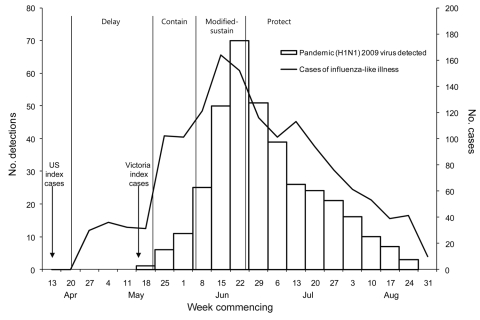
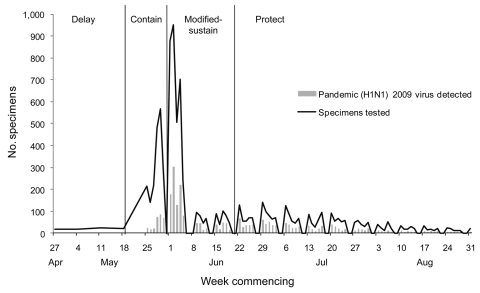
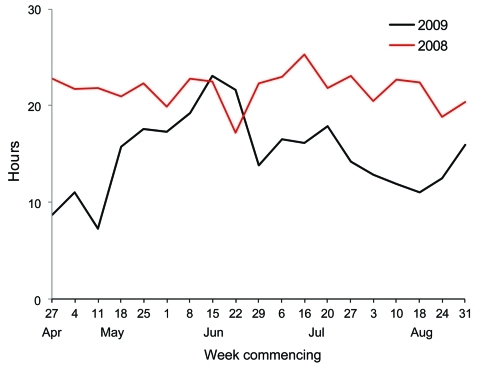
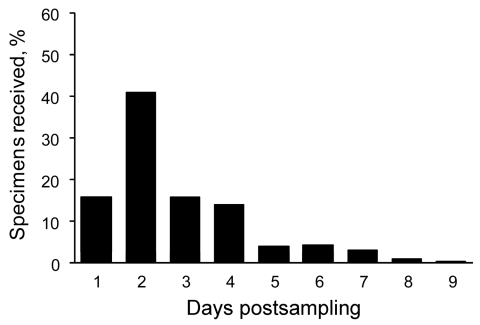
Description:In Australia, the outbreak of pandemic (H1N1) 2009 began in Melbourne, Victoria; in the first 17 days, the Victorian Infectious Diseases Reference Laboratory detected 977 cases. Although the laboratory had a pandemic plan in place, a retrospective evaluation found 3 major variations from plan assumptions: 1) higher peak demand not limited by a case definition, 2) prolonged peak demand because containment attempts continued despite widespread influenza, and 3) unexpected influence of negative test results on public health actions. Although implementation of the plan was generally successful, the greatest challenges were limited availability of skilled staff and test reagents. Despite peak demand of 1,401 tests per day, results were provided within the usual 24 hours of specimen receipt; however, turnaround time seemed slower because of slow transport times (>3 days for 45% of specimens). Hence, effective laboratory capability might be enhanced by speeding transport of specimens and improving transmission of clinical data.
-
Subjects:
-
Source:Emerg Infect Dis. 17(6):963-968.
-
Document Type:
-
Place as Subject:
-
Volume:17
-
Issue:6
-
Download URL:
-
File Type:
 [PDF - 239.01 KB]
 -
Collection(s):
-
Main Document Checksum:urn:sha256:0c4bebabda2ffc37a37557ef221e979b62dff01f5f4d27ab6568859dc8cda958
Supporting Files


File Language:
English
 Was this page helpful?
 Found an issue?


CDC STACKS serves as an archival repository of CDC-published products including
scientific findings, journal articles, guidelines, recommendations, or other public health information authored or
co-authored by CDC or funded partners.
As a repository, CDC STACKS retains documents in their original published format to ensure public access to scientific information.
As a repository, CDC STACKS retains documents in their original published format to ensure public access to scientific information.
You May Also Like
COLLECTION
Emerging Infectious Diseases