



Effect of Surveillance Method on Reported Characteristics of Lyme Disease, Connecticut, 1996–2007
Supporting Files
Public Domain

-
Feb 2012
Details
-
Alternative Title:Emerg Infect Dis
-
Personal Author:
-
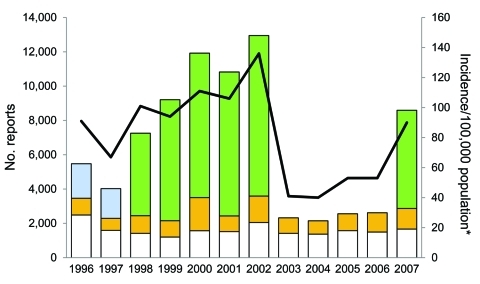
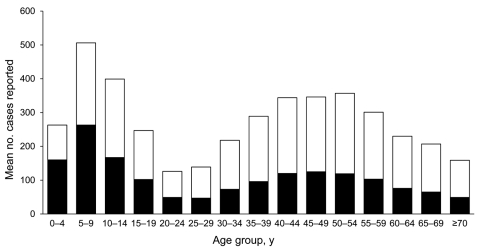
Description:To determine the effect of changing public health surveillance methods on the reported epidemiology of Lyme disease, we analyzed Connecticut data for 1996-2007. Data were stratified by 4 surveillance methods and compared. A total of 87,174 reports were received that included 79,896 potential cases. Variations based on surveillance methods were seen. Cases reported through physician-based surveillance were significantly more likely to be classified as confirmed; such case-patients were significantly more likely to have symptoms of erythema migrans only and to have illness onset during summer months. Case-patients reported through laboratory-based surveillance were significantly more likely to have late manifestations only and to be older. Use of multiple surveillance methods provided a more complete clinical and demographic description of cases but lacked efficiency. When interpreting data, changes in surveillance method must be considered.
-
Subjects:
- Research
- epidemiologic methods
- data collection
- population surveillance
- endemic diseases
- public health practice
- Lyme disease
- Connecticut
- bacteria
- vector-borne infections
- Adolescent
- Adult
- Aged
- Child
- Child, Preschool
- Female
- Humans
- Incidence
- Infant
- Lyme Disease
- Male
- Middle Aged
- Population Surveillance
- Seasons
- Young Adult
-
Source:Emerg Infect Dis. 18(2):242-247.
-
Document Type:
-
Volume:18
-
Issue:2
-
Download URL:
-
File Type:
 [PDF - 303.97 KB]
 -
Collection(s):
-
Main Document Checksum:urn:sha256:60e57dc1bc0098aa1af32a8edc75089b31b06ff065a66d4ea58ee3eb8fc9d982
Supporting Files


 Was this page helpful?
 Found an issue?

CDC STACKS serves as an archival repository of CDC-published products including
scientific findings, journal articles, guidelines, recommendations, or other public health information authored or
co-authored by CDC or funded partners.
As a repository, CDC STACKS retains documents in their original published format to ensure public access to scientific information.
As a repository, CDC STACKS retains documents in their original published format to ensure public access to scientific information.
You May Also Like
COLLECTION
Emerging Infectious Diseases