



Completeness of Communicable Disease Reporting, North Carolina, USA, 1995–1997 and 2000–2006
Supporting Files
Public Domain

-
Jan 2011
File Language:
English
Details
-
Alternative Title:Emerg Infect Dis
-
Personal Author:
-
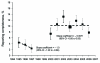
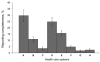
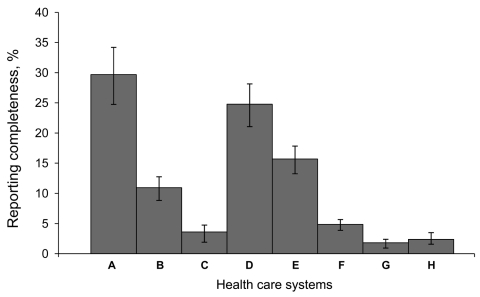
Description:Despite widespread use of communicable disease surveillance data to inform public health intervention and control measures, the reporting completeness of the notifiable disease surveillance system remains incompletely assessed. Therefore, we conducted a comprehensive study of reporting completeness with an analysis of 53 diseases reported by 8 health care systems across North Carolina, USA, during 1995-1997 and 2000-2006. All patients who were assigned an International Classification of Diseases, 9th Revision, Clinical Modification, diagnosis code for a state-required reportable communicable disease were matched to surveillance records. We used logistic regression techniques to estimate reporting completeness by disease, year, and health care system. The completeness of reporting varied among the health care systems from 2% to 30% and improved over time. Disease-specific reporting completeness proportions ranged from 0% to 82%, but were generally low even for diseases with great public health importance and opportunity for interventions.
-
Subjects:
-
Source:Emerg Infect Dis. 17(1):23-29.
-
Document Type:
-
Place as Subject:
-
Volume:17
-
Issue:1
-
Download URL:
-
File Type:
 [PDF - 181.49 KB]
 -
Collection(s):
-
Main Document Checksum:urn:sha256:22ae51cbfba8ce1ccac55cfb9fcf536b546be4511376f32494ec2dbdc56aeda4
Supporting Files


File Language:
English
 Was this page helpful?
 Found an issue?


CDC STACKS serves as an archival repository of CDC-published products including
scientific findings, journal articles, guidelines, recommendations, or other public health information authored or
co-authored by CDC or funded partners.
As a repository, CDC STACKS retains documents in their original published format to ensure public access to scientific information.
As a repository, CDC STACKS retains documents in their original published format to ensure public access to scientific information.
You May Also Like
COLLECTION
Emerging Infectious Diseases