



Ebola Hemorrhagic Fever Associated with Novel Virus Strain, Uganda, 2007–2008
Supporting Files
Public Domain

-
Jul 2010
File Language:
English
Details
-
Alternative Title:Emerg Infect Dis
-
Personal Author:
-
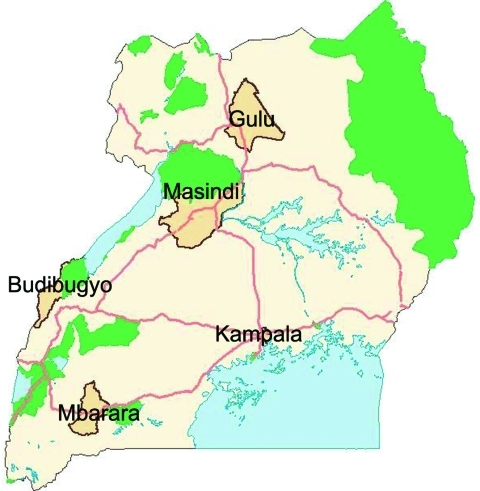
Description:During August 2007-February 2008, the novel Bundibugyo ebolavirus species was identified during an outbreak of Ebola viral hemorrhagic fever in Bundibugyo district, western Uganda. To characterize the outbreak as a requisite for determining response, we instituted a case-series investigation. We identified 192 suspected cases, of which 42 (22%) were laboratory positive for the novel species; 74 (38%) were probable, and 77 (40%) were negative. Laboratory confirmation lagged behind outbreak verification by 3 months. Bundibugyo ebolavirus was less fatal (case-fatality rate 34%) than Ebola viruses that had caused previous outbreaks in the region, and most transmission was associated with handling of dead persons without appropriate protection (adjusted odds ratio 3.83, 95% confidence interval 1.78-8.23). Our study highlights the need for maintaining a high index of suspicion for viral hemorrhagic fevers among healthcare workers, building local capacity for laboratory confirmation of viral hemorrhagic fevers, and institutionalizing standard precautions.
-
Subjects:
-
Source:Emerg Infect Dis. 16(7):1087-1092.
-
Document Type:
-
Place as Subject:
-
Volume:16
-
Issue:7
-
Download URL:
-
File Type:
 [PDF - 146.36 KB]
 -
Collection(s):
-
Main Document Checksum:urn:sha256:463633e530d63e48b0f964393615a432a4bb7542178312dec3b679ae587cc086
Supporting Files


File Language:
English
 Was this page helpful?
 Found an issue?


CDC STACKS serves as an archival repository of CDC-published products including
scientific findings, journal articles, guidelines, recommendations, or other public health information authored or
co-authored by CDC or funded partners.
As a repository, CDC STACKS retains documents in their original published format to ensure public access to scientific information.
As a repository, CDC STACKS retains documents in their original published format to ensure public access to scientific information.
You May Also Like
COLLECTION
Emerging Infectious Diseases