



Livestock-associated Methicillin-Resistant Staphylococcus aureus Sequence Type 398 in Humans, Canada
Supporting Files
Public Domain

-
Apr 2010
File Language:
English
Details
-
Alternative Title:Emerg Infect Dis
-
Personal Author:
-
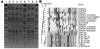
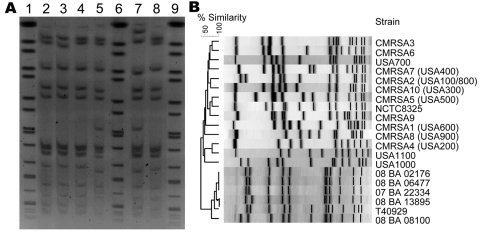
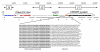
Description:Rates of colonization with livestock-associated methicillin-resistant Staphylococcus aureus (MRSA) sequence type 398 have been high for pigs and pig farmers in Canada, but prevalence rates for the general human population are unknown. In this study, 5 LA-MRSA isolates, 4 of which were obtained from skin and soft tissue infections, were identified from 3,687 tested MRSA isolates from persons in Manitoba and Saskatchewan, Canada. Further molecular characterization determined that these isolates all contained staphylococcal cassette chromosome (SCC) mecV, were negative for Panton-Valentine leukocidin, and were closely related by macrorestriction analysis with the restriction enzyme Cfr91. The complete DNA sequence of the SCCmec region from the isolate showed a novel subtype of SCCmecV harboring clustered regularly interspaced short palindromic repeats and associated genes. Although prevalence of livestock-associated MRSA seems to be low for the general population in Canada, recent emergence of infections resulting from this strain is of public health concern.
-
Subjects:
- Aged
- Animals
- Animals, Domestic
- Bacterial Toxins
- Deoxyribonucleases, Type Ii Site-Specific
- Exotoxins
- Female
- Genes, Bacterial
- Humans
- Inverted Repeat Sequences
- Leukocidins
- Male
- Manitoba
- Methicillin-Resistant Staphylococcus Aureus
- Middle Aged
- Mutagenesis, Insertional
- Prevalence
- Staphylococcal Infections
- Swine
-
Source:Emerg Infect Dis. 16(4):587-594.
-
Document Type:
-
Place as Subject:
-
Location:
-
Volume:16
-
Issue:4
-
Download URL:
-
File Type:
 [PDF - 387.36 KB]
 -
Collection(s):
-
Main Document Checksum:urn:sha256:bf7e7d621328c587288daeef933f02cc2831b1d21360dc0ca77f4e5362015224
Supporting Files


File Language:
English
 Was this page helpful?
 Found an issue?




CDC STACKS serves as an archival repository of CDC-published products including
scientific findings, journal articles, guidelines, recommendations, or other public health information authored or
co-authored by CDC or funded partners.
As a repository, CDC STACKS retains documents in their original published format to ensure public access to scientific information.
As a repository, CDC STACKS retains documents in their original published format to ensure public access to scientific information.
You May Also Like
COLLECTION
Emerging Infectious Diseases