



Illness in Long-Term Travelers Visiting GeoSentinel Clinics
Supporting Files
Public Domain

-
Nov 2009
File Language:
English
Details
-
Alternative Title:Emerg Infect Dis
-
Personal Author:
-
Corporate Authors:
-
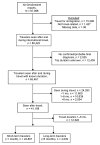
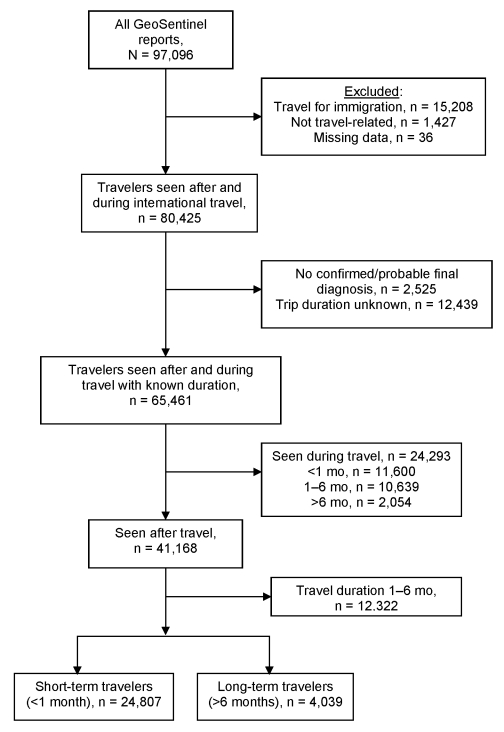
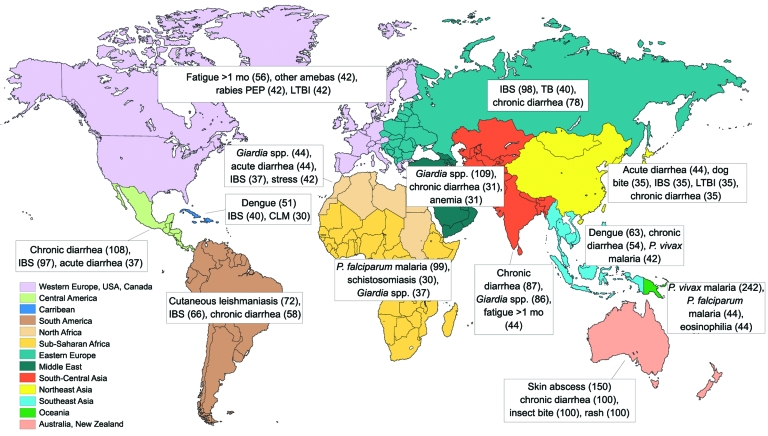
Description:Length of travel appears to be associated with health risks. GeoSentinel Surveillance Network data for 4,039 long-term travelers (trip duration >6 months) seen after travel during June 1, 1996, through December 31, 2008, were compared with data for 24,807 short-term travelers (trip duration <1 month). Long-term travelers traveled more often than short-term travelers for volunteer activities (39.7% vs. 7.0%) and business (25.2% vs. 13.8%). More long-term travelers were men (57.2% vs. 50.1%) and expatriates (54.0% vs. 8.9%); most had pretravel medical advice (70.3% vs. 48.9%). Per 1,000 travelers, long-term travelers more often experienced chronic diarrhea, giardiasis, Plasmodium falciparum and P. vivax malaria, irritable bowel syndrome (postinfectious), fatigue >1 month, eosinophilia, cutaneous leishmaniasis, schistosomiasis, and Entamoeba histolytica diarrhea. Areas of concern for long-term travelers were vector-borne diseases, contact-transmitted diseases, and psychological problems. Our results can help prioritize screening for and diagnosis of illness in long-term travelers and provide evidence-based pretravel advice.
-
Subjects:
-
Source:Emerg Infect Dis. 15(11):1773-1782.
-
Document Type:
-
Volume:15
-
Issue:11
-
Download URL:
-
File Type:
 [PDF - 352.95 KB]
 -
Collection(s):
-
Main Document Checksum:urn:sha256:3d398d19d88bd51a8ce445d4a8fd6f2665d9796fb1311d721a91bdd9532670fd
Supporting Files


File Language:
English
 Was this page helpful?
 Found an issue?

CDC STACKS serves as an archival repository of CDC-published products including
scientific findings, journal articles, guidelines, recommendations, or other public health information authored or
co-authored by CDC or funded partners.
As a repository, CDC STACKS retains documents in their original published format to ensure public access to scientific information.
As a repository, CDC STACKS retains documents in their original published format to ensure public access to scientific information.
You May Also Like
COLLECTION
Emerging Infectious Diseases