



Nontuberculous Mycobacteria–associated Lung Disease in Hospitalized Persons, United States, 1998–2005
Supporting Files
Public Domain

-
Oct 2009
File Language:
English
Details
-
Alternative Title:Emerg Infect Dis
-
Personal Author:
-
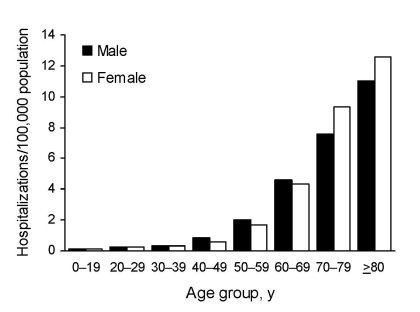
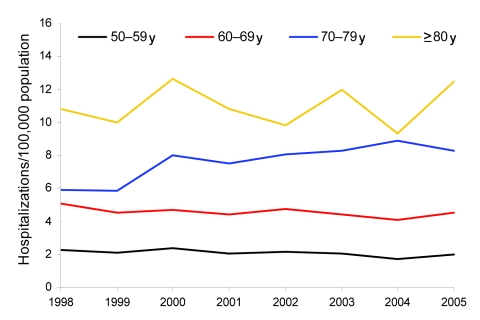
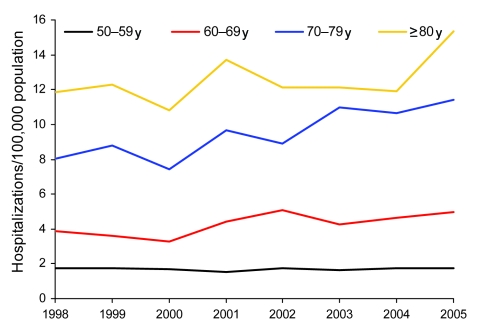
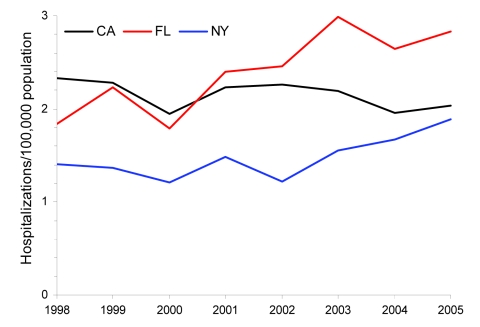
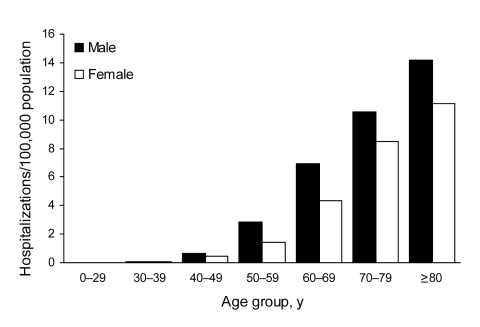
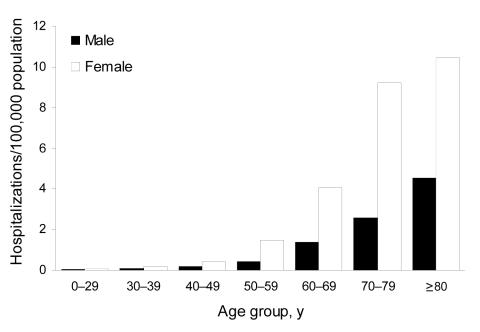
Description:The prevalence and trends of pulmonary nontuberculous mycobacteria (NTM)-associated hospitalizations in the United States were estimated using national hospital discharge data. Records were extracted for all persons with a pulmonary NTM International Classification of Diseases code (031.0) hospitalized in the 11 states with continuous data available from 1998 through 2005. Prevalence was calculated using US census data. Pulmonary NTM hospitalizations (031.0) increased significantly with age among both sexes: relative prevalence for persons 70-79 years of age compared with those 40-49 years of age was 15/100,000 for women (9.4 vs. 0.6) and 9/100,000 for men (7.6 vs. 0.83). Annual prevalence increased significantly among men and women in Florida (3.2%/year and 6.5%/year, respectively) and among women in New York (4.6%/year) with no significant changes in California. The prevalence of pulmonary NTM-associated hospitalizations is increasing in selected geographic areas of the United States.
-
Subjects:
-
Source:Emerg Infect Dis. 15(10):1562-1569.
-
Document Type:
-
Place as Subject:
-
Location:
-
Volume:15
-
Issue:10
-
Download URL:
-
File Type:
 [PDF - 690.06 KB]
 -
Collection(s):
-
Main Document Checksum:urn:sha256:daca3b11d2878b849fba5e4427d73c06da8f56a75113d91f965379b62873bb23
Supporting Files


File Language:
English
 Was this page helpful?
 Found an issue?


CDC STACKS serves as an archival repository of CDC-published products including
scientific findings, journal articles, guidelines, recommendations, or other public health information authored or
co-authored by CDC or funded partners.
As a repository, CDC STACKS retains documents in their original published format to ensure public access to scientific information.
As a repository, CDC STACKS retains documents in their original published format to ensure public access to scientific information.
You May Also Like
COLLECTION
Emerging Infectious Diseases