



New Respiratory Enterovirus and Recombinant Rhinoviruses among Circulating Picornaviruses
Supporting Files
Public Domain

-
May 2009
Details
-
Alternative Title:Emerg Infect Dis
-
Personal Author:
-
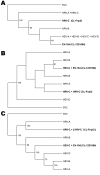
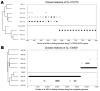
Description:Rhinoviruses and enteroviruses are leading causes of respiratory infections. To evaluate genotypic diversity and identify forces shaping picornavirus evolution, we screened persons with respiratory illnesses by using rhinovirus-specific or generic real-time PCR assays. We then sequenced the 5 untranslated region, capsid protein VP1, and protease precursor 3CD regions of virus-positive samples. Subsequent phylogenetic analysis identified the large genotypic diversity of rhinoviruses circulating in humans. We identified and completed the genome sequence of a new enterovirus genotype associated with respiratory symptoms and acute otitis media, confirming the close relationship between rhinoviruses and enteroviruses and the need to detect both viruses in respiratory specimens. Finally, we identified recombinants among circulating rhinoviruses and mapped their recombination sites, thereby demonstrating that rhinoviruses can recombine in their natural host. This study clarifies the diversity and explains the reasons for evolution of these viruses.
-
Subjects:
- Research
- Respiratory Infections
- Molecular Epidemiology
- Picornavirus
- Rhinovirus
- Enterovirus
- Recombination
- Capsid Protein
- Nonstructural Protein
- Genotype
- Adolescent
- Adult
- Child
- Child, Preschool
- Enterovirus Infections
- Genetic Variation
- Humans
- Infant
- Infant, Newborn
- Otitis Media
- Phylogeny
- Picornaviridae Infections
- Recombination, Genetic
- Respiratory Tract Infections
- Sequence Analysis, DNA
- Young Adult
-
Source:Emerg Infect Dis. 15(5):719-726.
-
Document Type:
-
Volume:15
-
Issue:5
-
Download URL:
-
File Type:
 [PDF - 295.13 KB]
 -
Collection(s):
-
Main Document Checksum:urn:sha256:29461a0ac89e0c118ddbc393ac5b9a899443a90c3b9fbeebc1e26cdc3998f9ad
Supporting Files


 Was this page helpful?
 Found an issue?





CDC STACKS serves as an archival repository of CDC-published products including
scientific findings, journal articles, guidelines, recommendations, or other public health information authored or
co-authored by CDC or funded partners.
As a repository, CDC STACKS retains documents in their original published format to ensure public access to scientific information.
As a repository, CDC STACKS retains documents in their original published format to ensure public access to scientific information.
You May Also Like
COLLECTION
Emerging Infectious Diseases