



Behavior Change Among HIV-Negative Men Who Have Sex with Men Not Using PrEP in the United States
Supporting Files

-
5 2024 ; 5-2024
-
Available in CDC Stacks on 2025-01-15T00:00:00Z

File Language:
English
Details
-
Alternative Title:AIDS Behav
-
Personal Author:
-
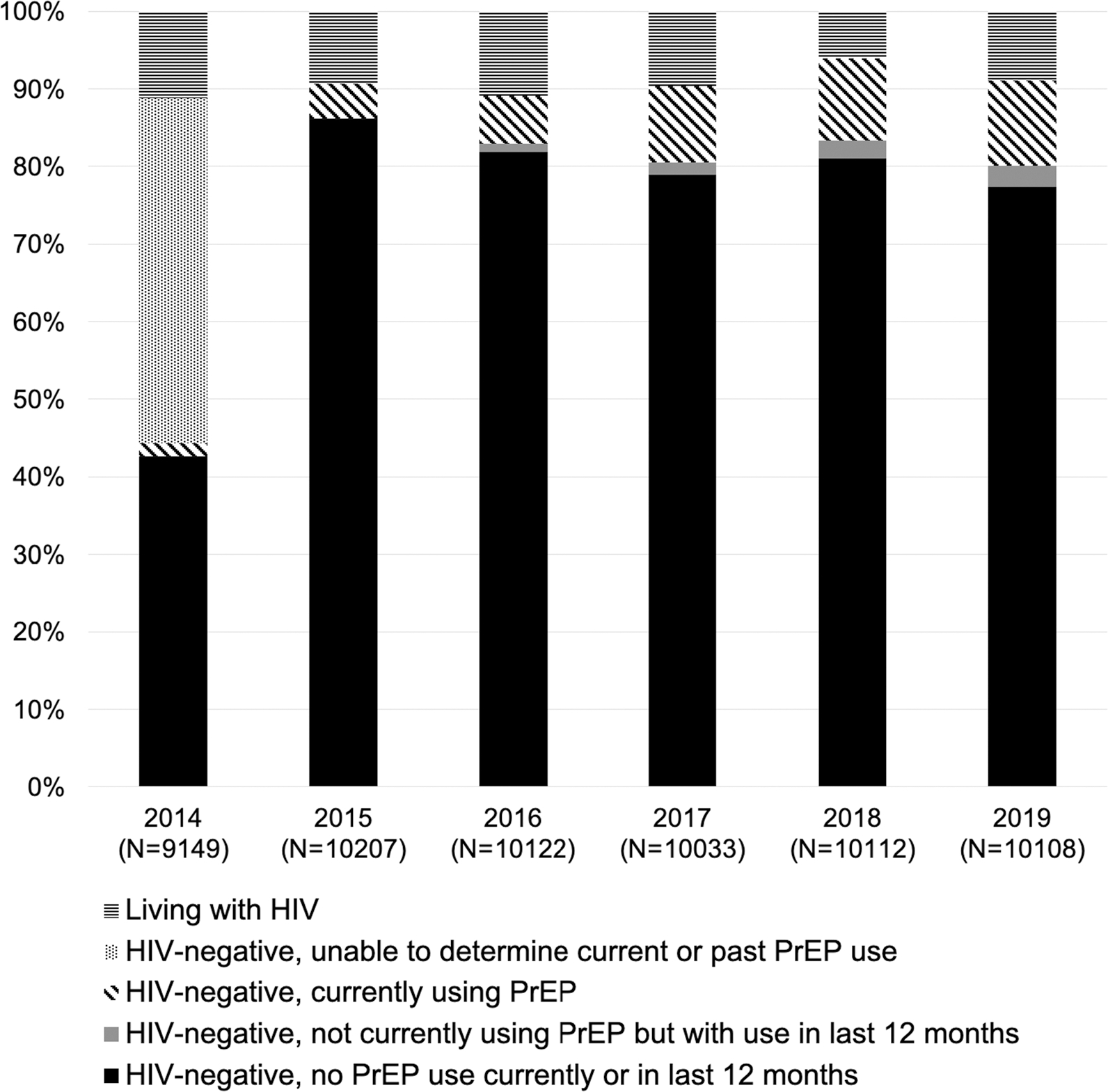
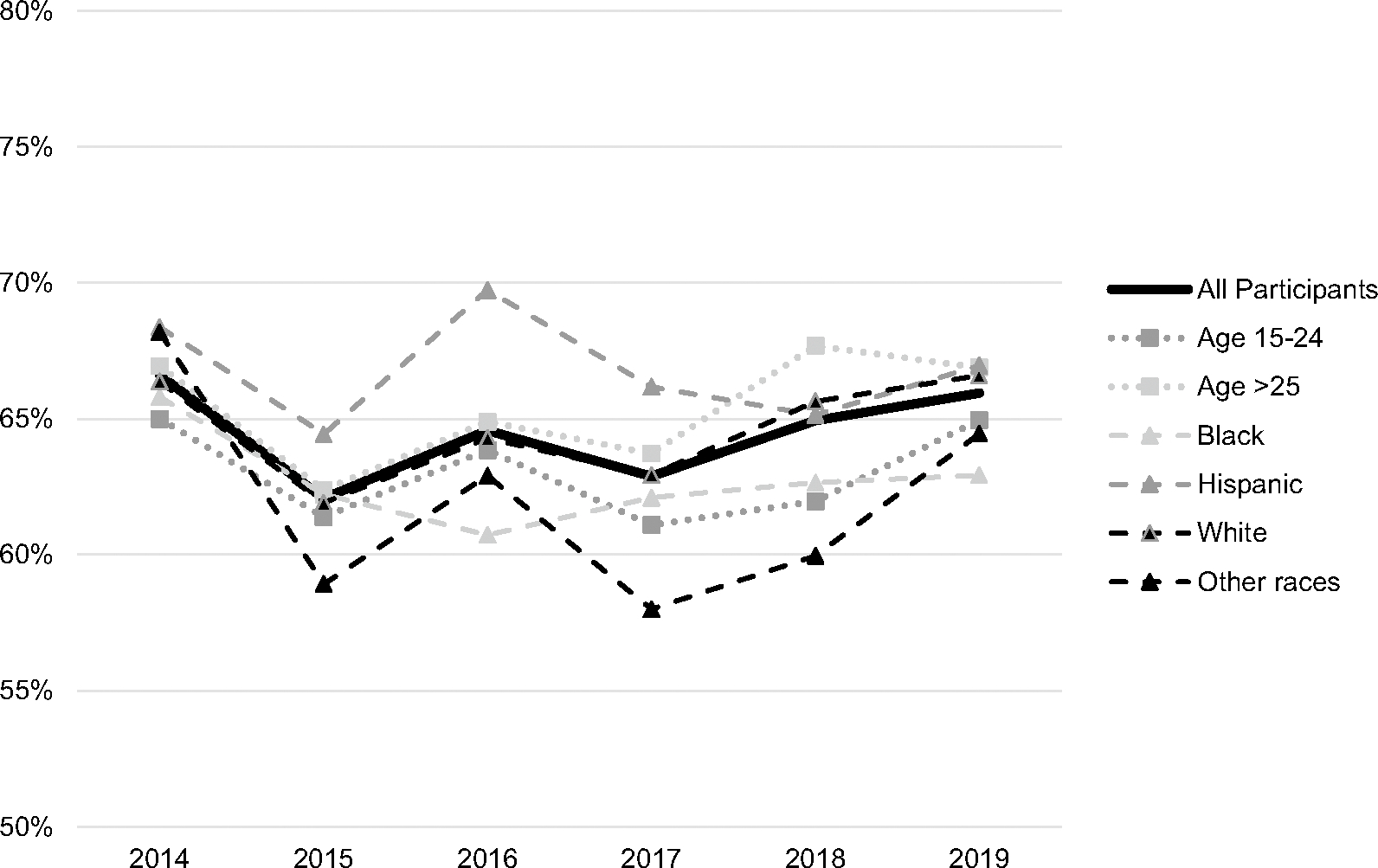
Description:This study measures changes in condomless anal sex (CAS) among HIV-negative men who have sex with men (MSM) who are not taking pre-exposure prophylaxis (PrEP). It considers the 2014-2019 cycles of the American Men's Internet Survey, a serial, cross-sectional web-based survey of US cisgender MSM aged ≥ 15 years, in which ~ 10% of each year's sample is drawn from the previous year. Among those surveyed for 2 years who remained HIV-negative and off PrEP, reports of having any CAS and of CAS partner number were compared across years. We disaggregated by partner HIV status, and considered demographic predictors. The overall population saw a significant 2.2 percentage-point (pp) increase in reports of any CAS year-over-year. Sub-populations with the largest year-on-year increases were 15-24-year-olds (5.0-pp) and Hispanic respondents (5.1-pp), with interaction (young Hispanic respondents = 12.8-pp). On the relative scale, these numbers correspond to 3.2%, 7.2%, 7.3% and 18.7%, respectively. Absolute increases were concentrated among partners reported as HIV-negative. Multivariable analyses for CAS initiation found effects concentrated among Hispanic and White youth and residents of fringe counties of large metropolitan areas. CAS partner number increases were similarly predicted by Hispanic identity and young age. Although condom use remains more common than PrEP use, increasing CAS among MSM not on PrEP suggests potential new HIV transmission pathways. Concentration of increases among 18-24-year-old MSM portends future increases in the proportion of newly diagnosed HIV that occur among youth. Concentration among young Hispanic MSM will likely expand existing disparities. Although reducing barriers to PrEP remains vital, condom promotion for MSM remains a key public health practice and appears to be missing key audiences. LGBTQ+-inclusive sex education is one avenue for enhancing these efforts.
-
Subjects:
- Adolescent
- Adult
- Humans
- Male
- Middle Aged
- Young Adult
- Condoms
- Cross-Sectional Studies
- Hispanic or Latino
- HIV Infections
- HIV Seronegativity
- Homosexuality, Male
- Pre-Exposure Prophylaxis
- Risk-Taking
- Sexual and Gender Minorities
- Sexual Behavior
- Sexual Partners
- Surveys and Questionnaires
- United States
- Unsafe Sex
- White
-
Keywords:
-
Source:AIDS Behav. 28(5):1766-1780
-
Pubmed ID:38411799
-
Pubmed Central ID:PMC11734629
-
Document Type:
-
Funding:R01 AI138783/AI/NIAID NIH HHSUnited States/ ; P2C HD042828/HD/NICHD NIH HHSUnited States/ ; U38-PS004646/National Center for HIV/AIDS, Viral Hepatitis, STD, and TB Prevention/ ; P2C-HD042828/National Institute of Child Health and Human Development/ ; P30-AI027757/National Institute of Allergy and Infectious Diseases/ ; U38 PS004646/PS/NCHHSTP CDC HHSUnited States/ ; R01-AI138783/National Institute of Allergy and Infectious Diseases/ ; P30 AI027757/AI/NIAID NIH HHSUnited States/
-
Volume:28
-
Issue:5
-
Download URL:
-
File Type:
 [PDF - 726.79 KB]
 -
Collection(s):
-
Main Document Checksum:urn:sha-512:9d569bdcaeb02895e47efc25ec3ea1111cf76cc3e8d86dd640dc1148fa34bd40905b42355c98ec4acbd2972a8e1be52dbd22466239bad08e024e8372155e5f78
Supporting Files


File Language:
English
 Was this page helpful?
 Found an issue?


CDC STACKS serves as an archival repository of CDC-published products including
scientific findings, journal articles, guidelines, recommendations, or other public health information authored or
co-authored by CDC or funded partners.
As a repository, CDC STACKS retains documents in their original published format to ensure public access to scientific information.
As a repository, CDC STACKS retains documents in their original published format to ensure public access to scientific information.
You May Also Like
COLLECTION
CDC Public Access