



Costs of seasonal influenza vaccine delivery in a pediatric demonstration project for children aged 6–23 months — Nakuru and Mombasa Counties, Kenya, 2019–2021☆
Supporting Files

-
10 24 2024 ; 10-24-
-
Available in CDC Stacks on 2025-01-06T00:00:00Z
File Language:
English
Details
-
Alternative Title:Vaccine
-
Personal Author:Gharpure, Radhika ; Akumu, Angela Oloo ; Dawa, Jeanette ; Gobin, Stacie ; Adhikari, Bishwa B. ; Lafond, Kathryn E. ; Fischer, Leah S. ; Mirieri, Harriet ; Mwazighe, Henry ; Tabu, Collins ; Jalang’o, Rose ; Kamau, Peter ; Silali, Catherine ; Kalani, Rosalia ; Oginga, Pauline ; Jewa, Isaac ; Njenga, Virginia ; Ebama, Malembe S. ; Bresee, Joseph S. ; Njenga, M. Kariuki ; Osoro, Eric ; Meltzer, Martin I. ; Emukule, Gideon O.
-
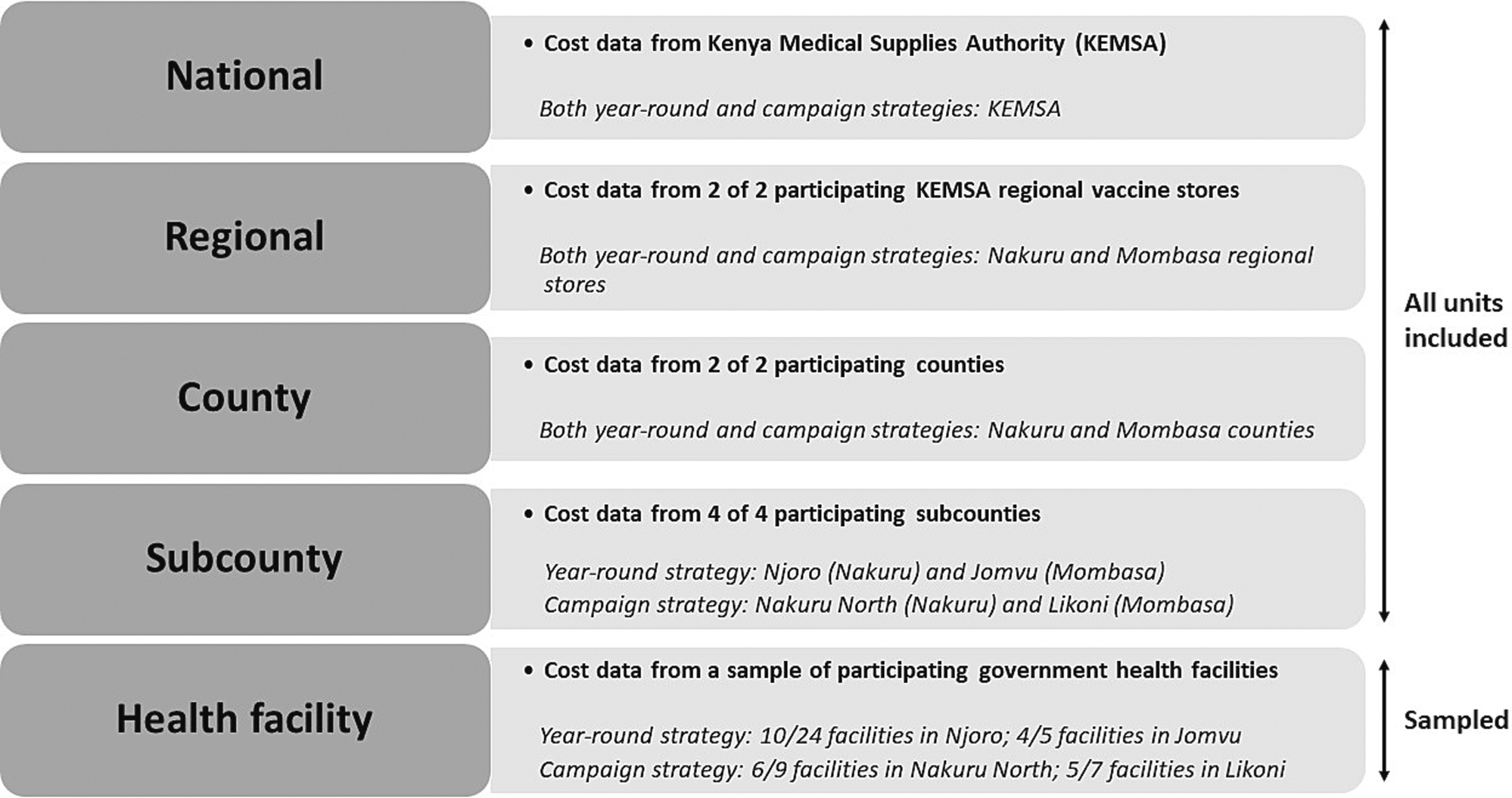
Description:Background: ; During November 2019–October 2021, a pediatric influenza vaccination demonstration project was conducted in four sub-counties in Kenya. The demonstration piloted two different delivery strategies: year-round vaccination and a four-month vaccination campaign. Our objective was to compare the costs of both delivery strategies. ; Methods: ; Cost data were collected using standardized questionnaires and extracted from government and project accounting records. We reported total costs and costs per vaccine dose administered by delivery strategy from the Kenyan government perspective in 2021 US$. Costs were separated into financial costs (monetary expenditures) and economic costs (financial costs plus the value of existing resources). We also separated costs by administrative level (national, regional, county, sub-county, and health facility) and program activity (advocacy and social mobilization; training; distribution, storage, and waste management; service delivery; monitoring; and supervision). ; Results: ; The total estimated cost of the pediatric influenza demonstration project was US$ 225,269 (financial) and US$ 326,691 (economic) for the year-round delivery strategy (30,397 vaccine doses administered), compared with US$ 214,753 (financial) and US$ 242,385 (economic) for the campaign strategy (25,404 doses administered). Vaccine purchase represented the largest proportion of costs for both strategies. Excluding vaccine purchase, the cost per dose administered was US$ 1.58 (financial) and US$ 5.84 (economic) for the year-round strategy and US$ 2.89 (financial) and US$ 4.56 (economic) for the campaign strategy. ; Conclusions: ; The financial cost per dose was 83% higher for the campaign strategy than the year-round strategy due to larger expenditures for advocacy and social mobilization, training, and hiring of surge staff for service delivery. However, the economic cost per dose was more comparable for both strategies (year-round 22% higher than campaign), balanced by higher costs of operating equipment and monitoring activities for the year-round strategy. These delivery cost data provide real-world evidence to inform pediatric influenza vaccine introduction in Kenya.
-
Subjects:
-
Keywords:
-
Source:Vaccine. 42(Suppl 4):125519
-
Pubmed ID:38154992
-
Pubmed Central ID:PMC11702309
-
Document Type:
-
Funding:
-
Volume:42
-
Download URL:
-
File Type:
 [PDF - 582.83 KB]
 -
Collection(s):
-
Main Document Checksum:urn:sha-512:d3de799ca638450d964a36a24a0adbd4e0572472fa3461b2bce92c6a7c06c51049f26908a67e13c26d1b3106fefd8f770bcc86f2ac50bca35d01c7a936709abe
Supporting Files


File Language:
English
 Was this page helpful?
 Found an issue?


CDC STACKS serves as an archival repository of CDC-published products including
scientific findings, journal articles, guidelines, recommendations, or other public health information authored or
co-authored by CDC or funded partners.
As a repository, CDC STACKS retains documents in their original published format to ensure public access to scientific information.
As a repository, CDC STACKS retains documents in their original published format to ensure public access to scientific information.
You May Also Like
COLLECTION
CDC Public Access