



Substance Use and Help Seeking as Coping Behaviors Among Parents and Unpaid Caregivers of Adults in the United States During the COVID-19 Pandemic
Supporting Files

-
11 2024 ; 11-2024
-
Available in CDC Stacks on November 01, 2025, 12:00 AM
File Language:
English
Details
-
Alternative Title:Am J Drug Alcohol Abuse
-
Personal Author:Varma, Prerna ; DePadilla, Lara ; Czeisler, Mark É. ; Rohan, Elizabeth ; Weaver, Matthew D. ; Quan, Stuart F. ; Robbins, Rebecca ; Patel, Chirag G. ; Melillo, Stephanie ; Drane, Alexandra ; Winnay, Sarah Stephens ; Lane, Rashon I. ; Czeisler, Charles A. ; Howard, Mark E. ; Rajaratnam, Shantha M.W. ; Matjasko, Jennifer L.
-
Description:Background
During the COVID-19 pandemic, caregiving responsibilities may have been associated with increased substance use.
Objectives
To characterize substance use to cope with stress and willingness to seek help among: (i) parents, (ii) unpaid caregivers of adults, and (iii) parent-caregivers.
Methods
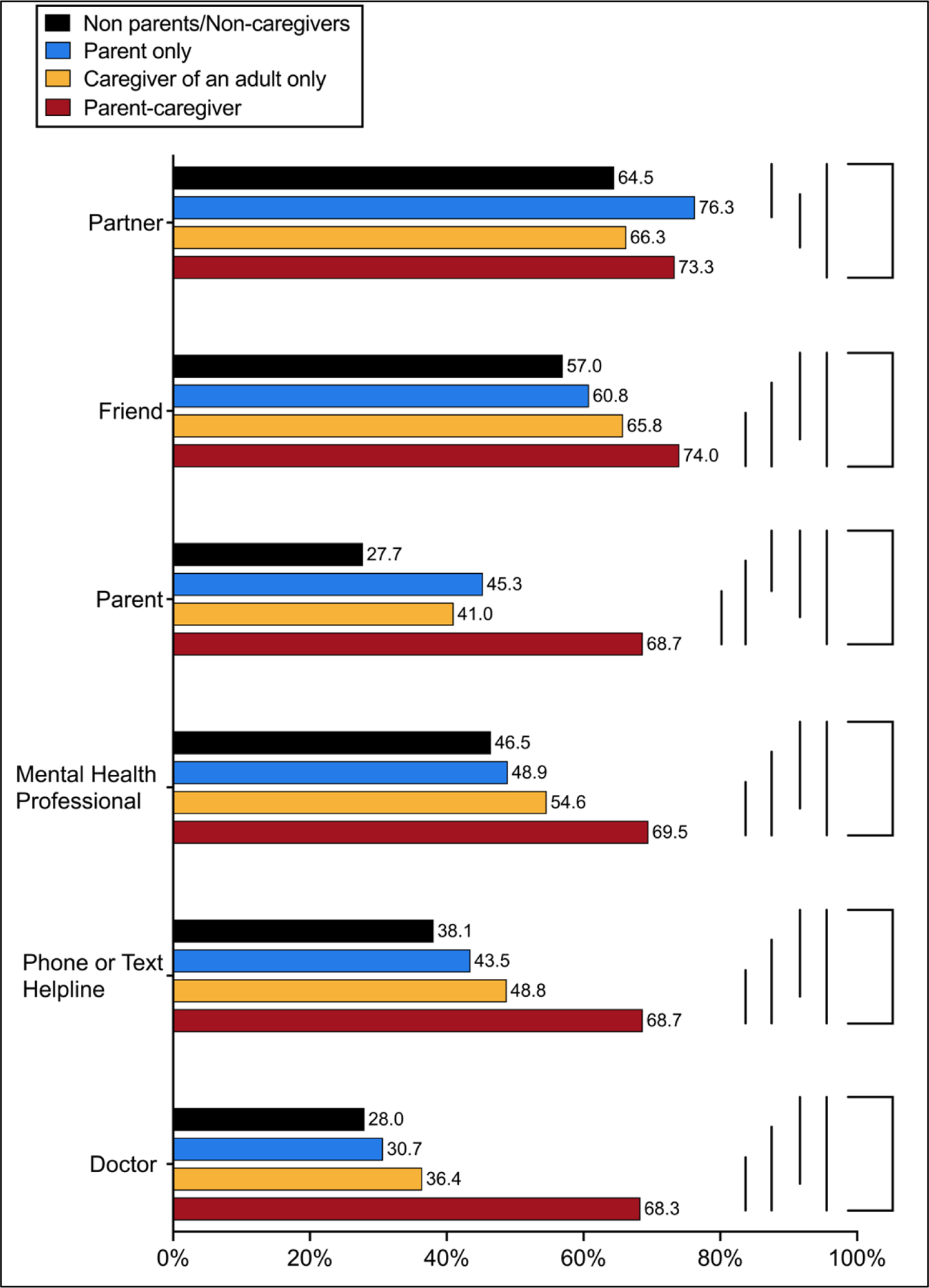
Data were analyzed for 10,444 non-probabilistic internet-based survey respondents of the COVID-19 Outbreak Public Evaluation (COPE) initiative (5227 females, 5217 males). Questions included new or increased substance use, substance use in the past 30 days to cope, insomnia, mental health, and willingness to seek help.
Results
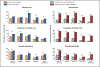
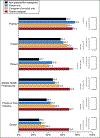
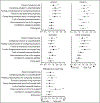
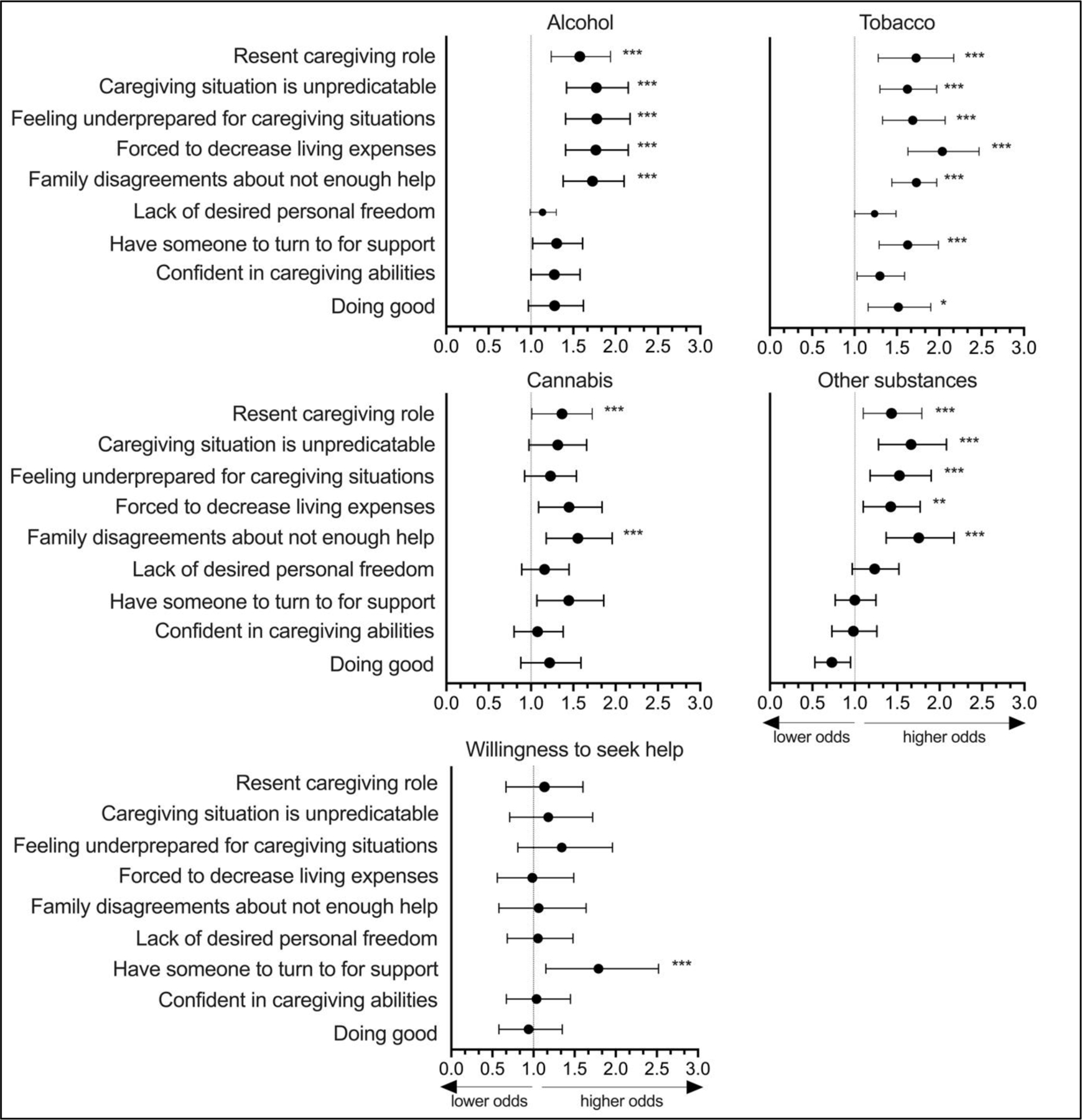
Nearly 20% of parents and unpaid caregivers of adults each reported new or increased use of substances to cope with stress or emotions;65.4% of parent-caregivers endorsed this response. Compared to non-caregivers, all caregiver groups had higher odds of new or increased use of substances, with parent-caregivers showing the largest effect size (aOR: 7.19 (5.87–8.83), p < .001). Parent-caregivers had four times the adjusted odds of using drugs other than cannabis (aOR: 4.01 (3.15–5.09), p < .001) compared to non-caregivers).
Conclusions
Caregivers may initiate or increase substance use as a coping strategy when under stress. The higher odds of substance use underscores the importance of efforts to screen for sleep disturbances and adverse mental health symptoms particularly among parent-caregivers. Clinicians may consider asking patients about family situations more broadly to help identify people who may be experiencing stress related to caregiving and, if indicated, offer treatment to potentially alleviate some of the risks. -
Subjects:
-
Keywords:
-
Source:Am J Drug Alcohol Abuse. 50(6):851-863
-
Pubmed ID:39436314
-
Pubmed Central ID:PMC11698632
-
Document Type:
-
Funding:
-
Volume:50
-
Issue:6
-
Download URL:
-
File Type:
 [PDF - 753.09 KB]
 -
Collection(s):
-
Main Document Checksum:urn:sha-512:8258620f5011e3515907d2d6cc08829032aee670c1a2a5574c9c7fe995143de10611c15e980e929b9d5cb26766d424ed75376f2d262784084d29d5433280a8d8
Supporting Files


File Language:
English
 Was this page helpful?
 Found an issue?


CDC STACKS serves as an archival repository of CDC-published products including
scientific findings, journal articles, guidelines, recommendations, or other public health information authored or
co-authored by CDC or funded partners.
As a repository, CDC STACKS retains documents in their original published format to ensure public access to scientific information.
As a repository, CDC STACKS retains documents in their original published format to ensure public access to scientific information.
You May Also Like
COLLECTION
CDC Public Access