



GEP NEC tumor spheroid drug screen reveals vulnerability to Tyrosyl-DNA phosphodiesterase 1 (TDP1) inhibitors
Supporting Files

-
3 2024
-
File Language:
English
Details
-
Alternative Title:Surgery
-
Personal Author:
-
Description:Background
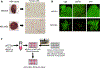
Gastroenteropancreatic neuroendocrine carcinomas (GEP NECs) are rare neoplasms with no effective treatments and poor prognosis. Few reliable pre-clinical models exist for the study of GEP NECs, limiting investigation of novel treatments. Here, we used tumor spheroids from our recently established GEP NEC Patient-derived Xenograft (PDX) models to systematically screen for compounds with diverse structures to identify potential new categories of therapeutic agents that can target GEP NECs.
Methods
Tumor spheroids were derived from our NEC913 and NEC1452 GEP NEC PDX models. GEP NEC spheroids were screened against a library of 885 compounds from the National Cancer Institute Diversity Set VII collection. Cell viability was measured via AlamarBlue assay. After identification of potential therapeutic compounds, synergy screening of a selected group with temozolomide and doxorubicin was performed, and these combinations were further analyzed for γH2AX and phosphorylated-ERK proteins.
Results
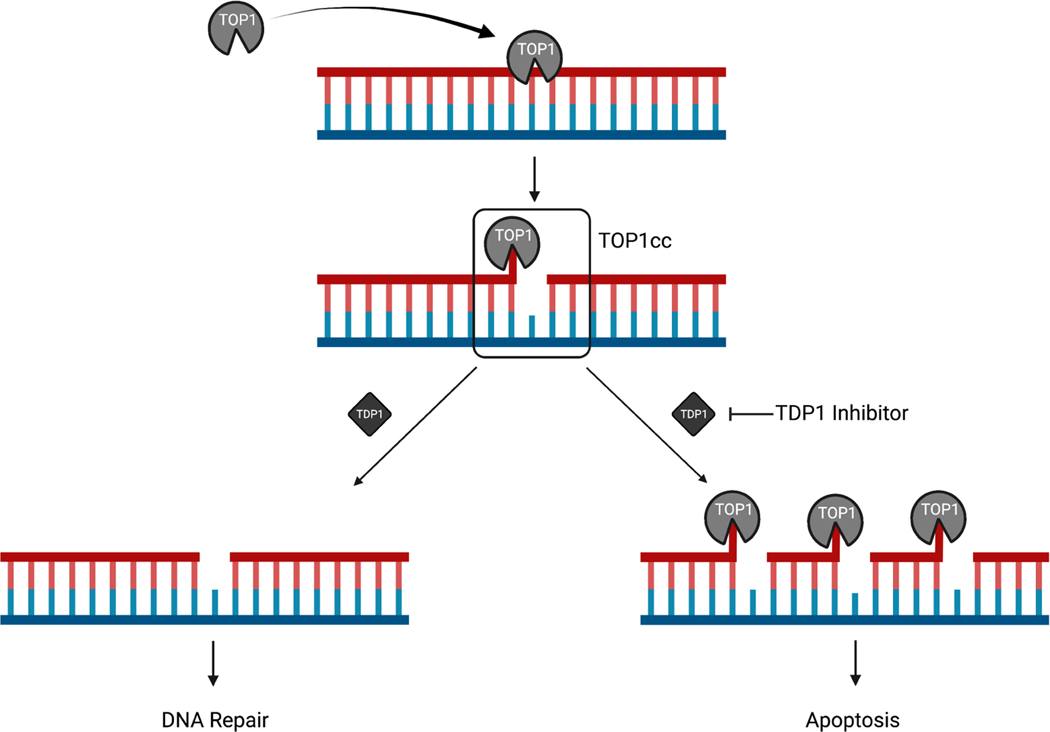
We identified 16 compounds that inhibit over 75% of GEP NEC spheroid survival. Interestingly, 7 are inhibitors of Tyrosyl-DNA phosphodiesterase 1 (TDP1), a DNA repair enzyme working closely with the topoisomerase I complex. When combined with temozolomide or doxorubicin, the TDP1 inhibitor cytarabine increased the cytotoxic effects of these drugs on NEC1452 cells which was further evidenced by increasing γH2AX and decreasing phosphorylated-ERK in combination treatment compared to temozolomide alone.
Conclusion
Both NEC913 and NEC1452 GEP NEC spheroid lines are useful pre-clinical models for drug testing. Our library screen revealed these GEP NEC spheroids are highly sensitive to a novel class of anti-cancer drugs that target nuclear genome stability.
-
Subjects:
-
Keywords:
-
Source:Surgery. 175(3):605-612
-
Pubmed ID:37914572
-
Pubmed Central ID:PMC10872605
-
Document Type:
-
Funding:
-
Volume:175
-
Issue:3
-
Collection(s):
-
Main Document Checksum:urn:sha-512:9f015c731112b6c40e757a9a5978c7ea7c137cfcf2853ece965a1aa704d59ae496fffc9c84c49261119fa0227d2d574e2b8c69ecb07a451f1872b5b140871db2
-
Download URL:
-
File Type:
 [PDF
- 1.69 MB
]
[PDF
- 1.69 MB
]
Supporting Files


File Language:
English
 Was this page helpful?
 Found an issue?


CDC STACKS serves as an archival repository of CDC-published products including
scientific findings,
journal articles, guidelines, recommendations, or other public health information authored or
co-authored by CDC or funded partners.
As a repository, CDC STACKS retains documents in their original published format to ensure public access to scientific information.
As a repository, CDC STACKS retains documents in their original published format to ensure public access to scientific information.
You May Also Like
COLLECTION
CDC Public Access