



Bordetella pertussis Strains with Increased Toxin Production Associated with Pertussis Resurgence
Supporting Files
Public Domain

-
Aug 2009
Details
-
Alternative Title:Emerg Infect Dis
-
Personal Author:
-
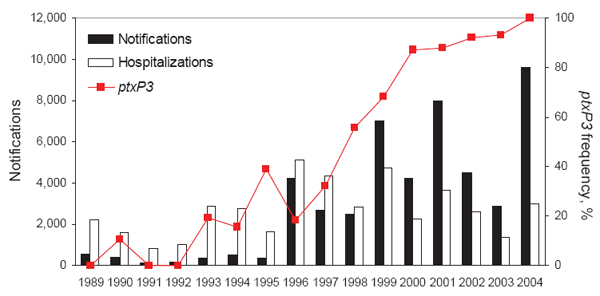
Description:Before childhood vaccination was introduced in the 1940s, pertussis was a major cause of infant death worldwide. Widespread vaccination of children succeeded in reducing illness and death. In the 1990s, a resurgence of pertussis was observed in a number of countries with highly vaccinated populations, and pertussis has become the most prevalent vaccine-preventable disease in industrialized countries. We present evidence that in the Netherlands the dramatic increase in pertussis is temporally associated with the emergence of Bordetella pertussis strains carrying a novel allele for the pertussis toxin promoter, which confers increased pertussis toxin (Ptx) production. Epidemiologic data suggest that these strains are more virulent in humans. We discuss changes in the ecology of B. pertussis that may have driven this adaptation. Our results underline the importance of Ptx in transmission, suggest that vaccination may select for increased virulence, and indicate ways to control pertussis more effectively.
-
Subjects:
- Research
- Gram-negative bacterial infections
- bacteria
- respiratory tract infections
- pertussis
- whooping cough
- resurgence
- vaccination
- the Netherlands
- research
- Adolescent
- Alleles
- Bacterial Outer Membrane Proteins
- Base Sequence
- Bordetella pertussis
- Child
- Child, Preschool
- Communicable Diseases, Emerging
- DNA Primers
- DNA, Bacterial
- Genes, Bacterial
- Humans
- Infant
- Molecular Epidemiology
- Molecular Sequence Data
- Netherlands
- Pertussis Toxin
- Polymorphism, Genetic
- Promoter Regions, Genetic
- Sequence Homology, Nucleic Acid
- Virulence
- Virulence Factors, Bordetella
- Whooping Cough
- Young Adult
-
Source:Emerg Infect Dis. 15(8):1206-1213.
-
Document Type:
-
Volume:15
-
Issue:8
-
Download URL:
-
File Type:
 [PDF - 688.38 KB]
 -
Collection(s):
-
Main Document Checksum:urn:sha256:8fccf463d3ea40cc40aeb3522befe6a01cf3fd381f2ec561e7f8b65016ff5da4
Supporting Files


 Was this page helpful?
 Found an issue?







CDC STACKS serves as an archival repository of CDC-published products including
scientific findings, journal articles, guidelines, recommendations, or other public health information authored or
co-authored by CDC or funded partners.
As a repository, CDC STACKS retains documents in their original published format to ensure public access to scientific information.
As a repository, CDC STACKS retains documents in their original published format to ensure public access to scientific information.
You May Also Like
COLLECTION
Emerging Infectious Diseases