



Young adult DUI behavior and perceived norms of driving under the influence of simultaneous alcohol and cannabis use
Supporting Files

-
12-2024
-
Available in CDC Stacks on 2025-12-01T00:00:00Z
File Language:
English
Details
-
Alternative Title:Alcohol Clin Exp Res (Hoboken)
-
Personal Author:
-
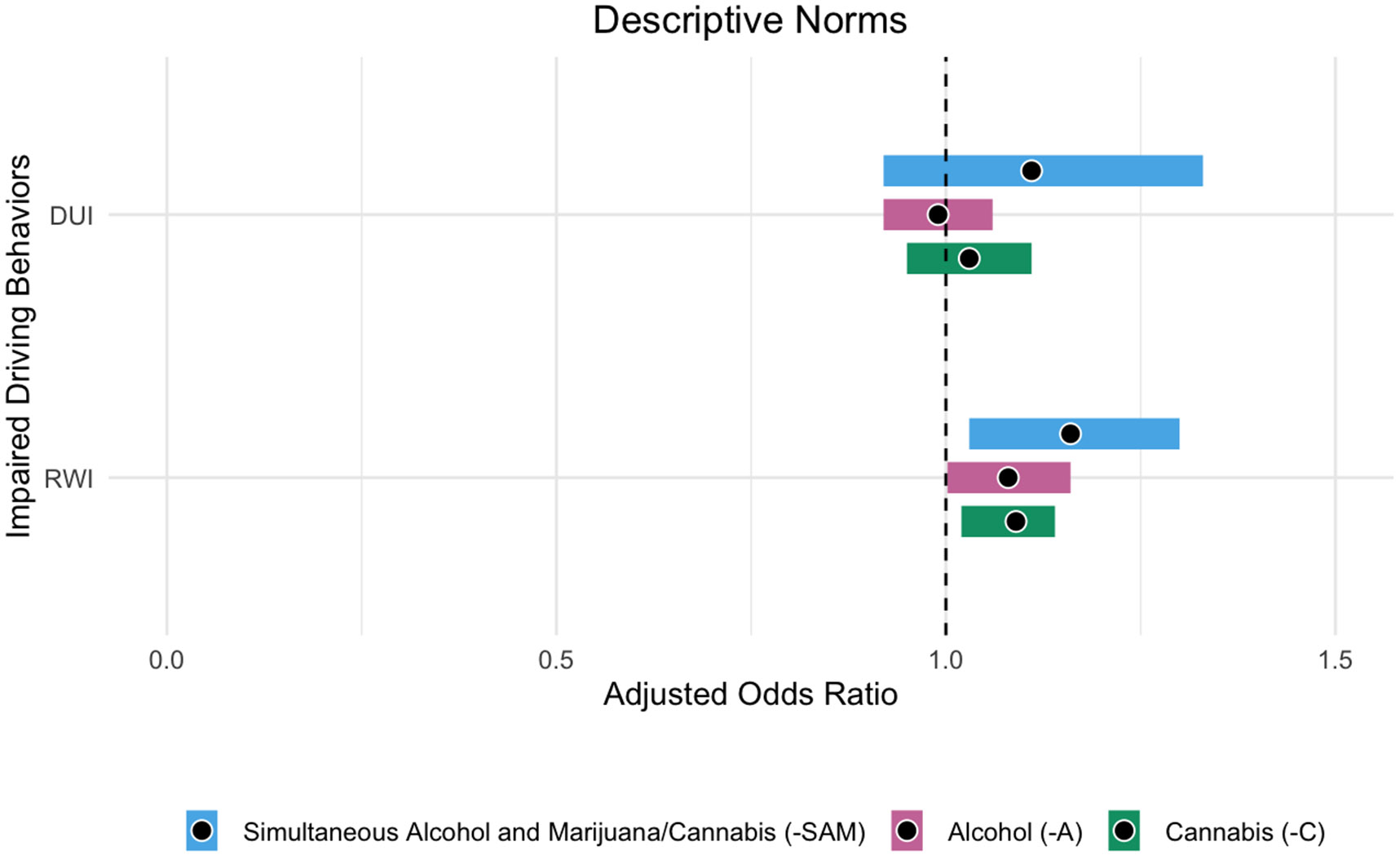
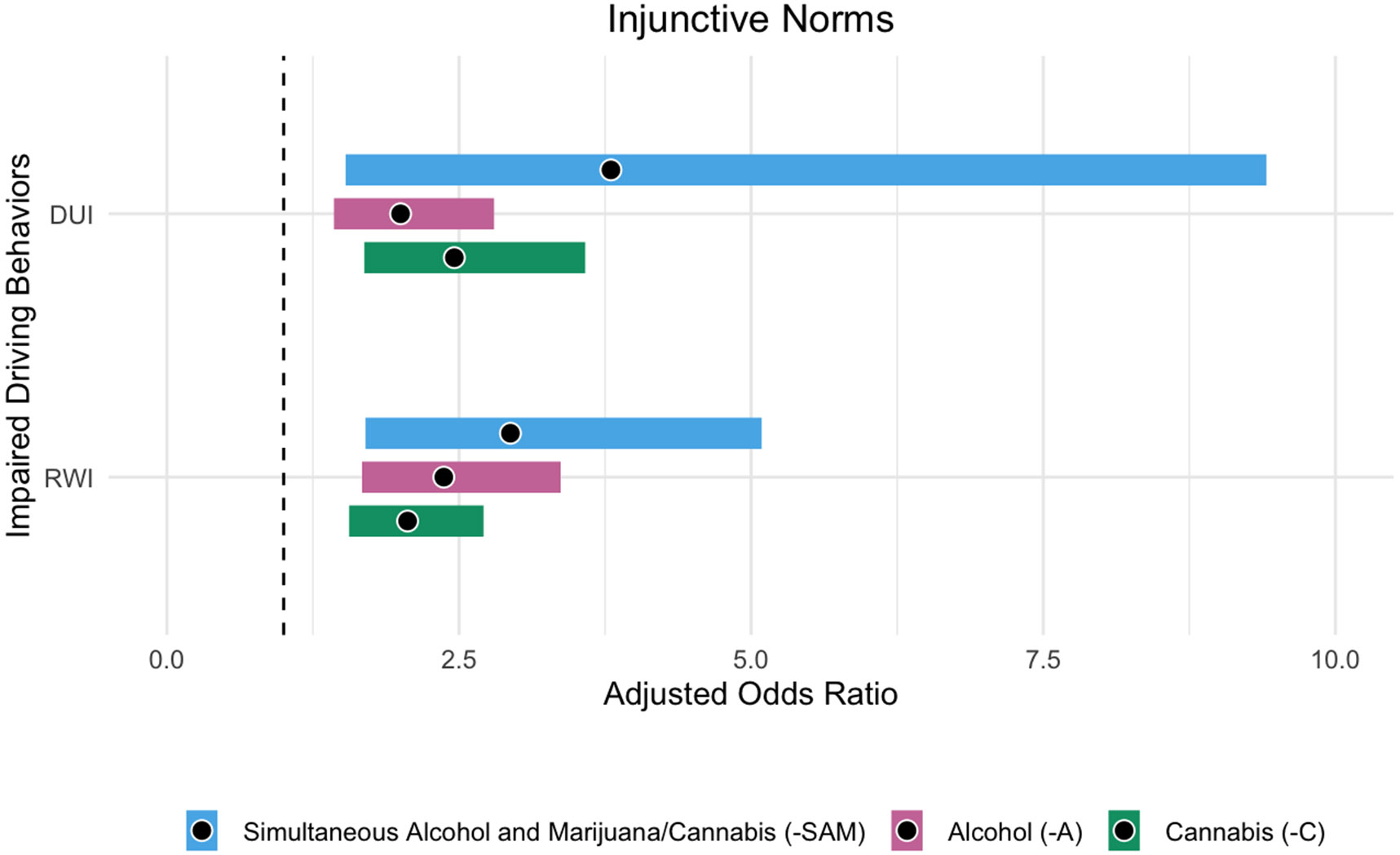
Description:Background: ; Impaired driving behaviors among young adults who are under the influence of simultaneous alcohol and marijuana/cannabis (SAM) use are associated with increased risks of motor vehicle accidents and resulting increased injury and mortality. Exploration of associations with descriptive and injunctive norms may have prevention implications. ; Methods: ; Young adults (aged 18-25; N=1,941) in the 2019 cohort of the Washington Young Adult Health Survey comprised study participants. Associations between descriptive norms (estimates of other’s frequency of driving under the influence of SAM DUI-SAM and riding with a SAM impaired driver RWI-SAM), injunctive norms (perceived approval or disapproval of DUI-SAM and RWI-SAM for young adults in their community), and past month DUI and RWI behaviors were assessed with logistic regression models, adjusting for covariates and applying post-stratification weights. ; Results: ; DUI-SAM was reported by 2.7% and almost double (5.3%) reported RWI-SAM at least once in the past month. Almost half of participants believed the average young adults in Washington state engaged in DUI-SAM (49.8%) and RWI-SAM (48.7%) at least once a month in the past year (i.e., descriptive norms). The majority reported DUI-SAM (68.8%) and RWI-SAM (67.6%) to be totally unacceptable for young adults in their community (i.e., injunctive norms). In models adjusting for covariates including SAM use frequency and corresponding injunctive norms, descriptive norms were not associated with DUI, but were positively associated with RWI-SAM. However, after controlling for SAM use frequency and descriptive norms, higher perceived approval (i.e., injunctive norms) was significantly associated with increased odds of all DUI and RWI behaviors. ; Conclusions: ; Injunctive norms for SAM impaired driving behaviors may be a promising intervention focus for DUI and RWI behaviors. Future research is needed to replicate these findings to determine if development and evaluation of individual and community-based interventions focused on changing normative beliefs are warranted.
-
Keywords:
-
Source:Alcohol Clin Exp Res (Hoboken). 48(12):2319-2330
-
Pubmed ID:39616528
-
Pubmed Central ID:PMC11631637
-
Document Type:
-
Funding:
-
Volume:48
-
Issue:12
-
Download URL:
-
File Type:
 [PDF - 399.16 KB]
 -
Collection(s):
-
Main Document Checksum:urn:sha-512:a90010e06b1c89f251073f5f88b23b715e45bd25b7a1488c56ab1f70c5274e6623219f77c14760060ac0ae7f77ceed7310fe11dcd661bf2308a264de37ca53b5
Supporting Files


File Language:
English
 Was this page helpful?
 Found an issue?



CDC STACKS serves as an archival repository of CDC-published products including
scientific findings, journal articles, guidelines, recommendations, or other public health information authored or
co-authored by CDC or funded partners.
As a repository, CDC STACKS retains documents in their original published format to ensure public access to scientific information.
As a repository, CDC STACKS retains documents in their original published format to ensure public access to scientific information.
You May Also Like
COLLECTION
CDC Public Access