



Increase in Pneumococcus Macrolide Resistance, United States
Supporting Files
Public Domain

-
Aug 2009
File Language:
English
Details
-
Alternative Title:Emerg Infect Dis
-
Personal Author:
-
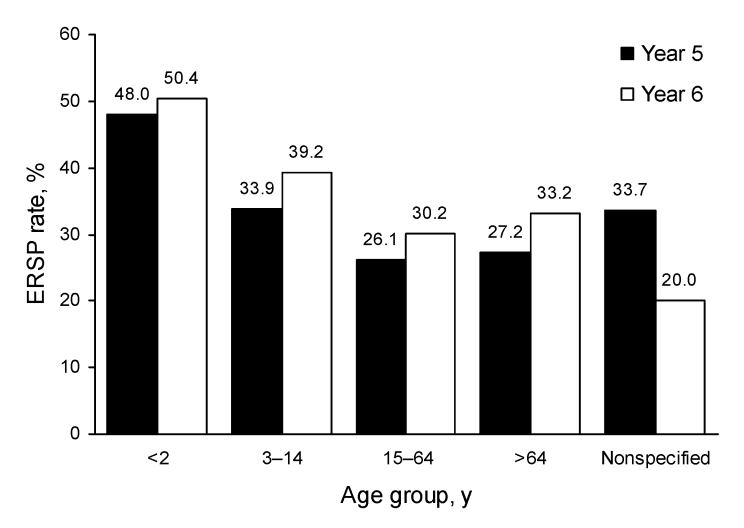
Description:During year 6 (2005-2006) of the Prospective Resistant Organism Tracking and Epidemiology for the Ketolide Telithromycin surveillance study, 6,747 Streptococcus pneumoniae isolates were collected at 119 centers. The susceptibility of these isolates to macrolides was compared with data from previous years. Macrolide resistance increased significantly in year 6 (35.3%) from the stable rate of approximately 30% for the previous 3 years (p<0.0001). Macrolide resistance increased in all regions of the United States and for all patient age groups. Rates were highest in the south and for children 0-2 years of age. Lower-level efflux mef(A)-mediated macrolide resistance decreased in prevalence to approximately 50%, and highly resistant erm(B) + mef(A) strains increased to 25%. Telithromycin and levofloxacin susceptibility rates were >99% and >98%, respectively, irrespective of genotype. Pneumococcal macrolide resistance in the United States showed its first significant increase since 2000. High-level macrolide resistance is also increasing.
-
Subjects:
- Research
- Adolescent
- Adult
- Aged
- Bacterial Proteins
- Child
- Child, Preschool
- Communicable Diseases, Emerging
- Community-Acquired Infections
- Drug Resistance, Bacterial
- Genotype
- Humans
- Infant
- Infant, Newborn
- Macrolides
- Membrane Proteins
- Methyltransferases
- Middle Aged
- Pneumococcal Infections
- Respiratory Tract Infections
- Time Factors
- Young Adult
-
Source:Emerg Infect Dis. 15(8):1260-1264.
-
Document Type:
-
Place as Subject:
-
Location:
-
Volume:15
-
Issue:8
-
Download URL:
-
File Type:
 [PDF - 440.00 KB]
 -
Collection(s):
-
Main Document Checksum:urn:sha256:dfe18e806b7c4d40d65baa10e37ea3857843e2d939b681a0770ed8209b10637d
Supporting Files


File Language:
English
 Was this page helpful?
 Found an issue?



CDC STACKS serves as an archival repository of CDC-published products including
scientific findings, journal articles, guidelines, recommendations, or other public health information authored or
co-authored by CDC or funded partners.
As a repository, CDC STACKS retains documents in their original published format to ensure public access to scientific information.
As a repository, CDC STACKS retains documents in their original published format to ensure public access to scientific information.
You May Also Like
COLLECTION
Emerging Infectious Diseases