



Hantavirus Pulmonary Syndrome, Central Plateau, Southeastern, and Southern Brazil
Supporting Files
Public Domain

-
2009/04/01
-
Series: Emerging Infectious Diseases
File Language:
English
Details
-
Journal Article:Emerging Infectious Diseases
-
Personal Author:Figueiredo, Luiz T.M. ; Moreli, Marcos L. ; de Sousa, Ricardo L.M. ; Borges, Alessandra A. ; de Figueiredo, Glauciane G. ; Machado, Alex M. ; Bisordi, Ivani ; Nagasse-Sugahara, Teresa K. ; Suzuki, Akemi ; Pereira, Luiz E. ; de Souza, Renato P. ; de Souza, Luiza T.M. ; Braconi, Carla T. ; Harsi, Charlotte M. ; de Andrade Zanotto, Paolo M.
-
Corporate Authors:
-
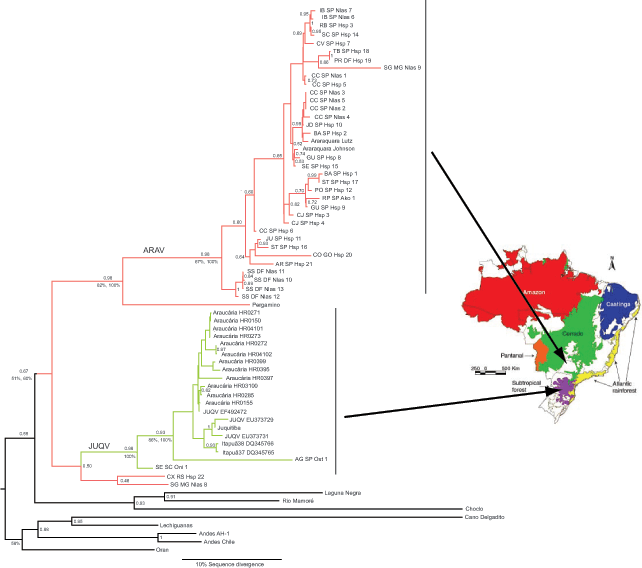
Description:Hantavirus pulmonary syndrome (HPS) is an increasing health problem in Brazil because of encroachment of sprawling urban, agricultural, and cattle-raising areas into habitats of subfamily Sigmodontinae rodents, which serve as hantavirus reservoirs. From 1993 through June 2007, a total of 884 cases of HPS were reported in Brazil (case-fatality rate 39%). To better understand this emerging disease, we collected 89 human serum samples and 68 rodent lung samples containing antibodies to hantavirus from a 2,500-km-wide area in Brazil. RNA was isolated from human samples and rodent tissues and subjected to reverse transcription-PCR. Partial sequences of nucleocapsid protein and glycoprotein genes from 22 human and 16 rodent sources indicated only Araraquara virus and Juquitiba virus lineages. The case-fatality rate of HPS was higher in the area with Araraquara virus. This virus, which may be the most virulent hantavirus in Brazil, was associated with areas that have had greater anthropogenic changes.
-
Subjects:
-
Keywords:
-
Series:
-
DOI:
-
ISSN:1080-6059 (digital) ; 1080-6040 (print)
-
Pubmed ID:19331732
-
Pubmed Central ID:PMC2671436
-
Document Type:
-
Genre:
-
Place as Subject:
-
Rights:Public Domain
-
Topic:
-
Location:
-
Volume:15
-
Issue:4
-
Citation:Emerg Infect Dis. 15(4):561-567.
-
Download URL:
-
File Type:
 [PDF - 190.41 KB]
 -
Collection(s):
-
Main Document Checksum:urn:sha-512:a40bf7f074c1e1ce95cd6502d64f3880f11252007278ff68f4fa5c88f4ecebe67a8e60bc3f72a3b7d6d4e333620f47dfeeab6f172a5f1e4fc1397c206d65bd2f
Supporting Files


File Language:
English
 Was this page helpful?
 Found an issue?

CDC STACKS serves as an archival repository of CDC-published products including
scientific findings, journal articles, guidelines, recommendations, or other public health information authored or
co-authored by CDC or funded partners.
As a repository, CDC STACKS retains documents in their original published format to ensure public access to scientific information.
As a repository, CDC STACKS retains documents in their original published format to ensure public access to scientific information.
You May Also Like
COLLECTION
Emerging Infectious Diseases