



Puumala Hantavirus Excretion Kinetics in Bank Voles (Myodes glareolus)
Supporting Files
Public Domain

-
2008/08/01
-
Series Emerging Infectious Diseases
File Language:
English
Details
-
Journal Article:Emerging Infectious Diseases
-
Personal Author:
-
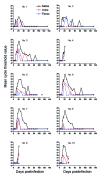
Description:Puumala hantavirus is present in bank voles (Myodes glareolus) and is believed to be spread mainly by contaminated excretions. In this study, we subcutaneously inoculated 10 bank voles with Puumala virus and sampled excretions until day 133 postinfection. Levels of shed viral RNA peaked within 11-28, 14-21, and 11-28 days postinfection for saliva, urine, and feces, respectively. The latest detection of viral RNA was 84, 44, and 44 days postinfection in saliva, urine, and feces, respectively. In contrast, blood of 5 of 6 animals contained viral RNA at day 133 postinfection, suggesting that bank voles secrete virus only during a limited time of the infection. Intranasal inoculations with bank vole saliva, urine, or feces were all infectious for virus-negative bank voles, indicating that these 3 transmission routes may occur in nature and that rodent saliva might play a role in transmission to humans.
-
Subjects:
-
Keywords:
-
Series:
-
DOI:
-
ISSN:1080-6059 (digital) ; 1080-6040 (print)
-
Pubmed ID:18680643
-
Pubmed Central ID:PMC2600398
-
Document Type:
-
Genre:
-
Rights:Public Domain
-
Topic:
-
Volume:14
-
Issue:8
-
Citation:Emerg Infect Dis. 14(8):1209-1215.
-
Download URL:
-
File Type:
 [PDF - 329.04 KB]
 -
Collection(s):
-
Main Document Checksum:urn:sha-512:2abe0423eb440ad7e10e5bb56ba00bd3868e96d2ed5ebc9fb6cc000078c65fd7d8e7247ebef1f8ac6539bf11bf2233df36ed2bee9c740e70347a7ecf99a79178
Supporting Files


File Language:
English
 Was this page helpful?
 Found an issue?



CDC STACKS serves as an archival repository of CDC-published products including
scientific findings, journal articles, guidelines, recommendations, or other public health information authored or
co-authored by CDC or funded partners.
As a repository, CDC STACKS retains documents in their original published format to ensure public access to scientific information.
As a repository, CDC STACKS retains documents in their original published format to ensure public access to scientific information.
You May Also Like
COLLECTION
Emerging Infectious Diseases