



Hantavirus Outbreak, Germany, 2007
Supporting Files
Public Domain

-
2008/05/01
-
Series: Emerging Infectious Diseases
File Language:
English
Details
-
Journal Article:Emerging Infectious Diseases
-
Personal Author:
-
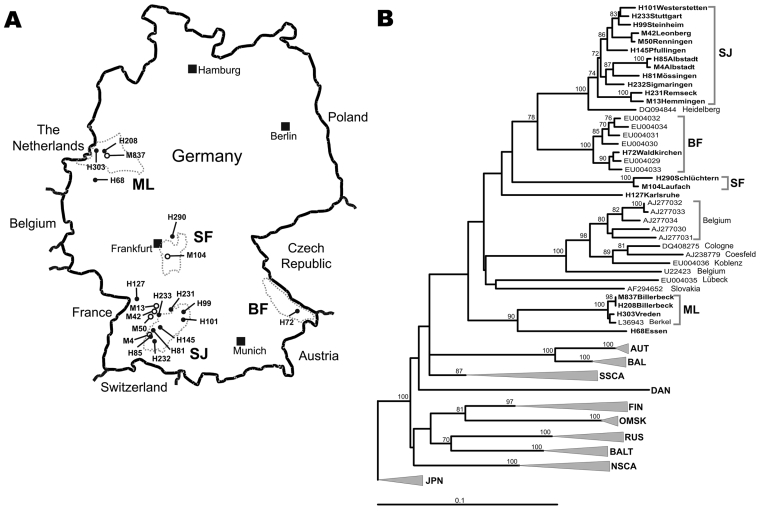
Description:Hantavirus disease (for review see 1) has been report- able in Germany since 2001, according to the Federal Infection Protection Act. In this country, Puumala virus (PUUV) causes most clinical hantavirus cases, although Dobrava-Belgrade virus and Tula virus also circulate (1). From 2001 through 2006, an aver- age of ≈220 cases were reported per year (incidence 0.267/100,000) with a maximum of 448 cases in 2005. In contrast, 1,687 cases were reported in 2007 (2). Whereas in 2005 the highest incidence of infection was in metropolitan areas (3), the current outbreak is focused in the rural areas in southern and western Germany. Clinical case- patients exhibit key characteristics of hantavirus disease (nephropathia epidemica): acute high fever; pain in the back, head, and/or abdomen; proteinuria; rise of serum creatinine; thrombocytopenia; and renal failure (1). The outbreak provided considerable numbers of clinical samples from the viremic phase and thus has enabled a molecular epidemiologic analysis of the circulating virus.
-
Subjects:
-
Series:
-
DOI:
-
ISSN:1080-6059 (digital) ; 1080-6040 (print)
-
Pubmed ID:18439382
-
Pubmed Central ID:PMC2600236
-
Document Type:
-
Genre:
-
Place as Subject:
-
Rights:Public Domain
-
Topic:
-
Location:
-
Volume:14
-
Issue:5
-
Citation:Emerg Infect Dis. 14(5):850-852.
-
Download URL:
-
File Type:
 [PDF - 133.67 KB]
 -
Collection(s):
-
Main Document Checksum:urn:sha-512:49be1291283e8b77fe27fb191618b639fdb8202344c63f04ba2970c7be35248b680d3dadd92b8f76514521e8b8a94b66376afaa889c64ba91acabe48b20ab304
Supporting Files


File Language:
English
 Was this page helpful?
 Found an issue?


CDC STACKS serves as an archival repository of CDC-published products including
scientific findings, journal articles, guidelines, recommendations, or other public health information authored or
co-authored by CDC or funded partners.
As a repository, CDC STACKS retains documents in their original published format to ensure public access to scientific information.
As a repository, CDC STACKS retains documents in their original published format to ensure public access to scientific information.
You May Also Like
COLLECTION
Emerging Infectious Diseases