



Transmission of Bartonella henselae by Ixodes ricinus
Supporting Files
Public Domain

-
Jul 2008
File Language:
English
Details
-
Alternative Title:Emerg Infect Dis
-
Personal Author:
-
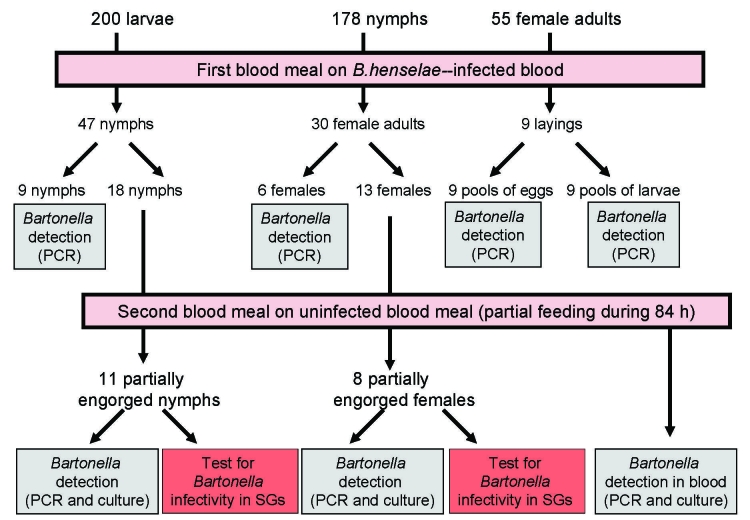
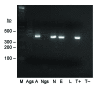
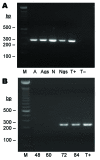
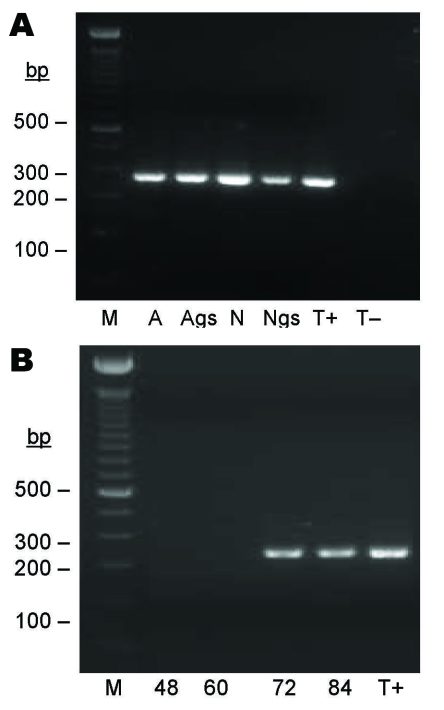
Description:Bartonella spp. are facultative intracellular bacteria associated with several emerging diseases in humans and animals. B. henselae causes cat-scratch disease and is increasingly associated with several other syndromes, particularly ocular infections and endocarditis. Cats are the main reservoir for B. henselae and the bacteria are transmitted to cats by cat fleas. However, new potential vectors are suspected of transmitting B. henselae, in particular, Ixodes ricinus, the most abundant ixodid tick that bites humans in western Europe. We used a membrane-feeding technique to infect I. ricinus with B. henselae and demonstrate transmission of B. henselae within I. ricinus across developmental stages, migration or multiplication of B. henselae in salivary glands after a second meal, and transmission of viable and infective B. henselae from ticks to blood. These results provide evidence that I. ricinus is a competent vector for B. henselae.
-
Subjects:
-
Source:Emerg Infect Dis. 14(7):1074-1080.
-
Document Type:
-
Volume:14
-
Issue:7
-
Download URL:
-
File Type:
 [PDF - 146.10 KB]
 -
Collection(s):
-
Main Document Checksum:urn:sha256:a4907a0d10389886abf5a9dba4cb74679fedb3c23e60f889f5f62fbfc0feddeb
Supporting Files


File Language:
English
 Was this page helpful?
 Found an issue?


CDC STACKS serves as an archival repository of CDC-published products including
scientific findings, journal articles, guidelines, recommendations, or other public health information authored or
co-authored by CDC or funded partners.
As a repository, CDC STACKS retains documents in their original published format to ensure public access to scientific information.
As a repository, CDC STACKS retains documents in their original published format to ensure public access to scientific information.
You May Also Like
COLLECTION
Emerging Infectious Diseases