



Comparison of trace elements in size-fractionated particles in two communities with contrasting socioeconomic status in Houston, TX
Supporting Files

-
2 2017 ; 2-2017
-
Available in CDC Stacks on November 01, 2024, 12:00 AM
File Language:
English
Details
-
Alternative Title:Environ Monit Assess
-
Personal Author:
-
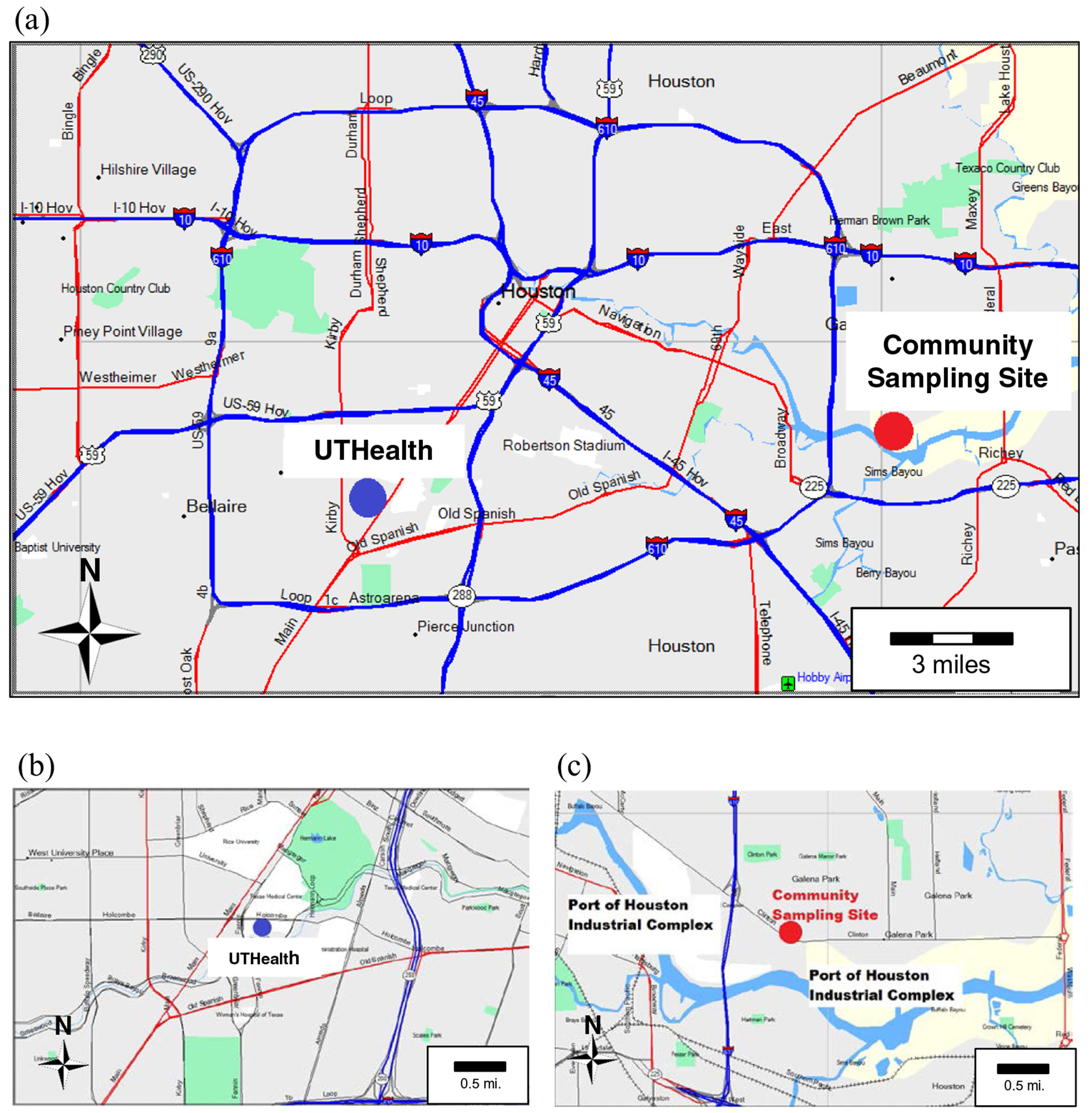
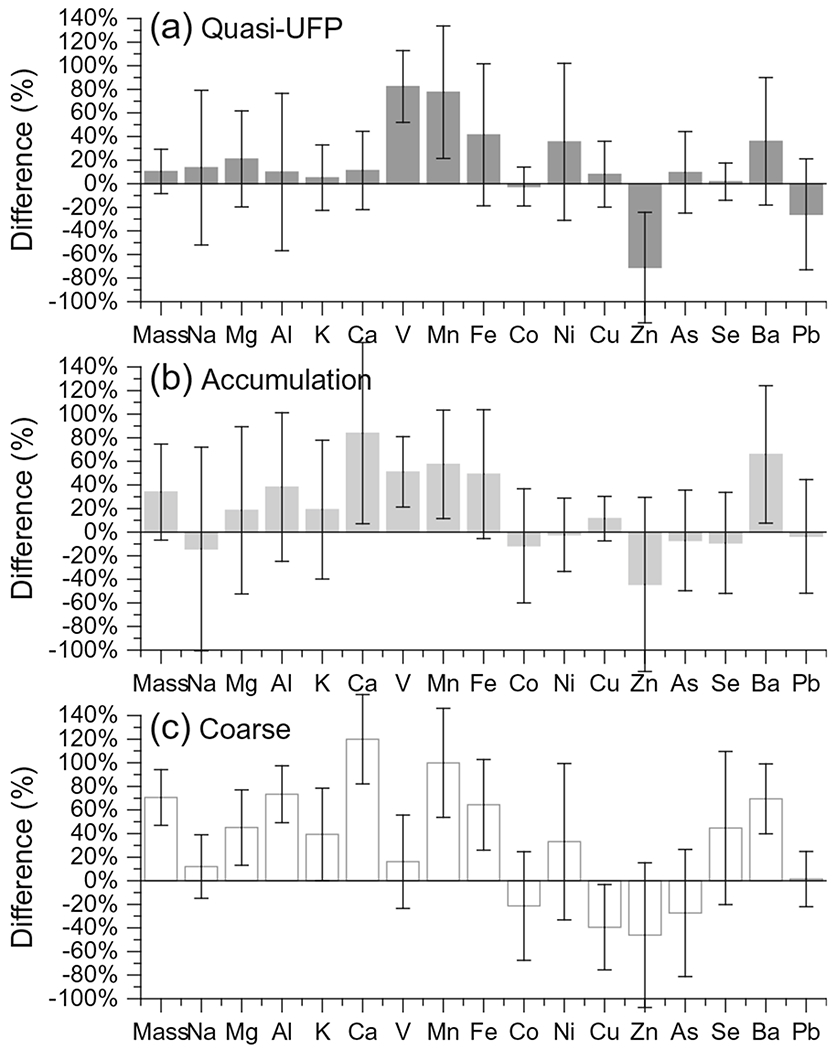
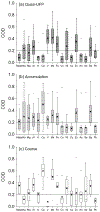
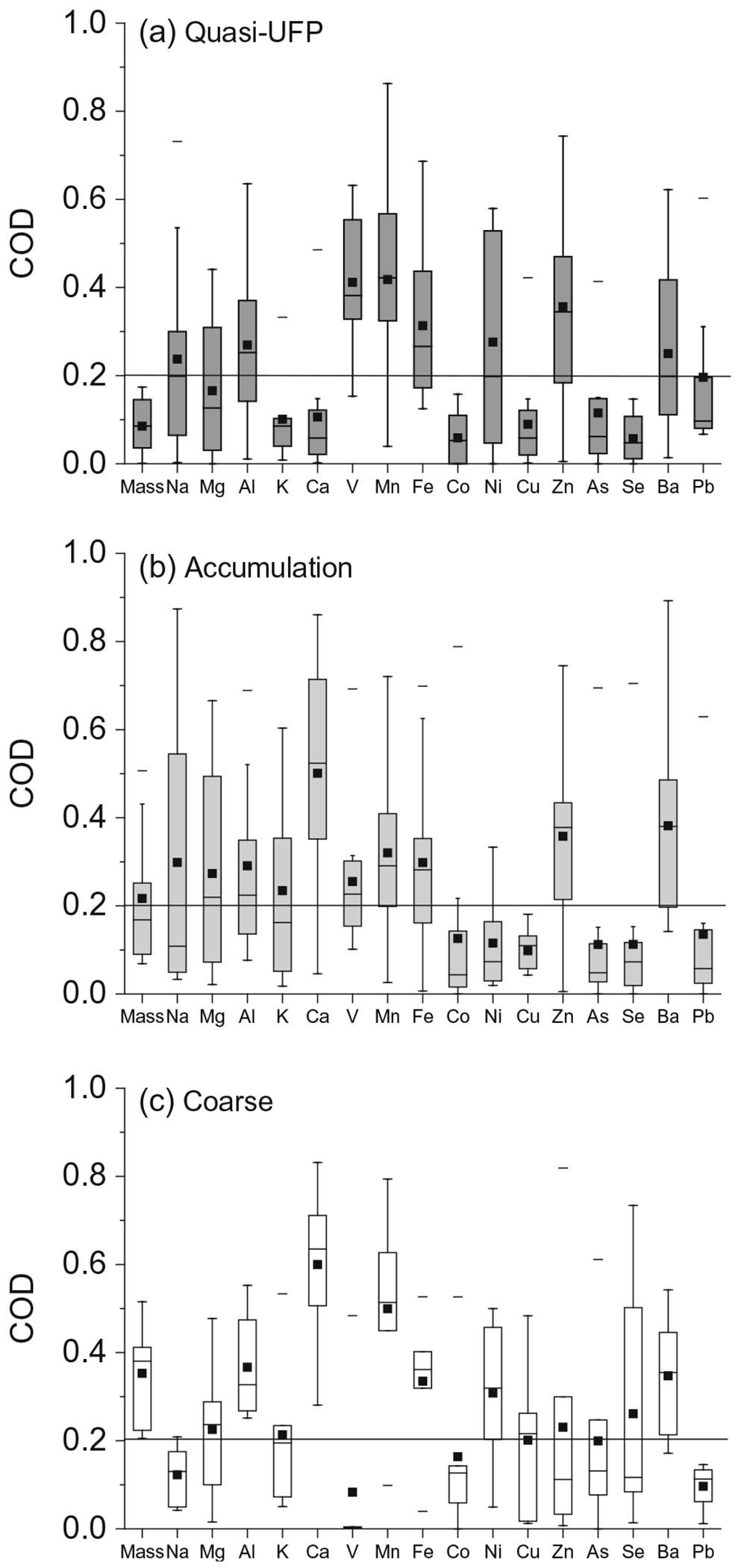
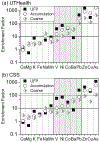
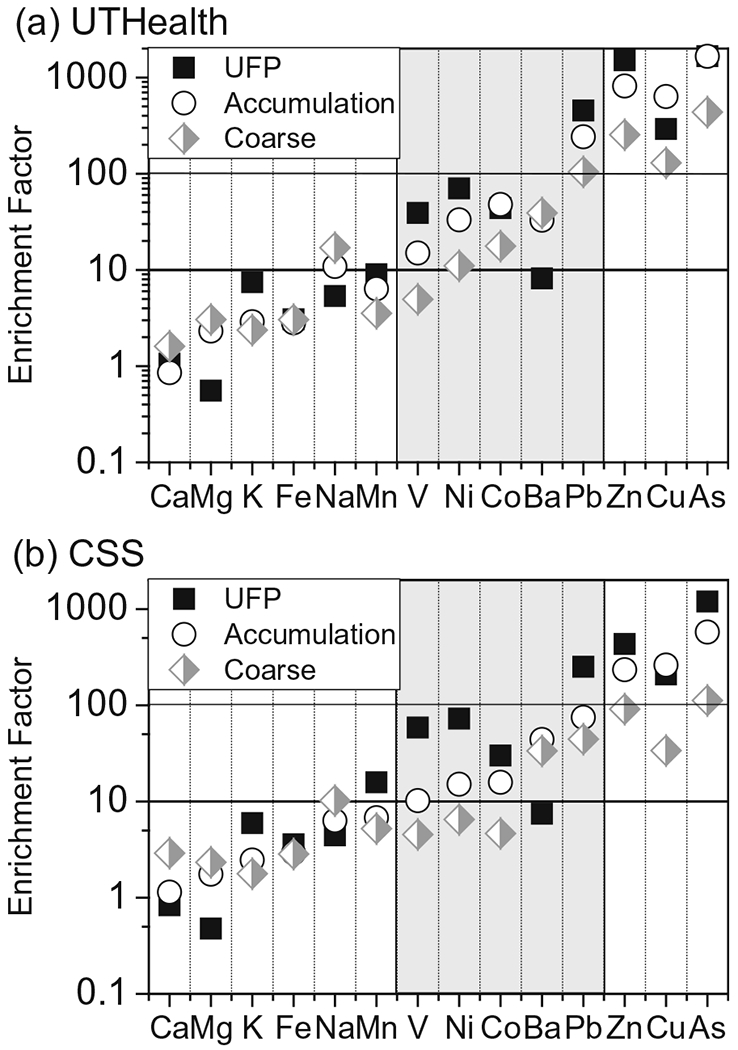
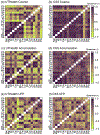
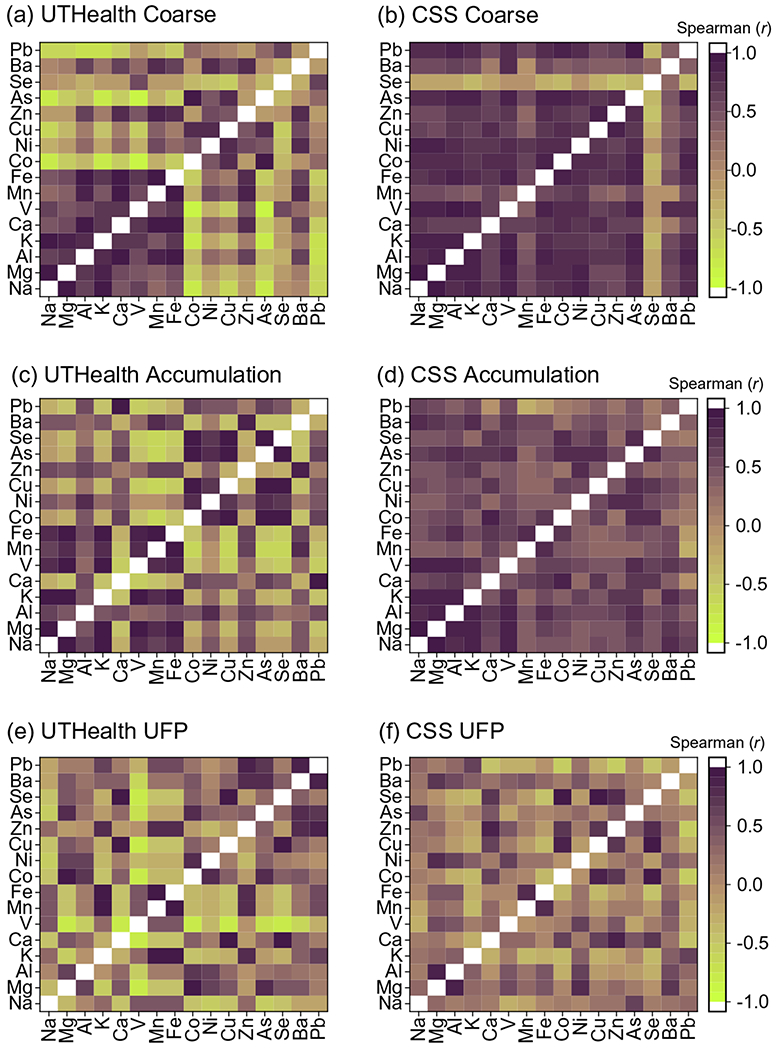
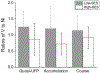
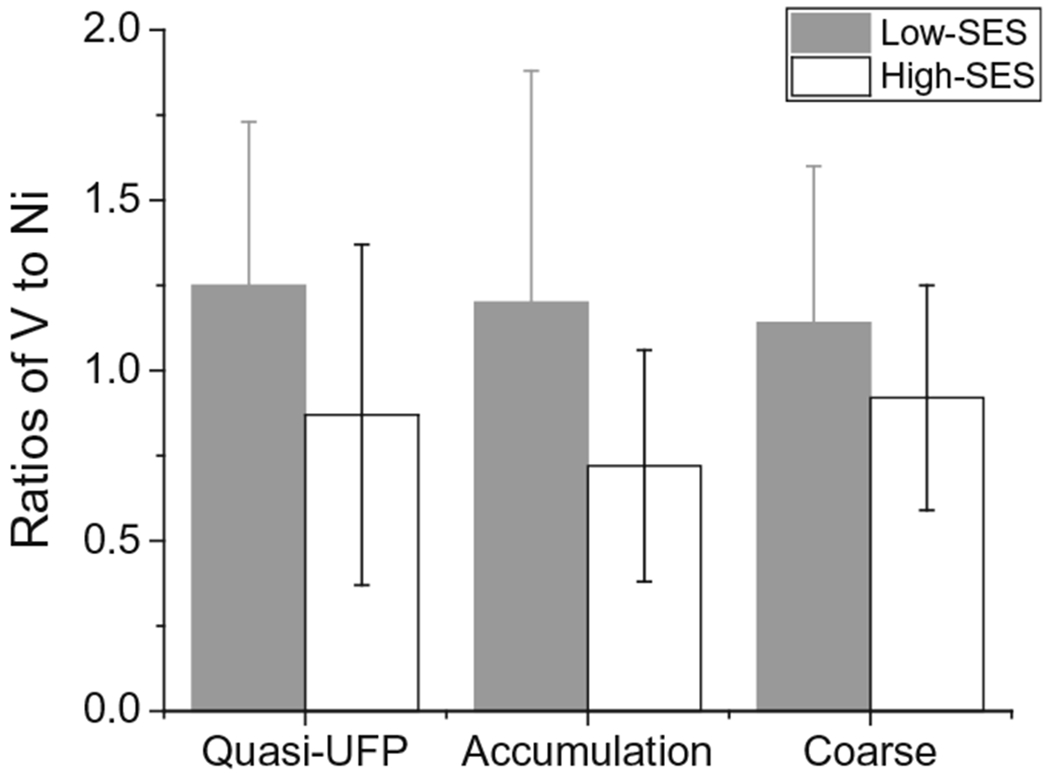
Description:Levels of ambient air pollutants, including particulate matter (PM), are often higher in low-socioeconomic status (SES) communities than in high-SES communities. Houston is the fourth largest city in the USA and is home to a large petrochemical industry, an active port, and congested roadways, which represent significant emission sources of air pollution in the region. To compare levels of air pollution between a low-SES and a high-SES community, we simultaneously collected a 7-day integrated size-fractionated PM between June 2013 and November 2013. We analyzed PM mass and elements for three particle size modes: quasi-ultrafine particles (quasi-UFP) (aerodynamic diameter <0.25 μm), accumulation mode particles (0.25-2.5 μm), and coarse mode particles (>2.5 μm). Concentrations of vanadium, nickel, manganese, and iron in the quasi-UFP mode were significantly higher in the low-SES community than in the high-SES community. In the accumulation and coarse modes, concentrations of crustal elements and barium were also significantly higher in the low-SES community compared to the high-SES community. These findings suggest that people living in the low-SES community may experience higher exposures to some toxic elements as compared to people in the high-SES community.
-
Subjects:
-
Keywords:
-
Source:Environ Monit Assess. 189(2):67
-
Pubmed ID:28110452
-
Pubmed Central ID:PMC11528243
-
Document Type:
-
Funding:
-
Volume:189
-
Issue:2
-
Download URL:
-
File Type:
 [PDF - 1.34 MB]
 -
Collection(s):
-
Main Document Checksum:urn:sha-512:a7248048f237072721a6b4863c0fda35bde99e974b0f52f0c0867ebbf1a0bc5feb1eaec57ab6ae751971d39e57c83e09e2ecdfd518836931fad45fbba93f4bce
Supporting Files


File Language:
English
 Was this page helpful?
 Found an issue?

CDC STACKS serves as an archival repository of CDC-published products including
scientific findings, journal articles, guidelines, recommendations, or other public health information authored or
co-authored by CDC or funded partners.
As a repository, CDC STACKS retains documents in their original published format to ensure public access to scientific information.
As a repository, CDC STACKS retains documents in their original published format to ensure public access to scientific information.
You May Also Like
COLLECTION
CDC Public Access