



Exposures in Nail Salons to Trace Elements in Nail Polish from Impurities or Pigment Ingredients – A Pilot Study
Supporting Files

-
3 2021 ; 3-2021
-
Available in CDC Stacks on March 01, 2022, 12:00 AM

File Language:
English
Details
-
Alternative Title:Int J Hyg Environ Health
-
Personal Author:
-
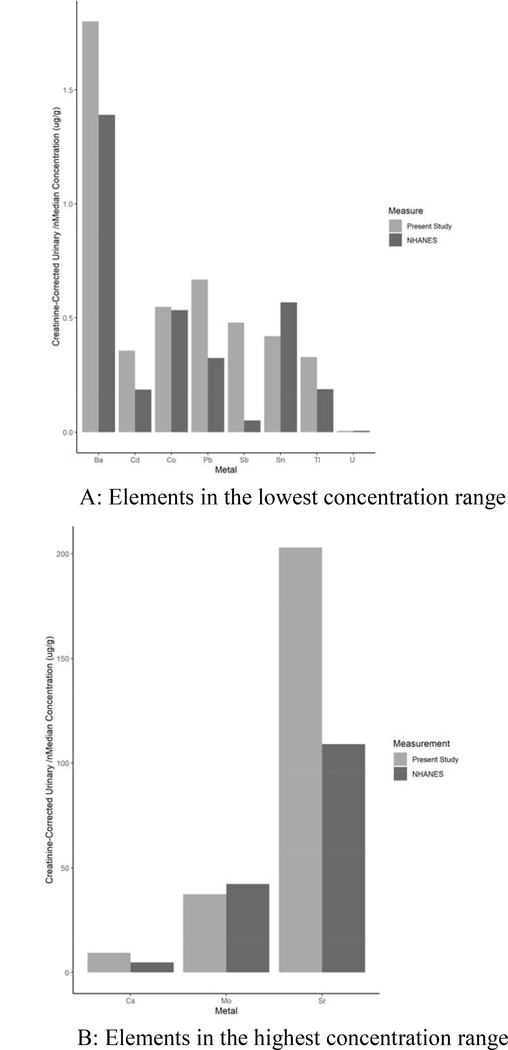
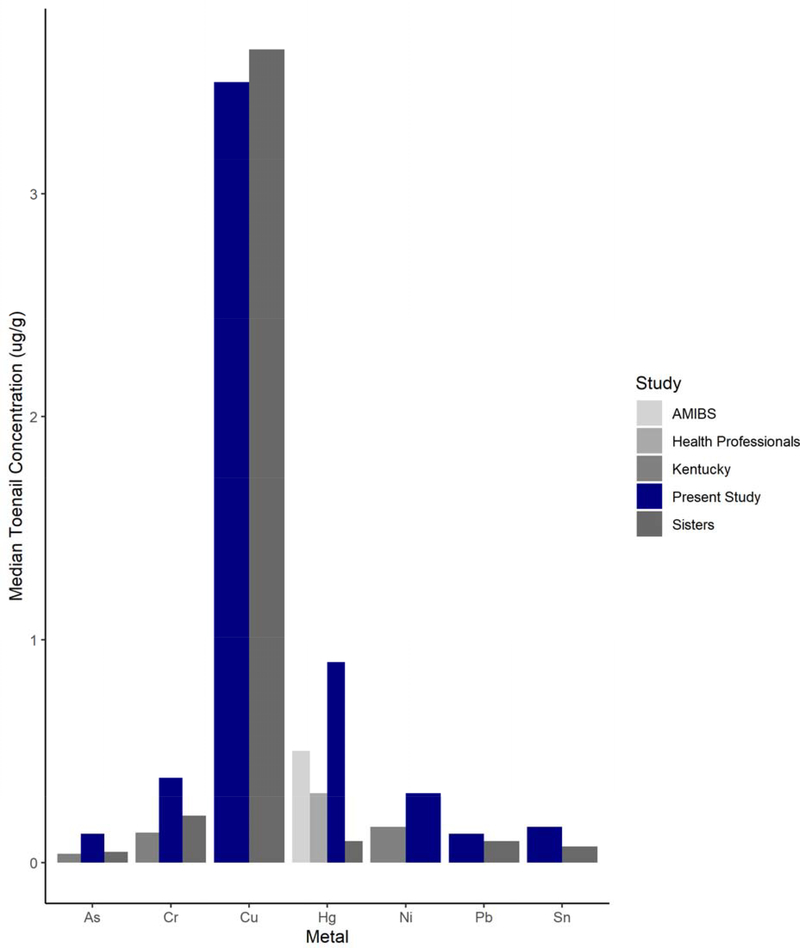
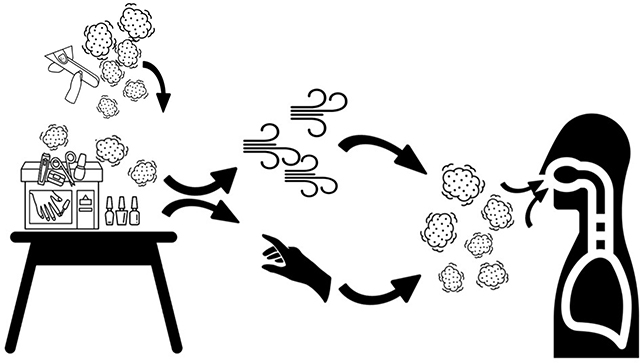
Description:Nail polishes have evolved considerably. Toxic elements, such as lead, have been found in nail polish, and it is unclear if new finishes using metallic effect pigments may be contributing to metals exposure in nail technicians. We characterized concentrations of trace elements in 40 nail polishes, 9 technicians' urine, and 20 technicians' toenail clippings from 8 nail salons in the Boston area in 2017. We also collected 24 salon surface wipes from 3 of the salons. Antimony was not disclosed as a nail polish ingredient, yet concentrations (<15 μg/g) were above existing cosmetics guidelines (0.5 μg/g) in five (13%) of the samples. Aluminum (<11,450 μg/g), barium (<11,250 μg/g), iron (<3,270 μg/g), and magnesium (<2375 μg/g) were disclosed as ingredients and were also found on salon surfaces where nail polish was stored or used. Heavy metal impurities in nail polish were not detected for cadmium. Lead and nickel were found at low concentrations (<0.40 μg/g lead, <0.67 μg/g nickel). Tin (p = 0.003) concentrations were higher in nail polish with finishes compared to without. Barium and strontium (both p = 0.0001) concentrations were higher for red nail polishes compared to all other colors. Of those elements in nail polish and salon surfaces, aluminum and iron were detected in toenails, manganese was detected in urine and toenails, and barium was detected in urine at comparable levels to the general population. Besides preventable antimony levels in nail polish, individual metals in nail polish did not appear to be from impurities but mainly from colorants (i.e., pigments) and not major contributors to nail technician exposure. It is unclear if low-level chronic metals mixtures in nail salons are of health concern.
-
Subjects:
-
Keywords:
-
Source:Int J Hyg Environ Health. 232:113687
-
Pubmed ID:33445102
-
Pubmed Central ID:PMC7854487
-
Document Type:
-
Funding:R01 ES016099/ES/NIEHS NIH HHSUnited States/ ; T42 OH008416/OH/NIOSH CDC HHSUnited States/ ; P42 ES007373/ES/NIEHS NIH HHSUnited States/ ; P30 CA023108/CA/NCI NIH HHSUnited States/ ; T42OH008416/ACL/ACL HHSUnited States/ ; T32 ES007069/ES/NIEHS NIH HHSUnited States/ ; UL1 TR001102/TR/NCATS NIH HHSUnited States/ ; R01 ES028800/ES/NIEHS NIH HHSUnited States/ ; P30 ES000002/ES/NIEHS NIH HHSUnited States/ ; K01 OH011648/OH/NIOSH CDC HHSUnited States/ ; T32 ES014562/ES/NIEHS NIH HHSUnited States/ ; K01OH011648/ACL/ACL HHSUnited States/ ; R25 ES023635/ES/NIEHS NIH HHSUnited States/
-
Volume:232
-
Download URL:
-
File Type:
 [PDF - 448.71 KB]
 -
Collection(s):
-
Main Document Checksum:urn:sha-512:1f4b4770a87317fea658a61f8e0258af52800adfa23f226272fa57b31eb150ba87e2ebebb9adbe20fbc79b8570c7545b53be286d8892f8deb31af466ba9e1ecf
Supporting Files


File Language:
English
 Was this page helpful?
 Found an issue?

CDC STACKS serves as an archival repository of CDC-published products including
scientific findings, journal articles, guidelines, recommendations, or other public health information authored or
co-authored by CDC or funded partners.
As a repository, CDC STACKS retains documents in their original published format to ensure public access to scientific information.
As a repository, CDC STACKS retains documents in their original published format to ensure public access to scientific information.
You May Also Like
COLLECTION
CDC Public Access