



Geographic disparities in late HIV diagnoses in Tennessee: Opportunities for interventions in the rural Southeast
Supporting Files

-
9 2024 ; 9-2024
-
Available in CDC Stacks on 2025-09-01T00:00:00Z
File Language:
English
Details
-
Alternative Title:J Rural Health
-
Personal Author:
-
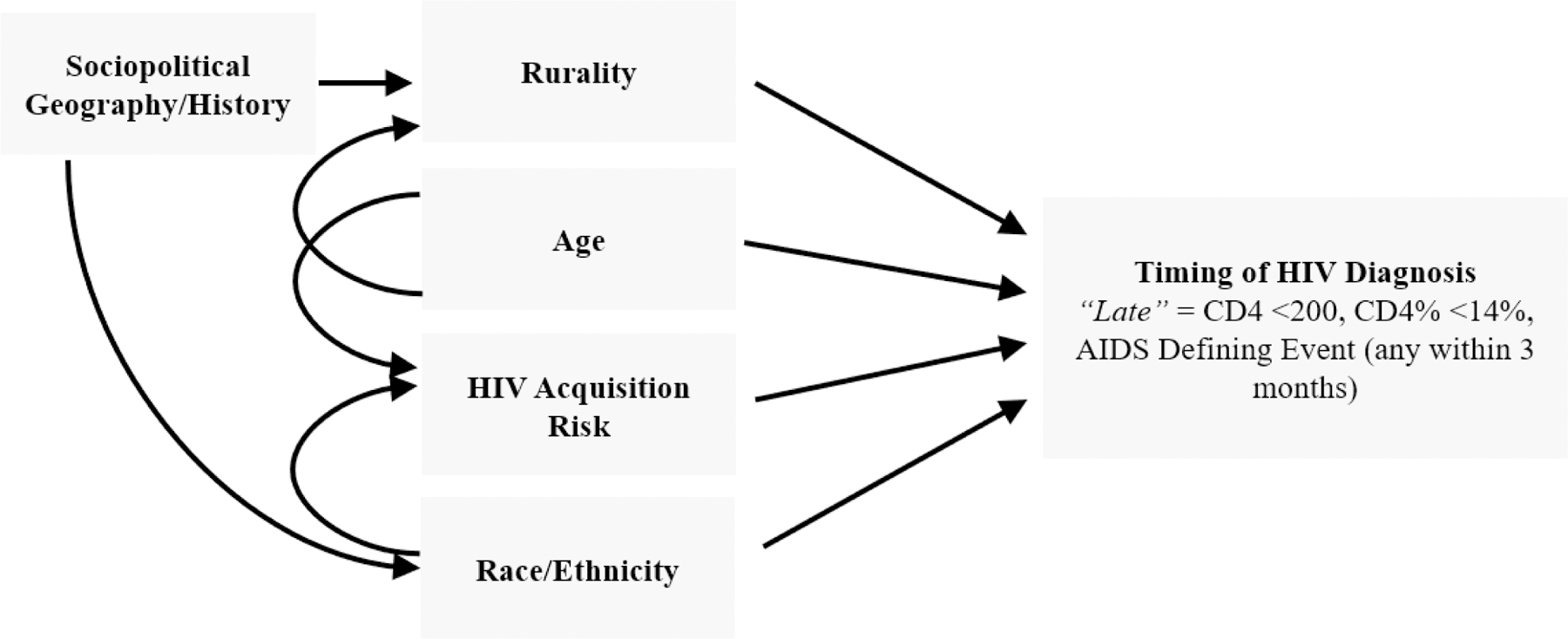
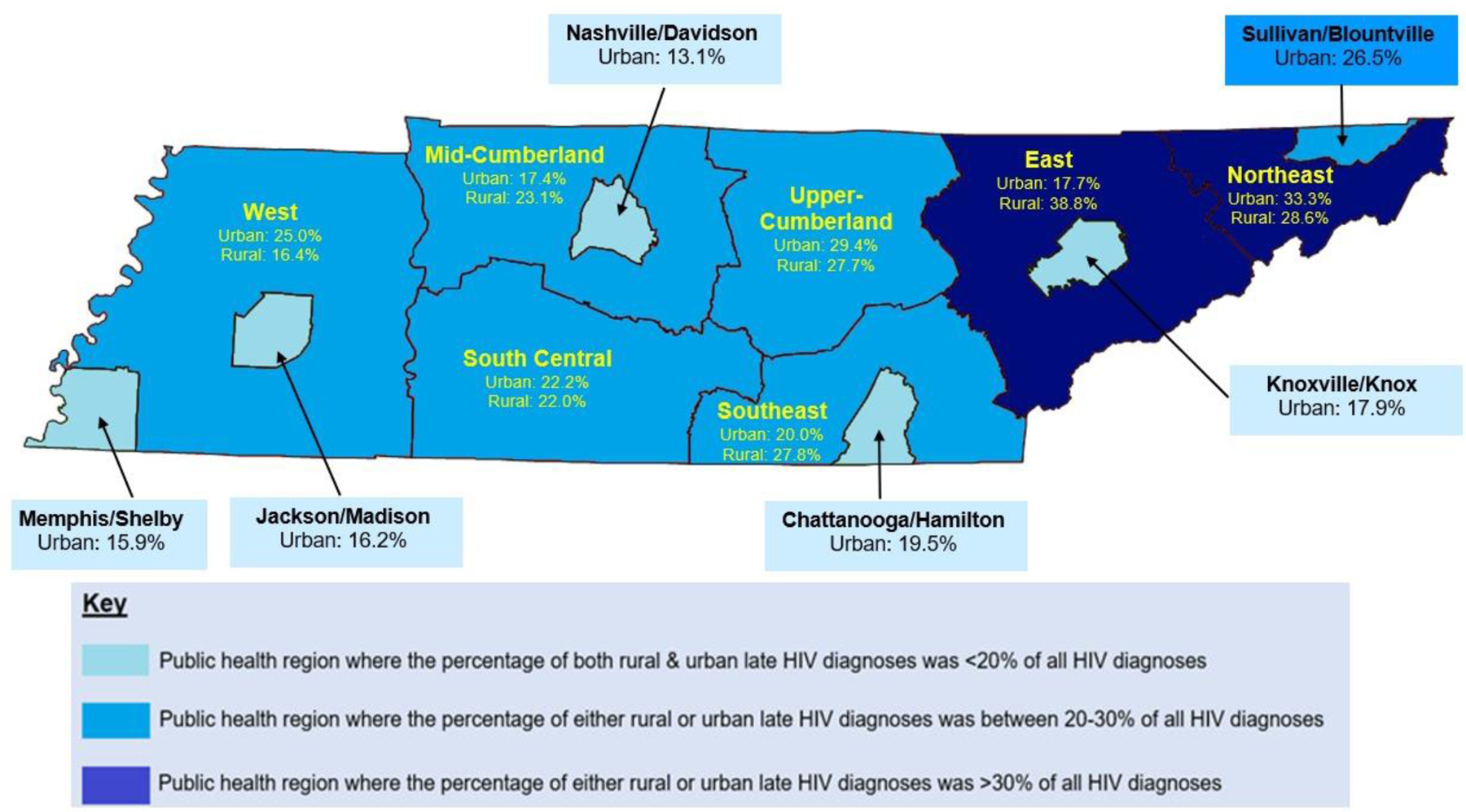
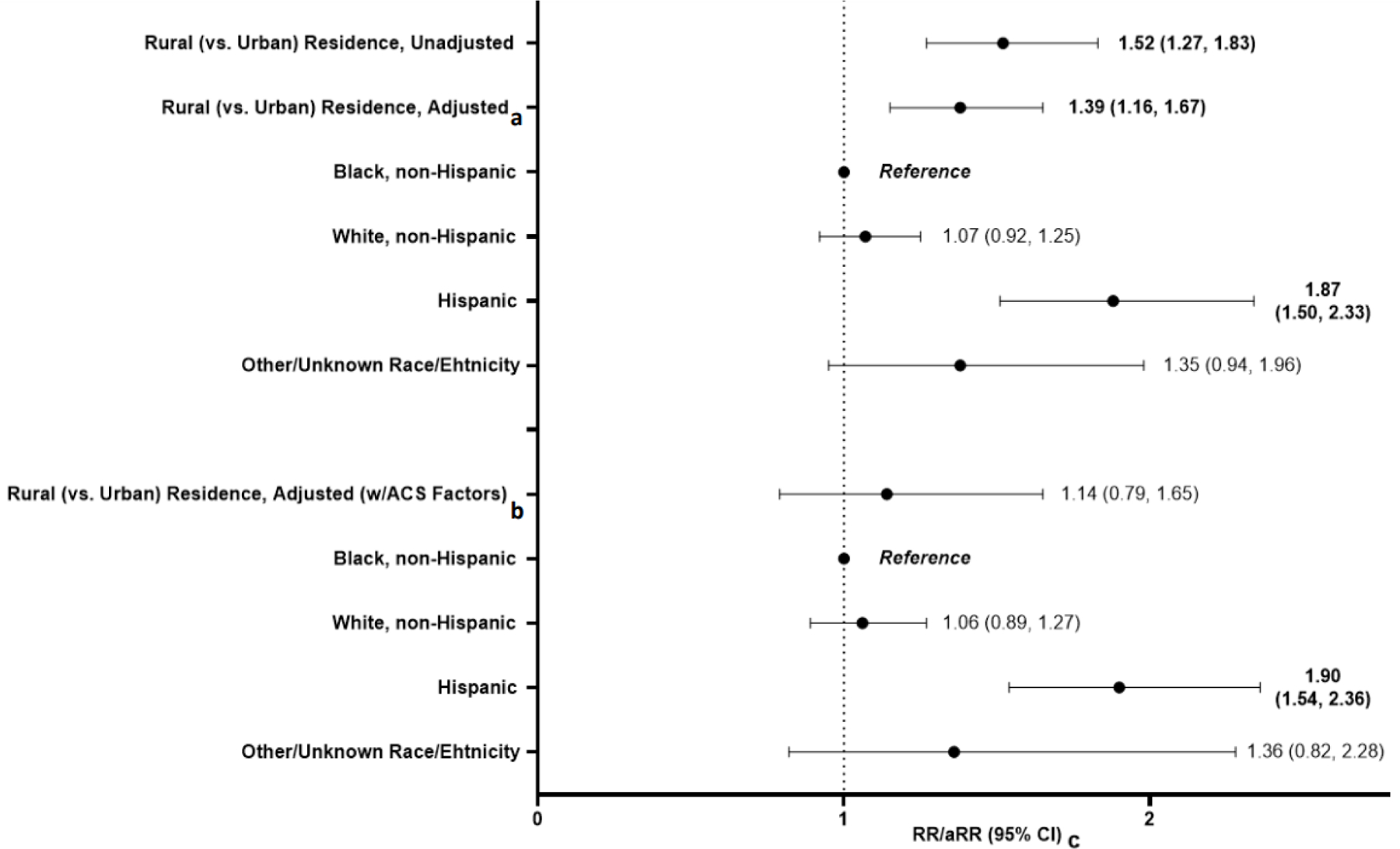
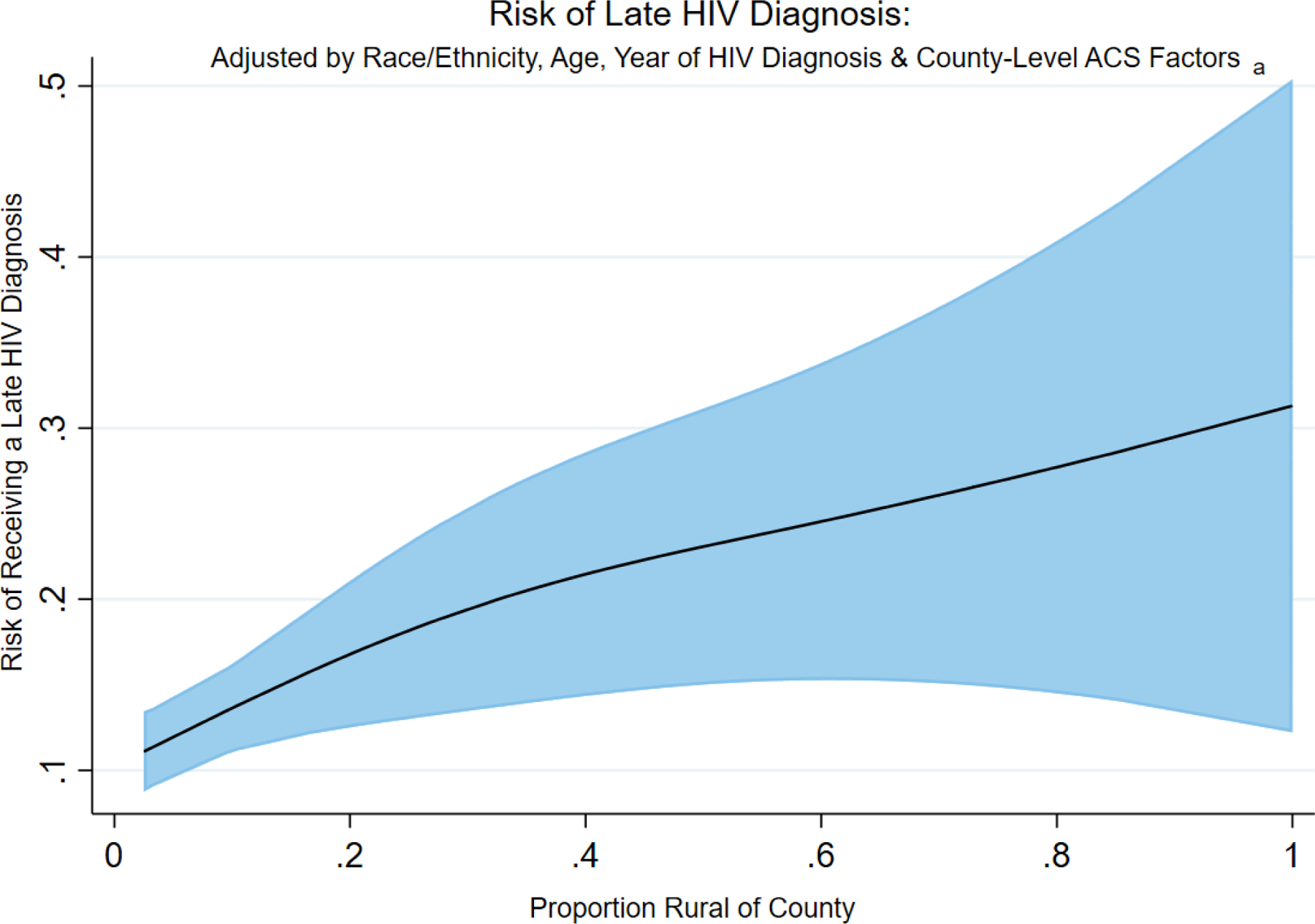
Description:Purpose: ; Incident HIV remains an important public health issue in the U.S. South, the region leading the nation in HIV incidence, rural HIV cases, and HIV-related deaths. Late diagnoses drive incident HIV and understanding factors driving late diagnoses is critical for developing locally relevant HIV testing and prevention interventions, decreasing HIV transmission, and ending the HIV epidemic. ; Methods: ; Retrospective cohort study utilizing Tennessee Department of Health (TDH) surveillance data and U.S. Census Bureau data. Adults ≥18 years old with a new HIV diagnosis between January 1, 2015 and December 31, 2019 identified in the TDH eHARS were included. Individuals were followed from initial HIV diagnosis until death, 90 days of follow-up for outcome assessment, or administrative censoring 90 days after study enrollment closed. ; Findings: ; We included 3,652 newly HIV-diagnosed individuals; median age was 31 years (IQR: 25, 42), 2909 (79.7%) were male, 2057 (56.3%) were Black, 246 (6.7%) were Hispanic, 408 (11.2%) were residing in majority-rural areas at diagnosis, and 642 (17.6%) individuals received a late HIV diagnosis. Residents of majority-rural counties (aRR=1.39, 95% CI: 1.16–1.67) and Hispanic individuals (aRR=1.87, 95% CI: 1.50–2.33) had an increased likelihood of receiving a late diagnosis after controlling for race/ethnicity, age, and year of HIV diagnosis. ; Conclusions: ; Rural residence and Hispanic ethnicity were associated with an increased risk of receiving a late HIV diagnosis in Tennessee. Future HIV testing and prevention efforts should be adapted to the needs of these vulnerable populations.
-
Subjects:
-
Keywords:
-
Source:J Rural Health. 40(4):699-708
-
Pubmed ID:38361431
-
Pubmed Central ID:PMC11324855
-
Document Type:
-
Funding:L30 AI172003/AI/NIAID NIH HHSUnited States/ ; P30 AI110527/AI/NIAID NIH HHSUnited States/ ; R01 MH113438/MH/NIMH NIH HHSUnited States/ ; T32 HS026122/HS/AHRQ HHSUnited States/ ; P30 AI110527/AI/NIAID NIH HHSUnited States/ ; CDC-RFA-PS18-1802/Tennessee Integrated HIV Surveillance and Prevention Programs for Health Departments/ ; T32HS026122/Agency for Health Care Research and Quality funded PROgRESS/
-
Volume:40
-
Issue:4
-
Download URL:
-
File Type:
 [PDF - 952.72 KB]
 -
Collection(s):
-
Main Document Checksum:urn:sha-512:b69ace2095269a131354c432742f38f9b56caf7921145b4fb2bc8f3b40468877fb34a2da129beeaca88b13953a104e5113d38d78b109dd10dfedc117e87c88a9
Supporting Files


File Language:
English
 Was this page helpful?
 Found an issue?

CDC STACKS serves as an archival repository of CDC-published products including
scientific findings, journal articles, guidelines, recommendations, or other public health information authored or
co-authored by CDC or funded partners.
As a repository, CDC STACKS retains documents in their original published format to ensure public access to scientific information.
As a repository, CDC STACKS retains documents in their original published format to ensure public access to scientific information.
You May Also Like
COLLECTION
CDC Public Access