



Cost-effectiveness of Antiviral Stockpiling and Near-Patient Testing for Potential Influenza Pandemic
Supporting Files
Public Domain

-
Feb 2008
File Language:
English
Details
-
Alternative Title:Emerg Infect Dis
-
Personal Author:
-
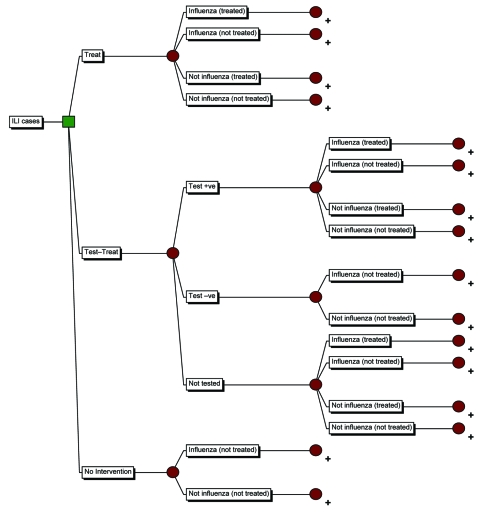
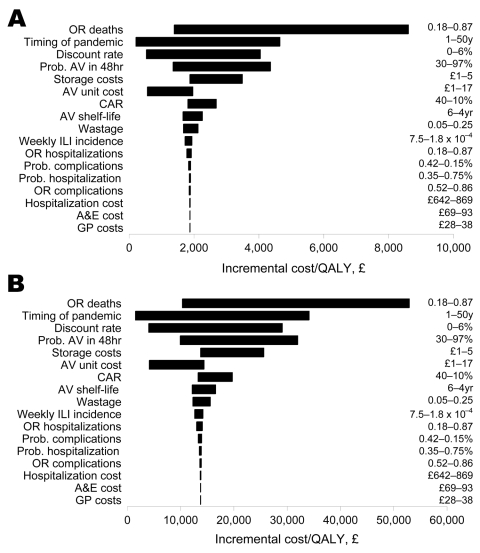
Description:A decision analytical model was developed to investigate the cost-effectiveness of stockpiling antiviral (AV) drugs for a potential influenza pandemic in the United Kingdom and the possible role of near-patient testing in conserving AV drug stocks. Under base-case assumptions (including a fixed stockpile that was smaller than the clinical attack rate), the treat-only option (treating all symptomatic patients with AV drugs) would be considered cost-effective ( pound1,900- pound13,700 per quality-adjusted life year QALY gained, depending on the fatality scenario), compared with no intervention (nonintervention but management of cases as they arise). The test-treat option (testing all symptomatic patients but treating those with positive tests results only) would result in moderate gains in QALYs over the treat-only option but at relatively large additional costs. Stockpiling sufficient AV drugs (but not near-patient tests) to treat all patients with clinical cases would be cost-effective, provided AV drugs are effective at preventing deaths from pandemic influenza.
-
Subjects:
-
Source:Emerg Infect Dis. 14(2):267-274.
-
Document Type:
-
Volume:14
-
Issue:2
-
Download URL:
-
File Type:
 [PDF - 424.29 KB]
 -
Collection(s):
-
Main Document Checksum:urn:sha256:c13f726346765af1ae914243d66a4b1aa3d78eddb43c474bdcebd6ab1c82265a
Supporting Files


File Language:
English
 Was this page helpful?
 Found an issue?









CDC STACKS serves as an archival repository of CDC-published products including
scientific findings, journal articles, guidelines, recommendations, or other public health information authored or
co-authored by CDC or funded partners.
As a repository, CDC STACKS retains documents in their original published format to ensure public access to scientific information.
As a repository, CDC STACKS retains documents in their original published format to ensure public access to scientific information.
You May Also Like
COLLECTION
Emerging Infectious Diseases