



Need for Improved Methods to Collect and Present Spatial Epidemiologic Data for Vectorborne Diseases
Supporting Files
Public Domain

-
Dec 2007
Details
-
Alternative Title:Emerg Infect Dis
-
Personal Author:
-
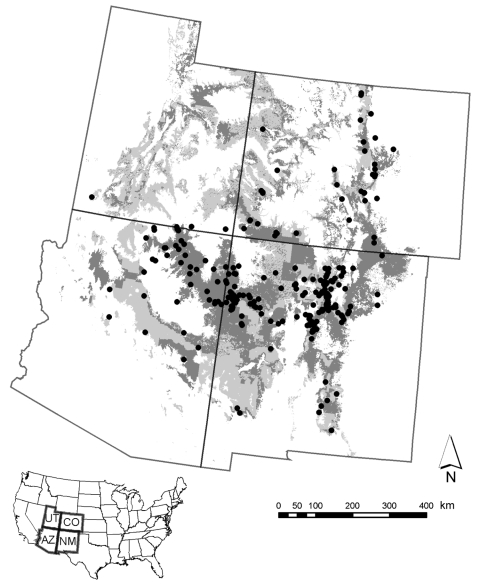
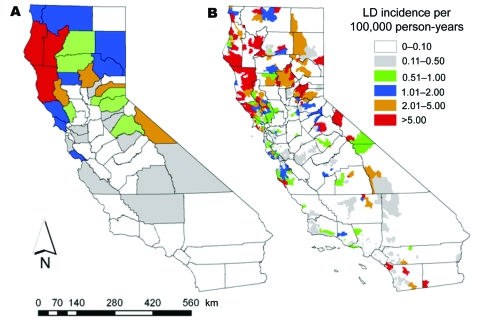
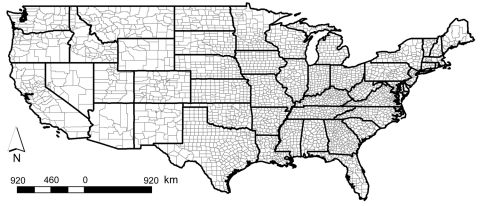
Description:Improved methods for collection and presentation of spatial epidemiologic data are needed for vectorborne diseases in the United States. Lack of reliable data for probable pathogen exposure site has emerged as a major obstacle to the development of predictive spatial risk models. Although plague case investigations can serve as a model for how to ideally generate needed information, this comprehensive approach is cost-prohibitive for more common and less severe diseases. New methods are urgently needed to determine probable pathogen exposure sites that will yield reliable results while taking into account economic and time constraints of the public health system and attending physicians. Recent data demonstrate the need for a change from use of the county spatial unit for presentation of incidence of vectorborne diseases to more precise ZIP code or census tract scales. Such fine-scale spatial risk patterns can be communicated to the public and medical community through Web-mapping approaches.
-
Subjects:
-
Source:Emerg Infect Dis. 13(12):1816-1820.
-
Document Type:
-
Place as Subject:
-
Location:
-
Volume:13
-
Issue:12
-
Download URL:
-
File Type:
 [PDF - 223.77 KB]
 -
Collection(s):
-
Main Document Checksum:urn:sha256:a63983060c54c346eab81814bd5cd9e1cacfa178e5dfeff63770c9c7c95c70b1
Supporting Files


 Was this page helpful?
 Found an issue?


CDC STACKS serves as an archival repository of CDC-published products including
scientific findings, journal articles, guidelines, recommendations, or other public health information authored or
co-authored by CDC or funded partners.
As a repository, CDC STACKS retains documents in their original published format to ensure public access to scientific information.
As a repository, CDC STACKS retains documents in their original published format to ensure public access to scientific information.
You May Also Like
COLLECTION
Emerging Infectious Diseases