



Assessment of the Healthy Worker Survivor Effect in Cancer Studies of the United Autoworkers-General Motors Cohort
Supporting Files

-
3 2017 ; 3-2017
-
Available in CDC Stacks on 2024-10-17T00:00:00Z
File Language:
English
Details
-
Alternative Title:Occup Environ Med
-
Personal Author:
-
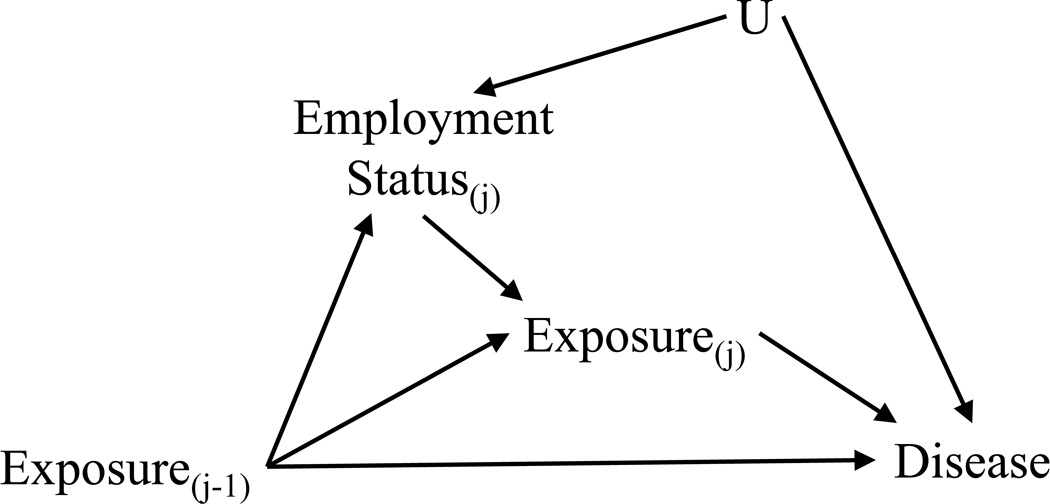
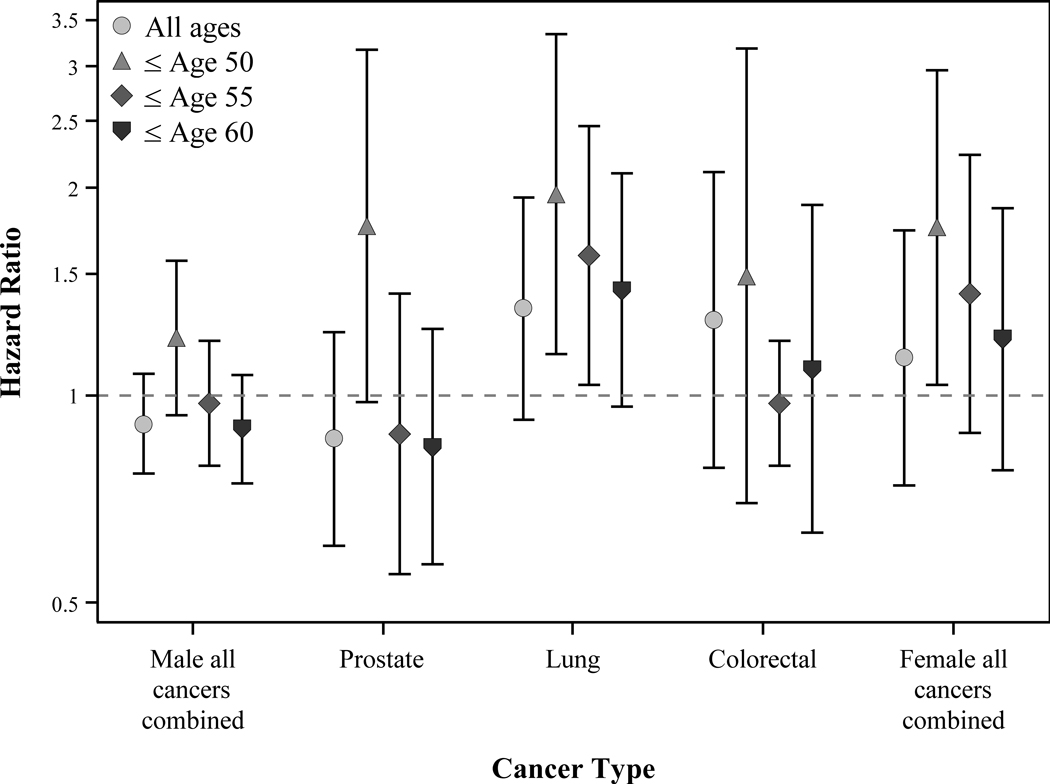
Description:Objective: ; The healthy worker survivor effect (HWSE) can affect the validity of occupational studies when data are analyzed incorrectly. HWSE depends on three underlying conditions: (1) leaving work predicts future exposure, (2) leaving work is associated with disease outcome, and (3) prior exposure increases probability of leaving work. If all these conditions are satisfied, then employment status is a time-varying confounder affected by prior exposure, and standard regression will produce bias. We assessed these conditions for cancer outcomes in a cohort of autoworkers exposed to metalworking fluids (MWF). ; Methods: ; The cohort includes 31,485 workers followed for cancer incidence from 1985–1994. Since occupational exposures to straight, soluble, and synthetic MWF are necessarily zero after leaving work, condition (1) is satisfied. Cox models for cancer incidence and for employment termination were used to assess conditions (2) and (3), respectively. Employment termination by select ages was examined to better gauge the presence of condition (2). ; Results: ; The hazard ratio for leaving work as a predictor of all cancers combined and prostate cancer was null, but elevated for lung and colorectal cancers among men. Condition (2) was more clearly satisfied for all cancer outcomes when leaving work occurred younger. Higher exposures to all three MWF types were associated with increased rates of leaving work condition (3), with the exception of straight MWF among women. ; Conclusions: ; We found evidence for the structural conditions underlying HWSE in a cohort of autoworkers. G-methods should be applied to reduce HWSE bias in studies of all cancers presently examined.
-
Subjects:
-
Keywords:
-
Source:Occup Environ Med. 74(4):294-300
-
Pubmed ID:28069969
-
Pubmed Central ID:PMC11484988
-
Document Type:
-
Funding:
-
Volume:74
-
Issue:4
-
Download URL:
-
File Type:
 [PDF - 389.52 KB]
 -
Collection(s):
-
Main Document Checksum:urn:sha-512:c0dfdb65822de184b68900cdac79830a28776a659a7a1ac852a0e489c66c533eae59be1e1ca177ae11cd9719fbf1e3688f282eebe192fb51b6447fae1228fad9
Supporting Files


File Language:
English
 Was this page helpful?
 Found an issue?

CDC STACKS serves as an archival repository of CDC-published products including
scientific findings, journal articles, guidelines, recommendations, or other public health information authored or
co-authored by CDC or funded partners.
As a repository, CDC STACKS retains documents in their original published format to ensure public access to scientific information.
As a repository, CDC STACKS retains documents in their original published format to ensure public access to scientific information.
You May Also Like
COLLECTION
CDC Public Access