



Symptomatic and Subclinical Infection with Rotavirus P[8]G9, Rural Ecuador
Supporting Files

-
Apr 2007
Details
-
Alternative Title:Emerg Infect Dis
-
Personal Author:
-
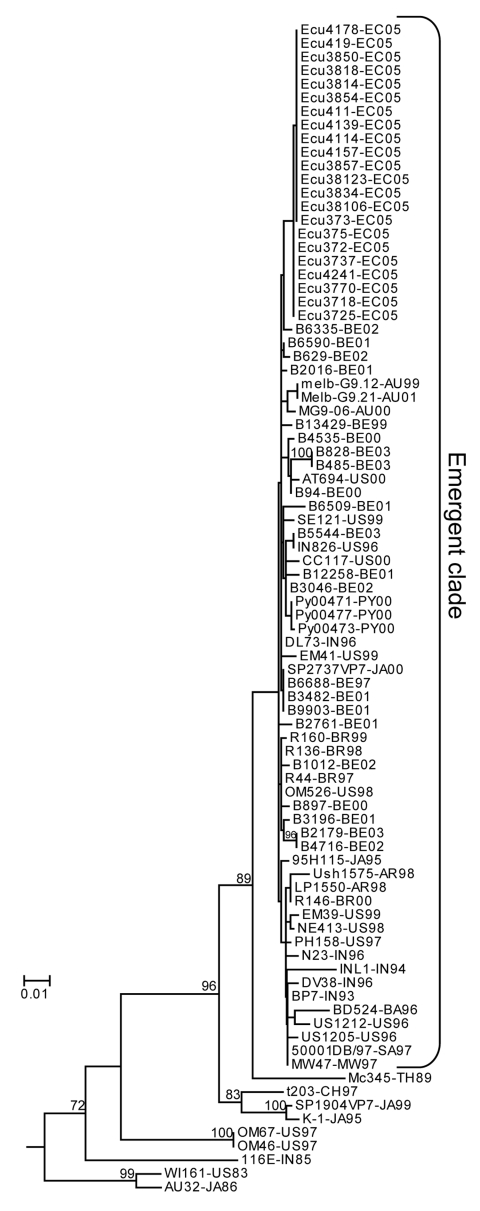
Description:During the past decade, rotavirus genotype G9 has spread throughout the world, adding to and sometimes supplanting the common genotypes G1-G4. We report evidence of this spread in a population sample within rural Ecuador. A total of 1,656 stool samples were collected from both patients with diarrhea and from asymptomatic residents in 22 remote communities in northwestern Ecuador from August 2003 through February 2006. Rotavirus was detected in 23.4% of case-patients and 3.2% of controls. From these 136 rotavirus-positive samples, a subset of 47 were genotyped; 72% were of genotype G9, and 62% were genotype P8G9. As a comparison, 29 rotavirus-positive stool samples were collected from a hospital in Quito during March 2006 and genotyped; 86% were of genotype P8G9. Few countries have reported P8G9 rotavirus detection rates as high as those of the current study. This growing prevalence may require changes to current vaccination programs to include coverage for this genotype.
-
Subjects:
- Research
- Rotavirus
- genotype analysis
- Ecuador
- epidemiology
- community study
- research
- Adolescent
- Adult
- Case-Control Studies
- Child
- Child, Preschool
- DNA, Viral
- Diarrhea
- Feces
- Genotype
- Humans
- Infant
- Middle Aged
- Molecular Sequence Data
- Phylogeny
- Prevalence
- Rotavirus Infections
- Rural Population
- Sequence Analysis, DNA
-
Source:Emerg Infect Dis. 13(4):574-580.
-
Document Type:
-
Funding:
-
Volume:13
-
Issue:4
-
Download URL:
-
File Type:
 [PDF - 323.41 KB]
 -
Collection(s):
-
Main Document Checksum:urn:sha256:f452920871d8bfaff191f37d6f86bddf0eda39822e41a9eb7d419def5bb67a8c
Supporting Files


 Was this page helpful?
 Found an issue?

CDC STACKS serves as an archival repository of CDC-published products including
scientific findings, journal articles, guidelines, recommendations, or other public health information authored or
co-authored by CDC or funded partners.
As a repository, CDC STACKS retains documents in their original published format to ensure public access to scientific information.
As a repository, CDC STACKS retains documents in their original published format to ensure public access to scientific information.
You May Also Like
COLLECTION
Emerging Infectious Diseases