



Epidemiology of Streptococcus dysgalactiae subsp. equisimilis in Tropical Communities, Northern Australia
Supporting Files
Public Domain

-
Nov 2007
File Language:
English
Details
-
Alternative Title:Emerg Infect Dis
-
Personal Author:
-
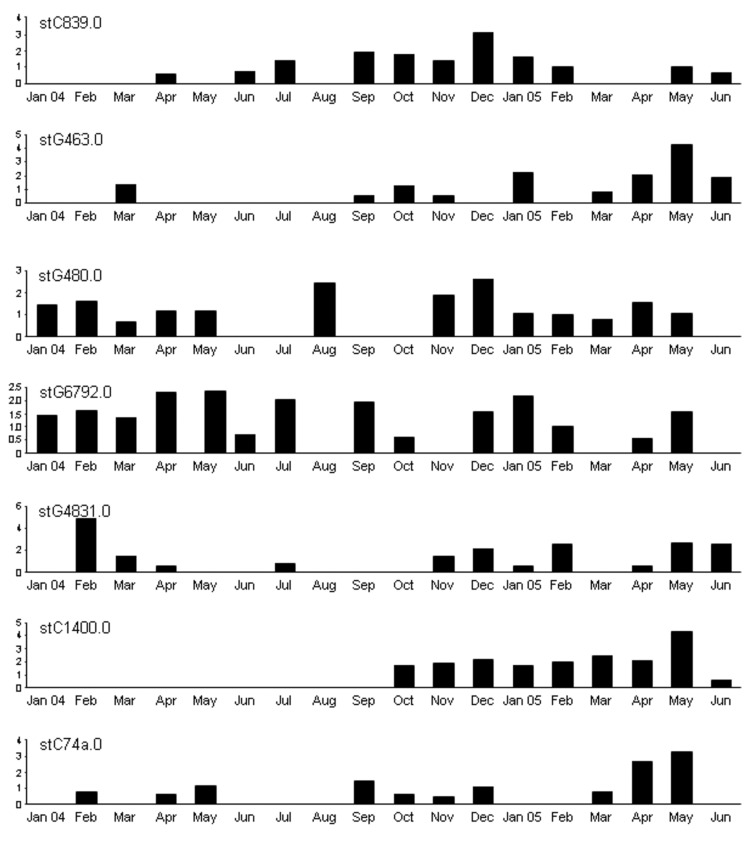
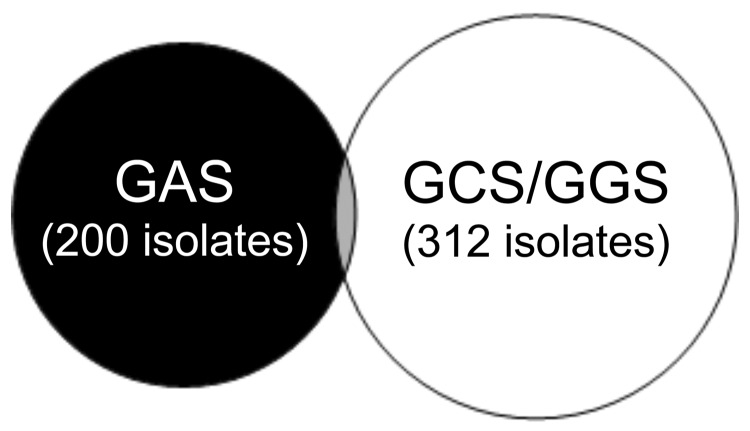
Description:Streptococcus dysgalactiae subsp. equisimilis (groups C and G streptococci GCS/GGS) is an increasingly recognized human pathogen, although it may follow indirect pathways. Prospective surveillance of selected households in 3 remote Aboriginal communities in Australia provided 337 GCS/GGS isolates that were emm sequence-typed. Lancefield group C isolates (GCS) were localized to specific households and group G isolates (GGS) were more evenly distributed. GCS/GGS was more frequently recovered from the throat than group A streptococci (GAS S. pyogenes) but rarely recovered from skin sores, and then only with Staphylococcus aureus or GAS. Symptomatic GGS/GGC pharyngitis was also rare. Specific emm sequence types of GCS/GGS did not appear to cycle through the communities (sequential strain replacement) in a manner suggesting acquisition of type-specific immunity. These communities already have high levels of streptococcal and poststreptococcal disease. GCS/GGS may increase in importance as it acquires key virulence factors from GAS by lateral gene transfer.
-
Subjects:
- Research
- Streptococcus Dysgalactiae Subsp. Equisimilis
- Group C Streptococci
- Group G Streptococci
- S. Pyogenes
- Emm Sequence Typing
- Aboriginal Australian
- Pyoderma
- Pharyngitis
- Adolescent
- Australia
- Child
- Humans
- Native Hawaiian Or Other Pacific Islander
- Pharynx
- Population Surveillance
- Prospective Studies
- Rheumatic Fever
- Rheumatic Heart Disease
- Skin
- Streptococcal Infections
- Streptococcus
- Tropical Climate
-
Source:Emerg Infect Dis. 13(11):1694-1700.
-
Document Type:
-
Volume:13
-
Issue:11
-
Download URL:
-
File Type:
 [PDF - 298.43 KB]
 -
Collection(s):
-
Main Document Checksum:urn:sha256:a94c534b687ece7f8c9e75fe4dc503363d1b9be1d8dc2e7afdba1c41040d97ca
Supporting Files


File Language:
English
 Was this page helpful?
 Found an issue?



CDC STACKS serves as an archival repository of CDC-published products including
scientific findings, journal articles, guidelines, recommendations, or other public health information authored or
co-authored by CDC or funded partners.
As a repository, CDC STACKS retains documents in their original published format to ensure public access to scientific information.
As a repository, CDC STACKS retains documents in their original published format to ensure public access to scientific information.
You May Also Like
COLLECTION
Emerging Infectious Diseases