


Immunologic and epidemiologic drivers of norovirus transmission in daycare and school outbreaks
Supporting Files

-
5 01 2021
-
File Language:
English
Details
-
Journal Article:Epidemiology
-
Personal Author:
-
Description:Background:
Norovirus outbreaks are notoriously explosive, with dramatic symptomology and rapid disease spread. Children are particularly vulnerable to infection and drive norovirus transmission due to their high contact rates with each other and the environment. Despite the explosive nature of norovirus outbreaks, attack rates in schools and daycares remain low with the majority of students not reporting symptoms.
Methods:
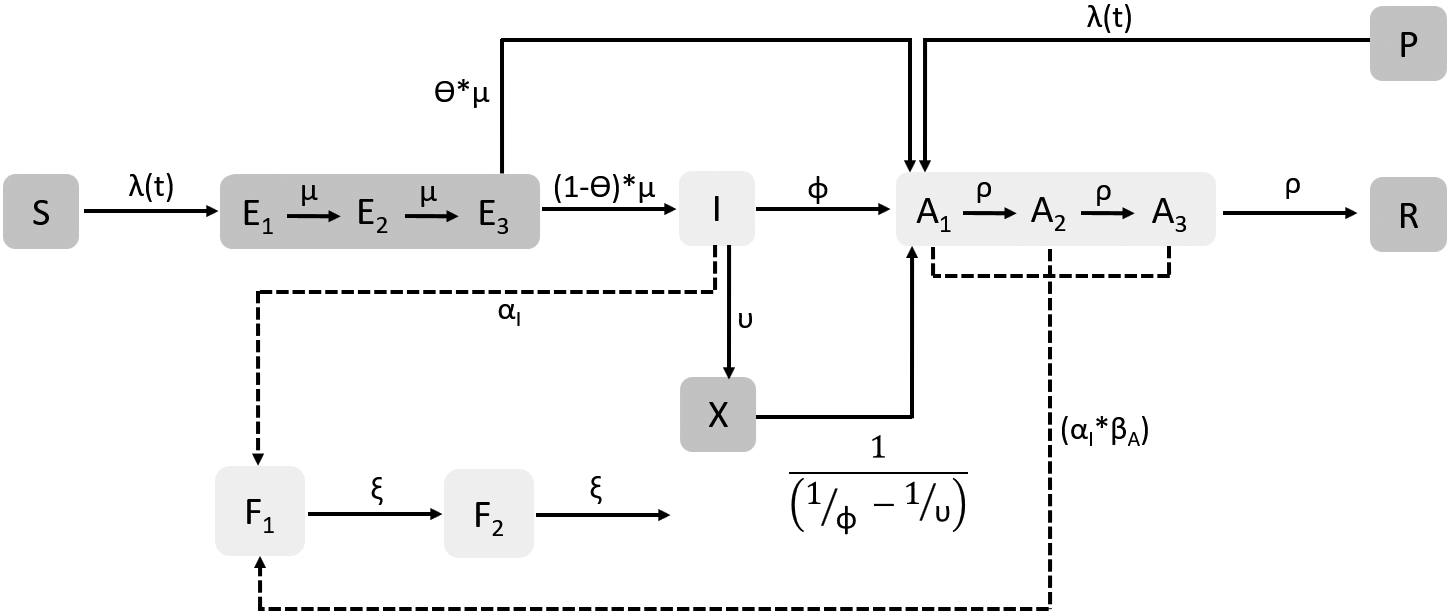
We explore immunologic and epidemiologic mechanisms that may underlie epidemic norovirus transmission dynamics using a disease transmission model. Towards this end, we compared different model scenarios, including innate resistance and acquired immunity (collectively denoted ‘immunity’), stochastic extinction, and an individual exclusion intervention. We calibrated our model to daycare and school outbreaks from national surveillance data.
Results:
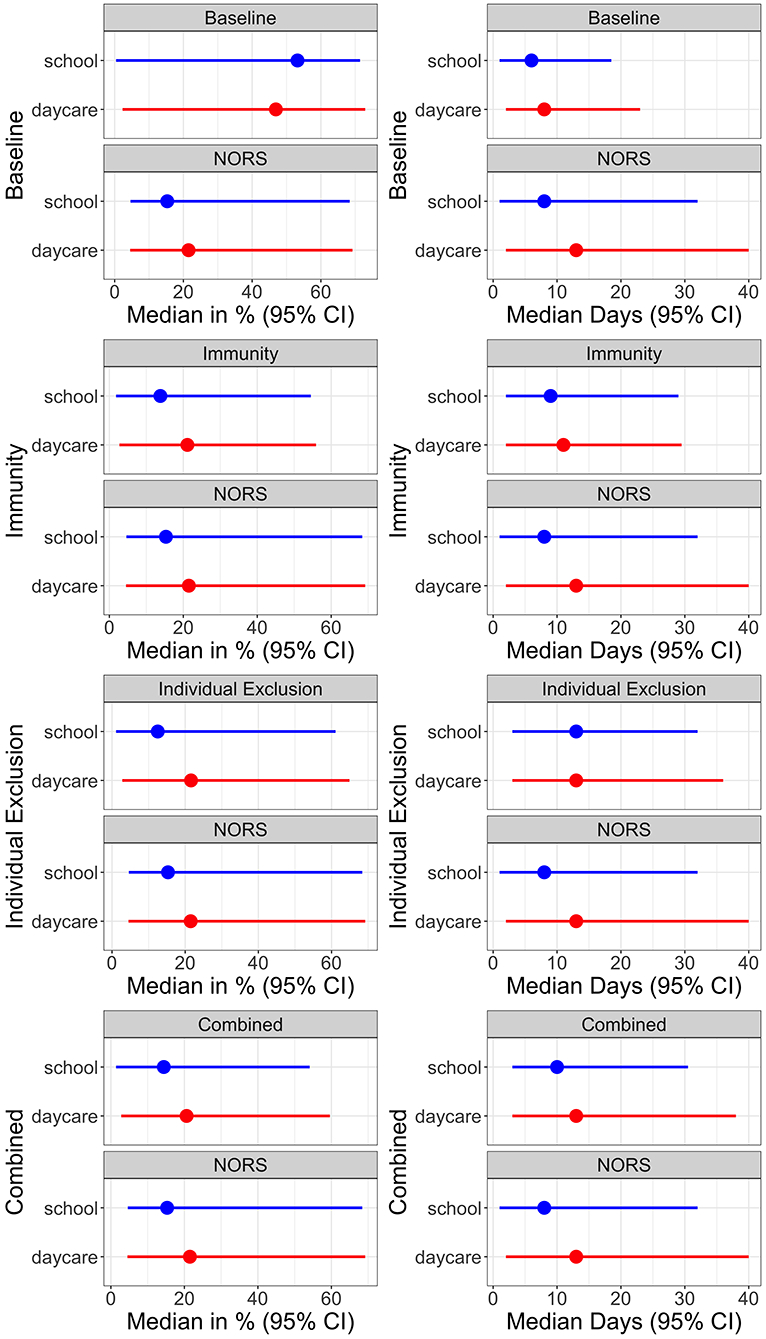
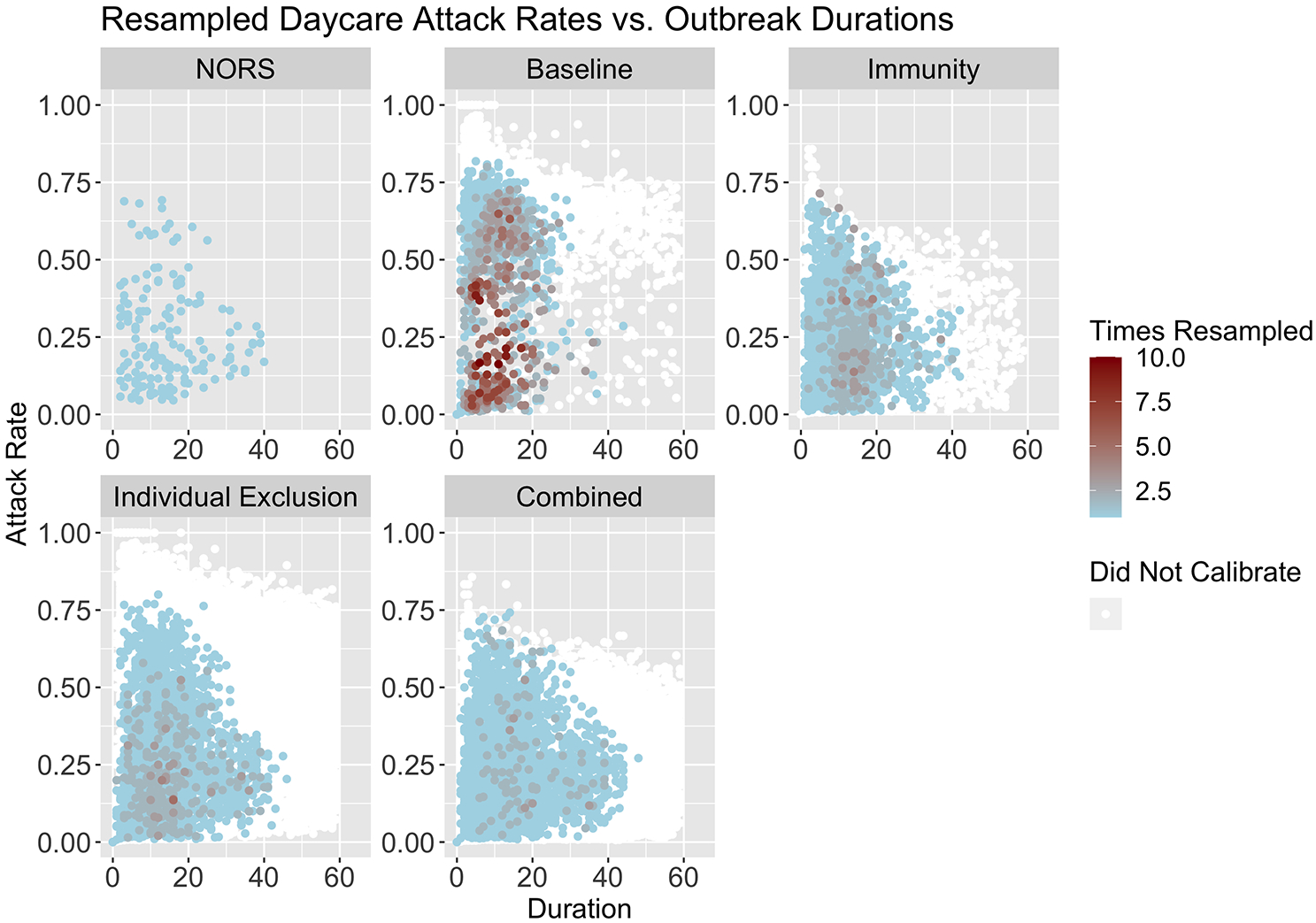
Including immunity in the model led to attack rates that were consistent with the data. However, immunity alone resulted in the majority of outbreak durations being relatively short. The addition of individual exclusion (to the immunity model) extended outbreak durations by reducing the amount of time that symptomatic people contribute to transmission. Including both immunity and individual exclusion mechanisms resulted in simulations where both attack rates and outbreak durations were consistent with surveillance data.
Conclusions:
The epidemiology of norovirus outbreaks in daycare and school settings cannot be well described by a simple transmission model in which all individuals start as fully susceptible. More studies on how best to design interventions which leverage population immunity and encourage more rigorous individual exclusion may improve venue-level control measures.
-
Subjects:
-
Keywords:
-
DOI:
-
Pubmed ID:33652444
-
Pubmed Central ID:PMC11457302
-
Document Type:
-
Funding:
-
Genre:
-
Volume:32
-
Issue:3
-
Citation:Epidemiology. 32(3):351-359
-
Collection(s):
-
Main Document Checksum:urn:sha-512:17445661fac0f3c587aa2e41c3aae026064b3204e8bc64bd72ad77d2745a293816785f63dfcda4a9da3173b00873cb5018b9a1e0c3621dcd266a803acf6fefd2
-
Download URL:
-
File Type:
 [PDF
- 525.98 KB
]
[PDF
- 525.98 KB
]
Supporting Files


File Language:
English
ON THIS PAGE

CDC STACKS serves as an archival repository of CDC-published products including
scientific findings,
journal articles, guidelines, recommendations, or other public health information authored or
co-authored by CDC or funded partners.
As a repository, CDC STACKS retains documents in their original published format to ensure public access to scientific information.
As a repository, CDC STACKS retains documents in their original published format to ensure public access to scientific information.
You May Also Like
COLLECTION
CDC Public Access