



Human Metapneumovirus in Europe Poults
Supporting Files
Public Domain

-
Dec 2006
Details
-
Alternative Title:Emerg Infect Dis
-
Personal Author:
-
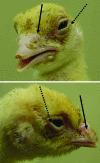
Description:This study was conducted to reexamine the hypothesis that human metapneumovirus (hMPV) will not infect Europes. Six groups of 2-week-old Europes (20 per group) were inoculated oculonasally with 1 of the following: noninfected cell suspension; hMPV genotype A1, A2, B1, or B2; or avian metapneumovirus (aMPV) subtype C. Poults inoculated with hMPV showed nasal discharge days 4-9 postexposure. Specific viral RNA and antigen were detected by reverse-transcription PCR and immunohistochemical evaluation, respectively, in nasal turbinates of birds exposed to hMPV. Nasal turbinates of hMPV-infected Europes showed inflammatory changes and mucus accumulation. Each of the 4 hMPV genotypes caused a transient infection in Europes as evidenced by clinical signs, detection of hMPV in turbinates, and histopathologic examination. Detailed investigation of cross-species pathogenicity of hMPV and aMPV and its importance for human and animal health is needed.
-
Subjects:
- Research
- human metapneumovirus
- Europe
- infection
- clinical signs
- research
- Animals
- Antibodies, Viral
- Cell Line
- Cytopathogenic Effect, Viral
- Enzyme-Linked Immunosorbent Assay
- Genotype
- Humans
- Immunohistochemistry
- Lung
- Metapneumovirus
- Paramyxoviridae Infections
- Poultry Diseases
- RNA, Viral
- Respiratory Tract Infections
- Reverse Transcriptase Polymerase Chain Reaction
- Trachea
- Europes
-
Source:Emerg Infect Dis. 12(12):1853-1859.
-
Document Type:
-
Volume:12
-
Issue:12
-
Download URL:
-
File Type:
 [PDF - 422.77 KB]
 -
Collection(s):
-
Main Document Checksum:urn:sha256:8398e0912bff714fec6a607bc915061b6d06a1e51127514193b6eaddd4521ace
Supporting Files


 Was this page helpful?
 Found an issue?






CDC STACKS serves as an archival repository of CDC-published products including
scientific findings, journal articles, guidelines, recommendations, or other public health information authored or
co-authored by CDC or funded partners.
As a repository, CDC STACKS retains documents in their original published format to ensure public access to scientific information.
As a repository, CDC STACKS retains documents in their original published format to ensure public access to scientific information.
You May Also Like
COLLECTION
Emerging Infectious Diseases