



Human and Animal Vaccination Delivery to Remote Nomadic Families, Chad
Supporting Files
Public Domain

-
Mar 2007
Details
-
Alternative Title:Emerg Infect Dis
-
Personal Author:
-
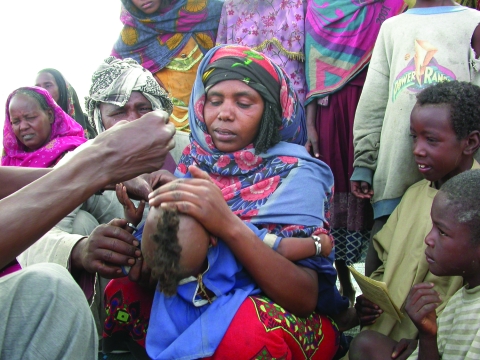
Description:Vaccination services for people and livestock often fail to achieve sufficient coverages in Africa's remote rural settings because of financial, logistic, and service delivery constraints. In Chad from 2000 through 2005, we demonstrated the feasibility of combining vaccination programs for nomadic pastoralists and their livestock. Sharing of transport logistics and equipment between physicians and veterinarians reduced total costs. Joint delivery of human and animal health services is adapted to and highly valued by hard-to-reach pastoralists. In intervention zones, for the first time approximately 10% of nomadic children (> 1-11 months of age) were fully immunized annually and more children and women were vaccinated per day during joint vaccination rounds than during vaccination of persons only and not their livestock (130 vs. 100, p < 0.001). By optimizing use of limited logistical and human resources, public health and veterinary services both become more effective, especially at the district level.
-
Subjects:
- Synopsis
- Vaccination delivery
- children
- women
- livestock
- remote rural zones
- measles
- polio
- anthrax
- synopsis
- Adult
- Animal Husbandry
- Animals
- Chad
- Child
- Costs and Cost Analysis
- Equipment and Supplies
- Feasibility Studies
- Female
- Health Policy
- Health Promotion
- Health Resources
- Humans
- Infant
- Interinstitutional Relations
- Rural Population
- Transportation
- Vaccination
-
Source:Emerg Infect Dis. 13(3):373-379.
-
Document Type:
-
Volume:13
-
Issue:3
-
Download URL:
-
File Type:
 [PDF - 279.27 KB]
 -
Collection(s):
-
Main Document Checksum:urn:sha256:8fcb2b0f6dd48d28342bb8cf25d05c654407ed9c0becf3db0ddb65ba5466e95d
Supporting Files


 Was this page helpful?
 Found an issue?

CDC STACKS serves as an archival repository of CDC-published products including
scientific findings, journal articles, guidelines, recommendations, or other public health information authored or
co-authored by CDC or funded partners.
As a repository, CDC STACKS retains documents in their original published format to ensure public access to scientific information.
As a repository, CDC STACKS retains documents in their original published format to ensure public access to scientific information.
You May Also Like
COLLECTION
Emerging Infectious Diseases