



Seroprevalence of Hepatitis E Virus Infection, Rural Southern People’s Republic of China
Supporting Files
Public Domain

-
Nov 2006
File Language:
English
Details
-
Alternative Title:Emerg Infect Dis
-
Personal Author:
-
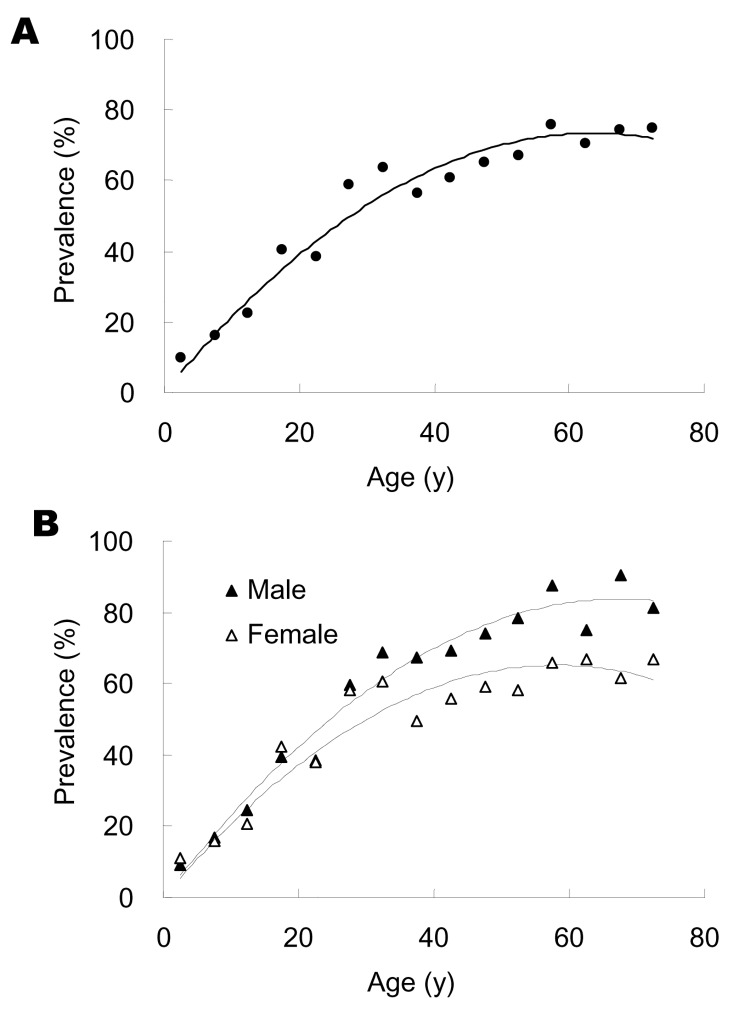
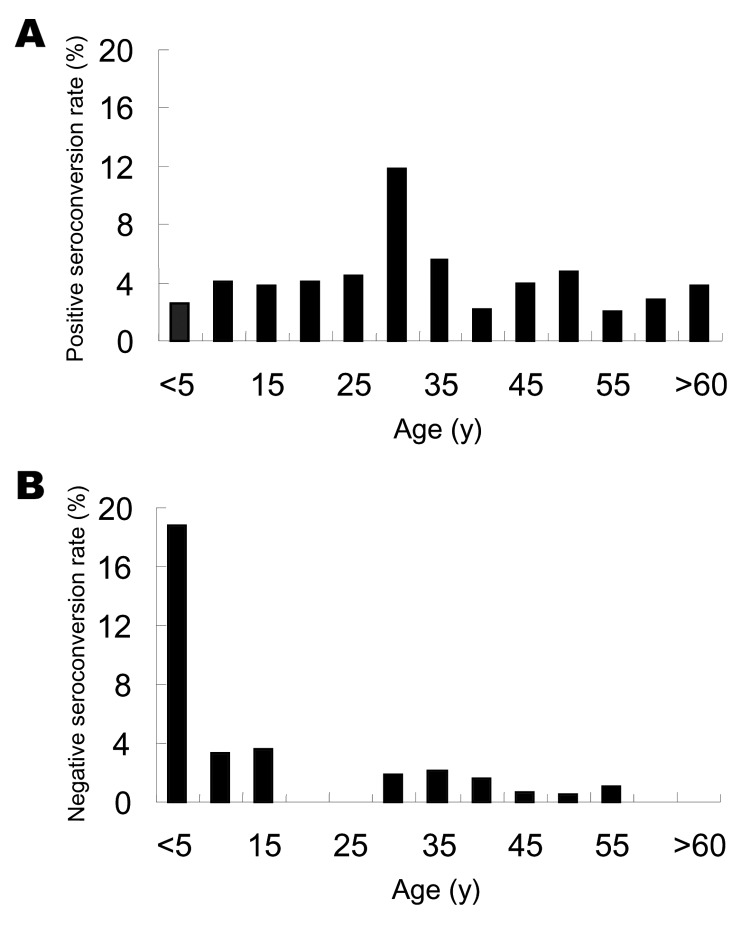
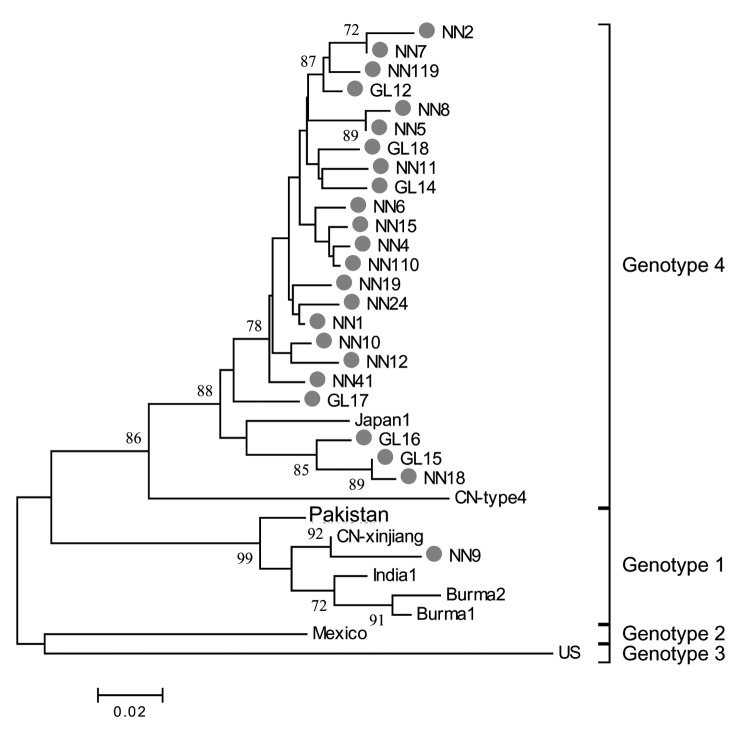
Description:Genotype 4 hepatitis E virus (HEV) is the dominant cause of hepatitis E in the People's Republic of China; swine are the principal reservoir. Our study was conducted in 8 rural communities of southern China, where families keep pigs near their homes. Phylogenetic analysis showed that 23 of 24 concurrent virus isolates from this region are genotype 4 strains. Among the study populations, immunoglobulin G anti-HEV seroprevalence accumulated with age at approximately equal to 1% per year for persons < or =60 years of age. After age 30 years, seroprevalence increased at higher rates for male than for female study participants. The overall seroprevalence was 43% (range 25%-66%) among the communities. Infection rates were higher for participants between 25 and 29 years of age. The results suggest that HEV infection probably has been endemic in southern China for at least 60 years, with swine being the principal reservoir of human HEV infection in recent years.
-
Subjects:
-
Source:Emerg Infect Dis. 12(11):1682-1688.
-
Document Type:
-
Place as Subject:
-
Location:
-
Volume:12
-
Issue:11
-
Download URL:
-
File Type:
 [PDF - 189.66 KB]
 -
Collection(s):
-
Main Document Checksum:urn:sha256:d5d38b192c33d440cb56660059dba039c4170f9ac23dbd87d1bde60d53e345c3
Supporting Files


File Language:
English
 Was this page helpful?
 Found an issue?



CDC STACKS serves as an archival repository of CDC-published products including
scientific findings, journal articles, guidelines, recommendations, or other public health information authored or
co-authored by CDC or funded partners.
As a repository, CDC STACKS retains documents in their original published format to ensure public access to scientific information.
As a repository, CDC STACKS retains documents in their original published format to ensure public access to scientific information.
You May Also Like
COLLECTION
Emerging Infectious Diseases