



Medicare reimbursement attributable to catheter-associated urinary tract infection in the inpatient setting: a retrospective cohort analysis
Supporting Files

-
2014/06/01
-
Available in CDC Stacks on September 20, 2024, 12:00 AM
File Language:
English
Details
-
Alternative Title:Med Care
-
Personal Author:
-
Description:Background:
Most catheter-associated urinary tract infections (CAUTIs) are considered preventable and thus a potential target for healthcare quality improvement and cost savings.
Objectives:
We sought to estimate excess Medicare reimbursement, length of stay, and inpatient death associated with CAUTI among hospitalized beneficiaries.
Research design:
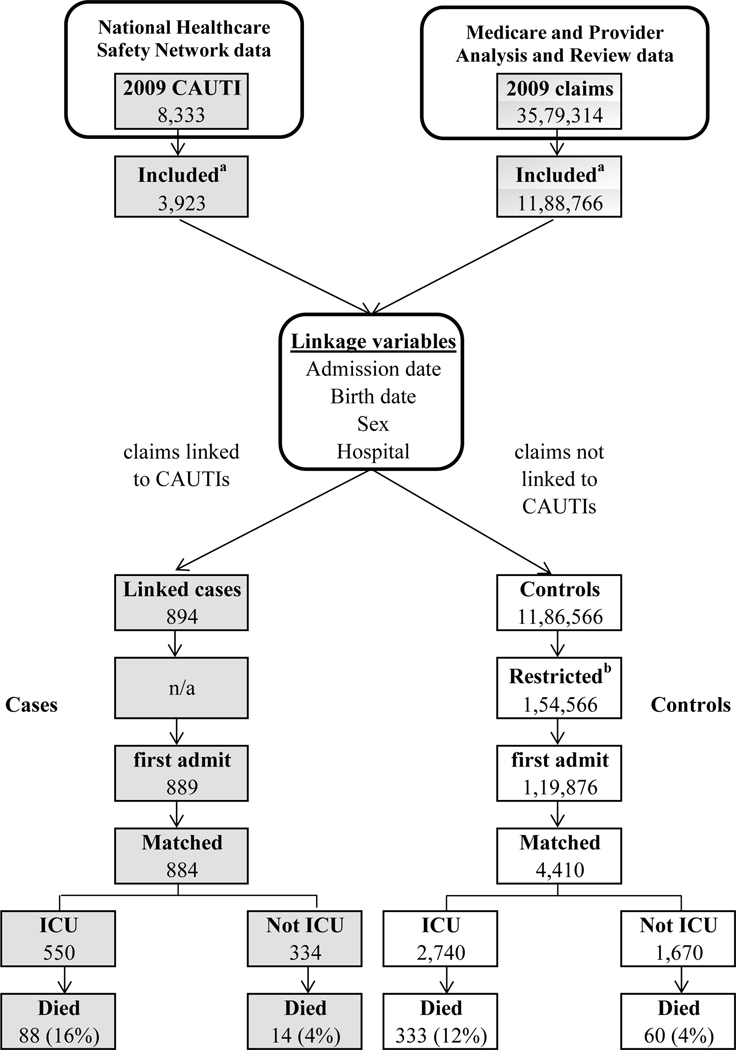
Using a retrospective cohort design with linked Medicare inpatient claims and National Healthcare Safety Network data from 2009, we compared Medicare reimbursement between Medicare beneficiaries with and without CAUTIs.
Subjects:
Fee-for-Service Medicare beneficiaries aged ≥65 years with continuous coverage of Parts A (hospital insurance) and B (supplementary medical insurance).
Results:
We found that beneficiaries with CAUTI had higher median Medicare reimbursement (Intensive care unit ICU: $8,548, non-ICU: $1,479) and length of stay (ICU: 8.1 days, non-ICU: 3.6 days) compared to those without CAUTI controlling for potential confounding factors. Odds of inpatient death were higher among beneficiaries with versus without CAUTI only among those with an ICU stay (ICU: odds ratio 1.37).
Conclusions:
Beneficiaries with CAUTI had increased Medicare reimbursement and length of stay compared with those without CAUTI after adjusting for potential confounders. -
Subjects:
- Aged
- Aged, 80 and over
- Catheter-Related Infections
- Cohort Studies
- Cross Infection
- Female
- Hospital Mortality
- Hospitalization
- Humans
- Insurance, Health, Reimbursement
- Intensive Care Units
- Length of Stay
- Male
- Medicare Assignment
- Medicare Part A
- Medicare Part B
- Quality Improvement
- Retrospective Studies
- Urinary Tract Infections
-
Keywords:
-
Source:Med Care. 52(6):469-478
-
Pubmed ID:24699236
-
Pubmed Central ID:PMC11413967
-
Document Type:
-
Funding:
-
Genre:
-
Volume:52
-
Issue:6
-
Download URL:
-
File Type:
 [PDF - 620.10 KB]
 -
Collection(s):
-
Main Document Checksum:urn:sha-512:e2066dac4fef7cce5a5e388c40daf50d5585341a13eccbdeb09b37b513e98d9ba591a8920921dfba6382fec045d0a3e6a071821ed3ed19fb766aace9c4b098be
Supporting Files


File Language:
English
 Was this page helpful?
 Found an issue?

CDC STACKS serves as an archival repository of CDC-published products including
scientific findings, journal articles, guidelines, recommendations, or other public health information authored or
co-authored by CDC or funded partners.
As a repository, CDC STACKS retains documents in their original published format to ensure public access to scientific information.
As a repository, CDC STACKS retains documents in their original published format to ensure public access to scientific information.
You May Also Like
COLLECTION
CDC Public Access