



Inequities Along the Human Immunodeficiency Virus (HIV) Pre-exposure Prophylaxis Services Continuum for Black Women in the United States, 2015–2020
Supporting Files

-
2 01 2024 ; 2-01-
-
Available in CDC Stacks on 2024-08-15T00:00:00Z
File Language:
English
Details
-
Alternative Title:Obstet Gynecol
-
Personal Author:Townes, Ashley ; Tanner, Mary R. ; Yu, Lei ; Johnson, Wayne D. ; Zhu, Weiming ; Iqbal, Kashif ; Dominguez, Kenneth L. ; Henny, Kirk D. ; Drezner, Kate ; Schumacher, Christina ; Bickham, Jacquelyn ; Elopre, Latesha ; Edelstein, Zoe R. ; Hoover, Karen W.
-
Corporate Authors:
-
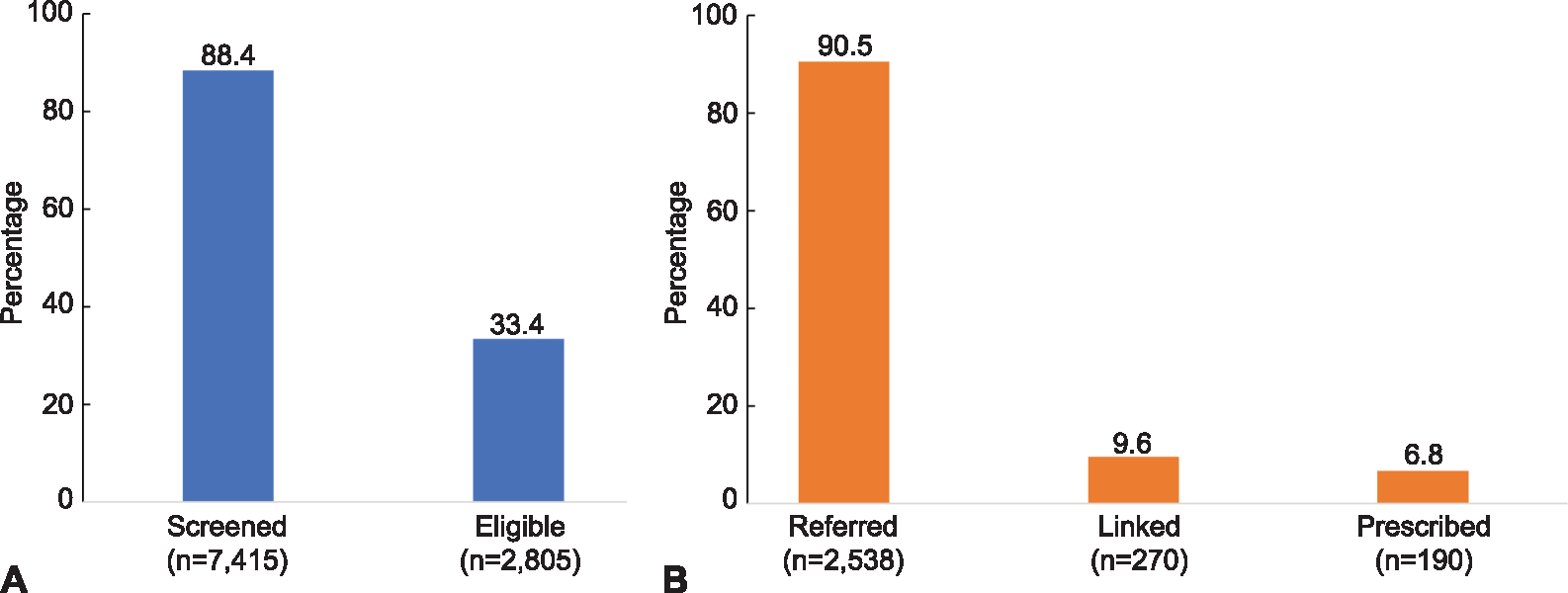
Description:OBJECTIVE: ; To estimate the number of women who received human immunodeficiency virus (HIV) and sexually transmitted infection (STI) testing and HIV pre-exposure prophylaxis (PrEP) services by race and ethnicity in seven THRIVE (Targeted Highly Effective Interventions to Reverse the HIV Epidemic)–funded jurisdictions and to estimate associations of age and syphilis and gonorrhea diagnoses with receipt of HIV PrEP services. ; METHODS: ; We analyzed data collected from 2015 to 2020 in Birmingham, Alabama; Baltimore City, Maryland; Washington, DC, New Orleans, Louisiana; Brooklyn, New York; Philadelphia, Pennsylvania; and Hampton Roads, Virginia. We compared Black women and women of additional racial and ethnic groups by age, HIV status at enrollment, receipt of STI testing and test positivity, and steps in the PrEP continuum (screened, eligible, referred, linked, and prescribed). We also examined the association of age, syphilis, or gonorrhea with the following steps in the PrEP continuum: screened, referred, linked, and prescribed. ; RESULTS: ; Black women made up 69.2% (8,758/12,647) of women served in THRIVE. Compared with non-Black women, Black women were more likely to have a positive test result for syphilis (3.3% vs 2.1%), gonorrhea (4.9% vs 3.5%), chlamydia (5.1% vs 1.9%), or more than one STI (1.4% vs 0.3%). Among women with negative HIV test results or unknown HIV status, Black women were more likely to be screened for PrEP eligibility (88.4% vs 64.9%). Among Black women, the proportion screened for PrEP was higher among those diagnosed with syphilis (97.3%) or gonorrhea (100%) than among those without an STI (88.1% and 87.8%, respectively). Among 219 Black women who presented with syphilis, only 10 (4.6%) were prescribed PrEP; among 407 with gonorrhea, only 11 (2.7%) were prescribed PrEP. ; CONCLUSION: ; Although most Black women seeking services received STI testing, the proportion of Black women who were eligible for PrEP and prescribed PrEP was low. To achieve national HIV-prevention goals, it is imperative that Black women have access to PrEP information and services.
-
Subjects:
-
Source:Obstet Gynecol. 143(2):294-301
-
Pubmed ID:37963384
-
Pubmed Central ID:PMC11325841
-
Document Type:
-
Funding:
-
Volume:143
-
Issue:2
-
Download URL:
-
File Type:
 [PDF - 120.85 KB]
 -
Collection(s):
-
Main Document Checksum:urn:sha-512:a41cbf4c4dd44f1cd30667a07dd832684e2b082a7ad7c1edc1872d3354cd2e4acf59d5e2adca2d99cc62f77e3b5e66be1c9e1ba6f3c0b823aca056a5745a309a
Supporting Files


File Language:
English
 Was this page helpful?
 Found an issue?

CDC STACKS serves as an archival repository of CDC-published products including
scientific findings, journal articles, guidelines, recommendations, or other public health information authored or
co-authored by CDC or funded partners.
As a repository, CDC STACKS retains documents in their original published format to ensure public access to scientific information.
As a repository, CDC STACKS retains documents in their original published format to ensure public access to scientific information.
You May Also Like
COLLECTION
CDC Public Access